.webp&w=384&q=75)

Loading, please wait...
Loading, please wait...

Inflammatory bowel disease represents a chronic, relapsing disorder that challenges clinicians globally and across India. Conventional diagnostic modalities often fail to identify early mucosal and transmural inflammation before macroscopic architectural destruction occurs. Consequently, developing sensitive optical biosensors has become essential for precise inflammatory bowel disease tracking in clinical and experimental gastroenterology. A ground-breaking study has introduced 2TPA-IsoL, a novel chemiluminescent probe specifically engineered for deep-tissue tracking of myeloperoxidase-mediated hypochlorous acid generation.
During active inflammatory bowel disease flares, circulating neutrophils migrate rapidly into the intestinal lamina propria. Once recruited, these activated polymorphonuclear leukocytes release abundant quantities of myeloperoxidase into the extracellular space. This specialized heme peroxidase subsequently utilizes hydrogen peroxide and chloride ions to catalyze the generation of hypochlorous acid. Although hypochlorous acid serves as a potent antimicrobial oxidant within innate immunity, sustained excessive accumulation causes massive tissue injury. Specifically, hypochlorous acid oxidizes membrane phospholipids, inactivates endogenous antiproteases, and chlorinates cellular proteins. As a result, the intestinal epithelial barrier loses integrity, exacerbating transmural inflammation and ulceration. Furthermore, clinical studies demonstrate that elevated intestinal myeloperoxidase activity strongly mirrors endoscopic disease severity in both Crohn's disease and ulcerative colitis. Therefore, tracking hypochlorous acid production provides an immediate, functional assessment of mucosal inflammation. Because microscopic neutrophil infiltration precedes gross endoscopic ulceration, detecting this reactive species facilitates earlier diagnosis. Thus, quantifying hypochlorous acid generation offers invaluable insight into disease activity that conventional systemic biomarkers cannot provide.
To achieve reliable bioimaging, researchers designed 2TPA-IsoL by restructuring the chemical framework of isoluminol. Specifically, they appended triphenylamine donor units onto the electron-deficient isoluminol scaffold, constructing a robust donor-acceptor architecture. This structural engineering effectively shifted the chemiluminescence emission maximum to 600 nanometers, moving the signal into the desirable red spectral band. Consequently, the probe dramatically reduces background autofluorescence and minimizes biological photon scattering. In addition, 2TPA-IsoL demonstrates exceptional selectivity toward hypochlorous acid, resisting interference from competing reactive oxygen species like peroxynitrite and hydrogen peroxide. When exposed to hypochlorous acid, the probe undergoes rapid oxidative activation that triggers strong chemiluminescent emission. Moreover, the probe exhibits prolonged light-emission kinetics rather than transient flash kinetics. This extended kinetic profile establishes a sustained observation window, enabling continuous monitoring during complex diagnostic procedures. Therefore, the probe provides an exceptional platform for long-term inflammatory bowel disease tracking across active and quiescent disease states. In summary, this rational molecular design delivers superior bioanalytical sensitivity and specificity.
Standard optical bioimaging approaches historically relied on external laser excitation to stimulate fluorescent dyes. However, external excitation light encounters severe obstacles in gastrointestinal imaging because tissue chromophores absorb incoming photons and generate distracting autofluorescence. Furthermore, repeated laser irradiation induces significant phototoxicity and photodamage in fragile mucosal layers. In contrast, chemiluminescence produces luminescence internally through an exergonic chemical oxidation without external light irradiation. Therefore, 2TPA-IsoL achieves an exceptionally high signal-to-noise ratio by completely avoiding tissue autofluorescence. Additionally, shorter wavelength emissions scatter heavily and fail to penetrate deep abdominal structures. Because 2TPA-IsoL generates red-shifted photons at 600 nanometers, its light penetrates effectively through dense intestinal walls and mesenteric adipose tissue. Consequently, clinicians and researchers can visualize transmural inflammatory loci in deep submucosal layers that traditional surface endoscopes cannot access. Moreover, the persistent luminescence kinetics permit steady optical image acquisition without rapid signal decay. Thus, 2TPA-IsoL overcomes longstanding physical and optical barriers that previously hindered non-invasive deep-tissue tracking of intestinal inflammation.
Achieving complete mucosal healing represents the ultimate treatment benchmark in contemporary inflammatory bowel disease management. Nevertheless, clinicians frequently struggle to assess treatment efficacy promptly because macroscopic mucosal remodeling lags behind biochemical resolution. By providing direct functional quantification of hypochlorous acid, 2TPA-IsoL delivers an agile readout of therapeutic efficacy. In experimental models treated with anti-inflammatory or biologic agents, successful therapy triggers a rapid decline in optical luminescence. Conversely, refractory disease states maintain robust chemiluminescent signals, indicating persistent neutrophilic activation and unresolved tissue inflammation. Consequently, clinicians can differentiate responsive patients from non-responders long before endoscopic restaging would detect macroscopic architectural changes. Furthermore, this dynamic molecular tracking prevents prolonged exposure to ineffective therapies and facilitates timely medication adjustments. Because routine blood biomarkers like C-reactive protein often correlate poorly with mild-to-moderate localized mucosal inflammation, site-specific biochemical probes provide superior diagnostic fidelity. Therefore, chemiluminescent tracking of neutrophil activity bridges an essential gap between cellular inflammatory dynamics and clinical decision-making.
The engineering principles demonstrated by 2TPA-IsoL open compelling opportunities for clinical gastrointestinal diagnostics. Moreover, this donor-acceptor scaffold provides a generalizable blueprint for creating targeted probes sensitive to alternative inflammatory mediators. Although invasive endoscopy with histological biopsy remains the gold standard for clinical assessment, non-invasive molecular tracking significantly mitigates patient risk and discomfort. In future clinical practice, integrating red-shifted chemiluminescent probes with advanced endoscopic or capsule devices could transform routine surveillance protocols. Additionally, detecting localized hypochlorous acid generation empowers gastroenterologists to detect subclinical inflammatory flares prior to symptomatic patient deterioration. As personalized medicine advances, real-time molecular visualization will allow physicians to tailor biologic regimens precisely to individual patient biology. Furthermore, this imaging modality could guide surgical resections by delineating microscopic disease margins in complicated bowel disease. Thus, long-wavelength chemiluminescent sensors represent a transformative leap forward for precision gastroenterology and internal medicine.
Hypochlorous acid functions as a potent oxidant generated by neutrophil-derived myeloperoxidase during acute and chronic intestinal flares. When neutrophils infiltrate the gut mucosa, they synthesize hypochlorous acid to combat pathogens. However, sustained hypochlorous acid overproduction damages epithelial cell membranes, chlorinates functional proteins, and degrades intestinal barrier architecture. Consequently, this oxidative process perpetuates mucosal injury, making hypochlorous acid an exceptional surrogate biomarker for tracking localized neutrophilic inflammatory activity.
The 2TPA-IsoL probe incorporates triphenylamine donor moieties into an isoluminol scaffold, shifting chemiluminescence emission to 600 nanometers. Because it operates through chemiluminescence rather than external fluorescence excitation, it entirely eliminates tissue autofluorescence and phototoxicity. Furthermore, the red-shifted emission experiences minimal photon attenuation and scattering in biological tissue. Consequently, the probe achieves exceptional depth penetration and high signal-to-noise ratios, allowing precise monitoring of transmural intestinal inflammation without invasive surgical intervention.
Molecular chemiluminescence directly reflects active neutrophil suppression following therapeutic intervention. While macroscopic mucosal healing takes weeks or months to appear during endoscopic evaluation, hypochlorous acid levels decrease rapidly when anti-inflammatory agents succeed. Therefore, tracking chemiluminescent signals enables clinicians to evaluate therapeutic response promptly. This real-time insight helps specialists identify refractory disease earlier, adjust biologic dosages efficiently, and avoid unnecessary treatment delays, ultimately optimizing long-term patient outcomes in inflammatory bowel disease.
Disclaimer: This content is for informational and educational purposes only and should not be taken as professional medical advice. Always consult a healthcare professional for diagnosis and treatment. Refer to the latest local and national guidelines for clinical practice.
References

Read summarized clinical updates, watch expert medical content, and earn CME certifications right from your smartphone.
Open your smartphone camera to scan and install.





The novel chemiluminescent probe 2TPA-IsoL enables selective, deep-tissue monitoring of MPO-generated HOCl. This breakthrough offers real-time tracking of inflammatory bowel disease activity and therapeutic response.
Today

New evidence from Karolinska Institutet shows women vaccinated against HPV prior to conception have significantly lower rates of preterm birth and major perinatal complications. Clinicians in India can leverage these findings to strengthen adolescent immunisation and reproductive health advocacy.
Today

Cinematic rendering utilizes advanced global illumination to transform coronary CT angiography datasets. This imaging technique provides lifelike depth perception, helping cardiologists and surgeons precisely evaluate anomalous coronary artery origins, high-risk interarterial courses, and post-surgical anatomy.
Today
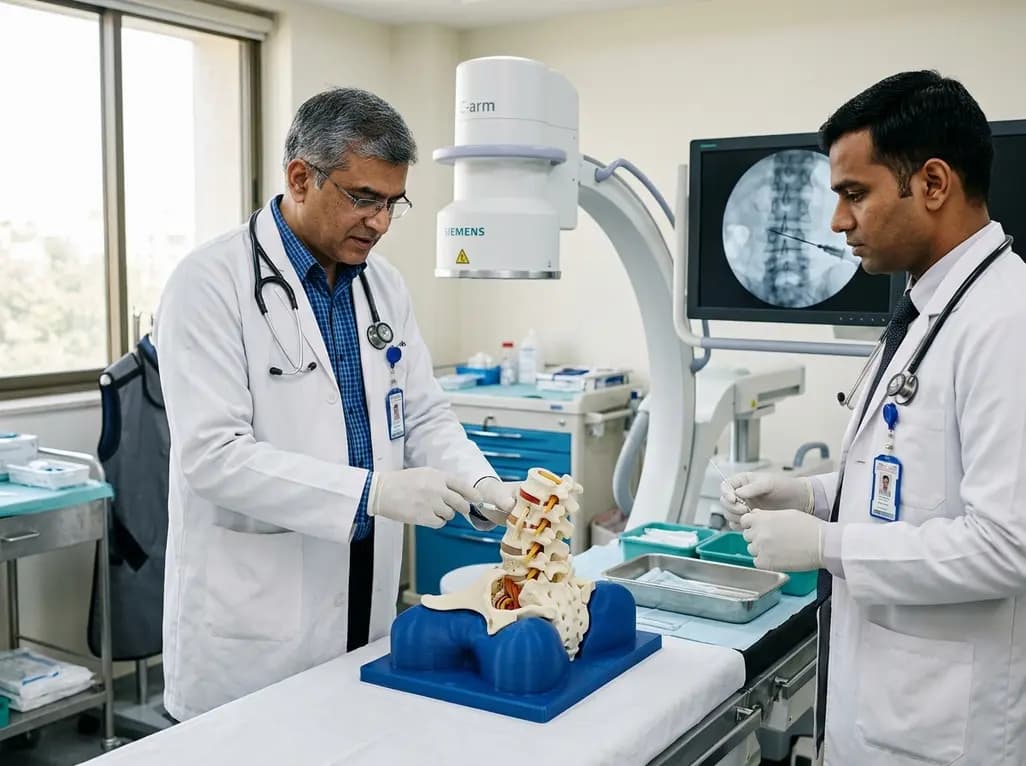
A novel 3D-printed lumbar spine simulator with tunable radiopacity provides realistic tactile and radiographic feedback for fluoroscopy-guided intervertebral disc puncture training, offering a low-cost, ethical alternative to cadaver models.
Today

A breakthrough study reveals that loss of SELENOT in hypothalamic POMC neurons triggers premature cellular senescence, ATF6α stress activation, and ER calcium depletion, linking neuroendocrine decay to metabolic disease.
Today
