.webp&w=384&q=75)

Loading, please wait...
Loading, please wait...
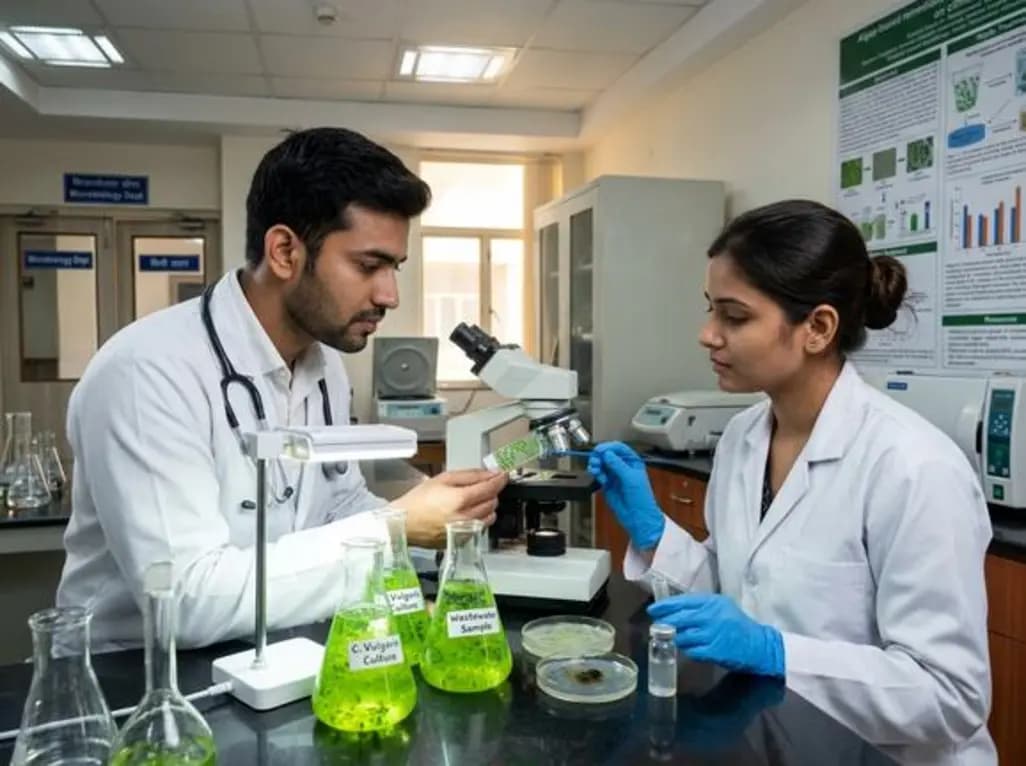
Livestock and poultry farming generate wastewater with significant antibiotic residues. These residues drive environmental risks and contribute to the global rise of antimicrobial resistance. Therefore, microalgae antibiotic removal technology has emerged as a promising and sustainable alternative to traditional remediation methods. Furthermore, recent reviews highlight the potential of these biological systems to mitigate the spread of resistant genes in aquatic environments.
Microalgae utilize several complex pathways to eliminate pharmaceutical pollutants from wastewater. Specifically, extracellular polymeric substances (EPS) act as vital multifunctional mediators during this process. The anionic functional groups within the EPS matrix facilitate the bioadsorption of cationic antibiotics. Additionally, photosensitizing components within the EPS promote indirect photodegradation when exposed to light. Consequently, these microorganisms effectively reduce the concentration of pharmaceutical waste without the need for harsh chemicals.
Biotransformation also plays a critical role in high-efficiency treatment systems. EPS-associated enzymes directly participate in the biotransformation of complex antibiotic structures into simpler, less harmful compounds. Moreover, synergistic interactions between microalgae and bacteria often improve overall removal rates. However, researchers must still clarify the exact mechanisms underlying these microbial interactions. Future studies should focus on characterizing EPS functionality more accurately under practical wastewater conditions.
Ultimately, optimizing these microalgae-based systems could provide a robust defense against environmental antibiotic contamination. Addressing current knowledge gaps regarding transformation products will be essential for large-scale implementation. Such advances will significantly support the One Health approach by reducing the environmental pressure that fosters antibiotic-resistant superbugs.
Microalgae remove antibiotics through several mechanisms, including bioadsorption, where residues adhere to the cell surface, and biodegradation, where metabolic enzymes break down the chemical compounds.
EPS are polymers secreted by microalgae that function as a biological filter. They contain functional groups that trap antibiotics and enzymes that facilitate their degradation, enhancing the overall purification process.
In India, environmental antibiotic discharge is a major driver of antimicrobial resistance (AMR). Effective wastewater treatment reduces the environmental reservoir of resistant pathogens, which directly impacts the efficacy of clinical treatments for human infections.
Disclaimer: This content is for informational and educational purposes only. It does not constitute professional medical advice, diagnosis, or treatment. Always seek the advice of your physician or other qualified healthcare provider with any questions you may have regarding a medical condition. Refer to the latest local and national guidelines for clinical practice.
References
1. Zhang R et al. Microalgae-based technology for antibiotic removal from livestock wastewater: A review on mechanisms, performance, and extracellular polymeric substances (EPS) enhancement. J Environ Manage. 2026 Jun 19. doi: undefined. PMID: 42320209.
2. Polianciuc SI et al. Antibiotics in the environment: causes and effects. Arch Pharm (Weinheim). 2020;353(1):e1900291.
3. World Health Organization. Antibiotic resistance. 2020. Available at: https://www.who.int/news-room/fact-sheets/detail/antibiotic-resistance.
"
Read summarized clinical updates, watch expert medical content, and earn CME certifications right from your smartphone.
Open your smartphone camera to scan and install.





Livestock wastewater contains antibiotic residues that pose environmental risks. This review explores microalgae-based technology and extracellular polymeric substances (EPS) as sustainable tools for antibiotic removal, highlighting mechanisms like bioadsorption and biotransformation.
4 months ago

Review how tailored exercise programs benefit frail older patients with heart failure. Explore pathophysiological mechanisms, individualized training prescriptions, and strategies to overcome adherence barriers in clinical practice.
Today

Leucine Rich Bio has introduced South Asia's first comprehensive vaginal microbiome test, BugSpeaks. By profiling microbial dysbiosis, pathogens, and antimicrobial resistance, this next-generation diagnostic platform provides clinicians with deeper insights into recurrent infections, fertility, and reproductive health.
Today

In high-risk pulmonary embolism complicated by severe anemia and active uterine bleeding, systemic thrombolysis is contraindicated. Large-bore aspiration thrombectomy provides rapid hemodynamic rescue without fibrinolysis, supported by inferior vena cava filter placement and multidisciplinary critical care.
Today

This comparative study evaluates posterior labral tears with and without glenohumeral instability, highlighting distinct demographic patterns, MRI underestimation in stable shoulders, and successful arthroscopic repair outcomes.
Today

A clinical study demonstrates that early intervention with tocilizumab, either as monotherapy or bridged with corticosteroids, achieves significant proptosis reduction and resolves active inflammation in treatment-naive thyroid eye disease.
Today
