.webp&w=384&q=75)

Loading, please wait...
Loading, please wait...

A recent systematic review highlights a concerning disparity regarding mental health service utilization among young refugees and asylum seekers. Although these populations face a high prevalence of psychological distress, researchers found that they consistently underutilize formal mental health services. Consequently, this gap between clinical need and actual care highlights an urgent public health challenge. Understanding these patterns is essential for clinicians who provide care to displaced youth, particularly in diverse clinical settings.
The systematic review, which analyzed twenty-two studies, identified a clear trend of underutilization compared to majority population peers. Interestingly, this trend was most pronounced in outpatient services and the use of psychotropic medications. In contrast, young refugees showed an increased reliance on emergency services. This suggests that many individuals only receive care when their conditions reach a crisis point. Furthermore, the data indicated that service use was particularly low for those from low- and middle-income countries. Conversely, unaccompanied minors tended to access services more frequently, likely due to the involvement of child welfare agencies.
Various factors significantly impede access to care for this vulnerable group. Language remains a primary barrier, as identified in several studies. Patients often struggle to navigate complex health systems when linguistic support is unavailable. Additionally, cultural stigma surrounding mental illness can prevent families from seeking help. Moreover, some cultures may not recognize neurodevelopmental disorders or psychosomatic symptoms as mental health issues. Therefore, clinicians must foster culturally sensitive environments to improve engagement. Future research should prioritize exploring these facilitators and barriers to ensure equitable care for asylum seekers.
Healthcare providers should actively screen young refugees for trauma-related disorders and schizophrenia, as these are the most common reasons for service contact. However, providers must also remain vigilant for under-diagnosed conditions like neurodevelopmental disorders. Addressing the mental health service utilization gap requires a multisectoral approach. Specifically, integrating mental health screening into primary care can help identify needs before they escalate into emergencies. Developing community-based outreach programs may also help bridge the gap for marginalized groups.
Several factors contribute to this, including language barriers, cultural stigma, and a lack of awareness about available resources. Additionally, structural issues within the host country's healthcare system can make access difficult for newly arrived families.
Research indicates that trauma-related disorders and schizophrenia are the most common reasons for service use. In contrast, neurodevelopmental disorders like ADHD or autism are less frequently diagnosed or treated in refugee youth.
Unaccompanied minors often show higher rates of service utilization compared to accompanied refugee children. This is usually attributed to the closer supervision and mandatory health screenings provided by social services and legal guardians.
Disclaimer: This content is for informational and educational purposes only. It does not constitute medical advice or establish a doctor-patient relationship. Always seek the advice of a qualified healthcare provider for any medical concerns. Refer to the latest local and national guidelines for clinical practice.
References
Abou Seif N et al. A systematic review of global mental health service utilisation in young refugees and asylum seekers. BJPsych Open. 2026 Mar 02. doi: 10.1192/bjo.2025.10963. PMID: 41766630.
Barbo G, Petrucka P. Barriers associated with inaccessible mental health services for youth refugees and asylum seekers: An integrative review. uvic.ca. 2024.
Björkenstam E et al. Differences in psychiatric care utilization between refugees, non-refugee migrants and Swedish-born youth. Psychological Medicine. 2022;52(7):1365-1375.

Read summarized clinical updates, watch expert medical content, and earn CME certifications right from your smartphone.
Open your smartphone camera to scan and install.





A systematic review reveals that young refugees underutilize outpatient mental health services despite high needs, often relying on emergency care instead....
7 months ago
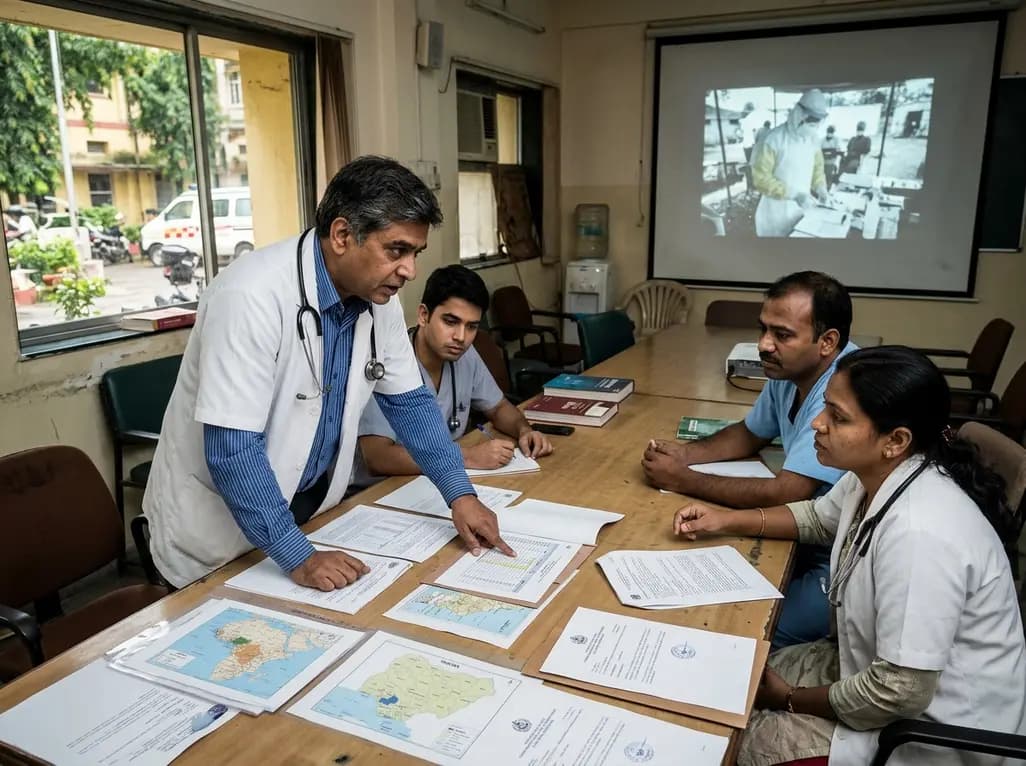
Following Nigeria's first recorded Ebola case linked to regional travel, the Africa CDC has convened an emergency ministerial summit. This alert underscores critical clinical priorities for healthcare professionals, including differentiating early viral infection from malaria, implementing barrier nursing, and triage.
Today

Leucine Rich Bio has introduced South Asia's first comprehensive vaginal microbiome test, BugSpeaks. By profiling microbial dysbiosis, pathogens, and antimicrobial resistance, this next-generation diagnostic platform provides clinicians with deeper insights into recurrent infections, fertility, and reproductive health.
Today

Review how tailored exercise programs benefit frail older patients with heart failure. Explore pathophysiological mechanisms, individualized training prescriptions, and strategies to overcome adherence barriers in clinical practice.
Today

This comparative study evaluates posterior labral tears with and without glenohumeral instability, highlighting distinct demographic patterns, MRI underestimation in stable shoulders, and successful arthroscopic repair outcomes.
Today

A clinical study demonstrates that early intervention with tocilizumab, either as monotherapy or bridged with corticosteroids, achieves significant proptosis reduction and resolves active inflammation in treatment-naive thyroid eye disease.
Today
