.webp&w=384&q=75)

Loading, please wait...
Loading, please wait...
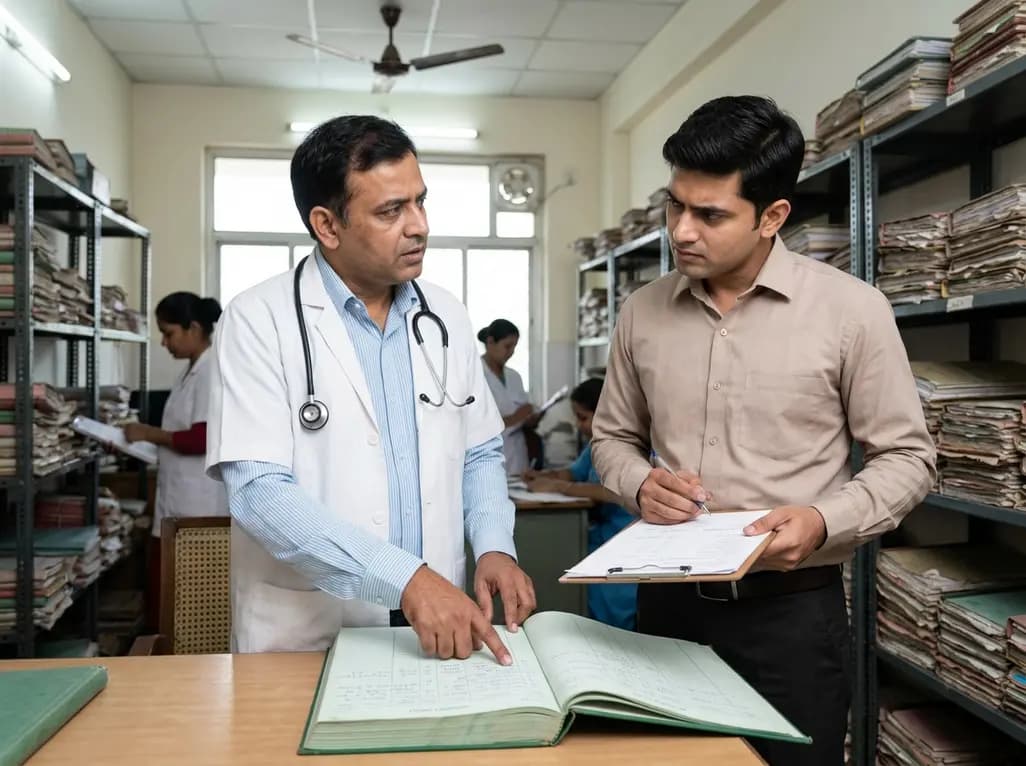
The Delhi State Consumer Disputes Redressal Commission recently ruled in favor of Bajaj Allianz General Insurance in a notable mediclaim dispute. Specifically, the commission upheld the insurer's decision to reject a reimbursement claim because the investigator found manipulated hospital records. Consequently, this judgment underscores the legal weight of an insurance survey report and the critical importance of transparent medical documentation.
The case began when a policyholder, Ashok, purchased a health insurance policy from Bajaj Allianz. Consequently, he had a sum insured of Rs 3 lakh. During the policy period, Ashok was admitted to Prasad Health Care Multispeciality Hospital and Fertility Centre. He received treatment for jaundice (Acute Viral Hepatitis) and Enteric Fever from November 8 to November 12, 2022. Subsequently, the hospital generated a final bill of Rs 36,847. Although the complainant paid this amount, Bajaj Allianz rejected his subsequent reimbursement request. Thus, a bitter legal battle ensued.
According to the insurer, the claim documents revealed severe misrepresentations. Therefore, the company deployed a field officer to investigate. During the visit, hospital staff allegedly misbehaved and even retained the officer's phone to prevent them from recording the patient's statement. Furthermore, the investigation report highlighted that the entire Indoor Case Paper was written in a highly stereotyped handwriting. Because of these fraudulent indicators, the insurer rejected the claim, citing non-cooperation and falsification of clinical files.
Initially, the district consumer commission ruled in the patient's favor. It ordered the insurer to pay the claim with 9% interest and Rs 25,000 in compensation. However, Bajaj Allianz appealed this decision. The Delhi State Consumer Commission, led by Justice Sangita Dhingra Sehgal and Member Bimla Kumari, reversed the lower court's decision. They emphasized that investigative and survey reports constitute essential evidence. Therefore, courts must respect these reports unless there is clear evidence of bias or error. Since the patient could not disprove the investigator's findings, the commission declared that no deficiency of service occurred.
This case serves as a warning for hospitals and doctors. Above all, maintaining accurate, individualized, and transparent medical records is non-negotiable. Legally, courts will not tolerate stereotyped handwriting or non-cooperation with insurance investigators. Therefore, healthcare providers must ensure administrative staff fully cooperate with genuine verification procedures to protect patient trust.
Q1: What led to the rejection of the reimbursement claim in this case?
The insurer rejected the claim due to suspected hospital record manipulation and non-cooperation. Investigators discovered that the Indoor Case Paper was written in stereotyped handwriting, and the hospital staff prevented the recording of the patient's statement.
Q2: Why did the state commission reverse the district forum's order?
The Delhi State Consumer Commission ruled that investigator and surveyor reports are vital legal evidence. Since the complainant failed to provide reliable evidence to counter these findings, the commission upheld the insurer's claim rejection.
Q3: How does this ruling impact medical record-keeping?
This ruling reinforces that medical documentation must be authentic and consistent. Hospitals that generate suspicious or stereotyped records risk losing credibility, which ultimately harms their patients' legitimate insurance claims.
Disclaimer: This content is for informational and educational purposes only. It does not constitute medical advice or replace professional judgment. Refer to the latest local and national guidelines for clinical practice.
References

Read summarized clinical updates, watch expert medical content, and earn CME certifications right from your smartphone.
Open your smartphone camera to scan and install.





The Delhi State Consumer Commission ruled that insurer Bajaj Allianz was justified in rejecting a claim due to manipulated hospital medical records....
4 months ago

As monsoon seasons elevate arboviral disease threats, Tamil Nadu has initiated an ICMR-monitored evaluation of the tetravalent dengue vaccine in Tenkasi district. Clinicians emphasize clinical monitoring, public prevention, and high-quality early pediatric care to reduce disease morbidity across endemic regions.
Today

A comparative cohort study evaluates vNOTES vs TLH hysterectomy for benign conditions, demonstrating shorter operative duration, faster return to daily activities, and equivalent female sexual function scores without increased dyspareunia.
Today

Review how tailored exercise programs benefit frail older patients with heart failure. Explore pathophysiological mechanisms, individualized training prescriptions, and strategies to overcome adherence barriers in clinical practice.
Today

This comparative study evaluates posterior labral tears with and without glenohumeral instability, highlighting distinct demographic patterns, MRI underestimation in stable shoulders, and successful arthroscopic repair outcomes.
Yesterday

A clinical study demonstrates that early intervention with tocilizumab, either as monotherapy or bridged with corticosteroids, achieves significant proptosis reduction and resolves active inflammation in treatment-naive thyroid eye disease.
Today
