

Loading, please wait...
Loading, please wait...
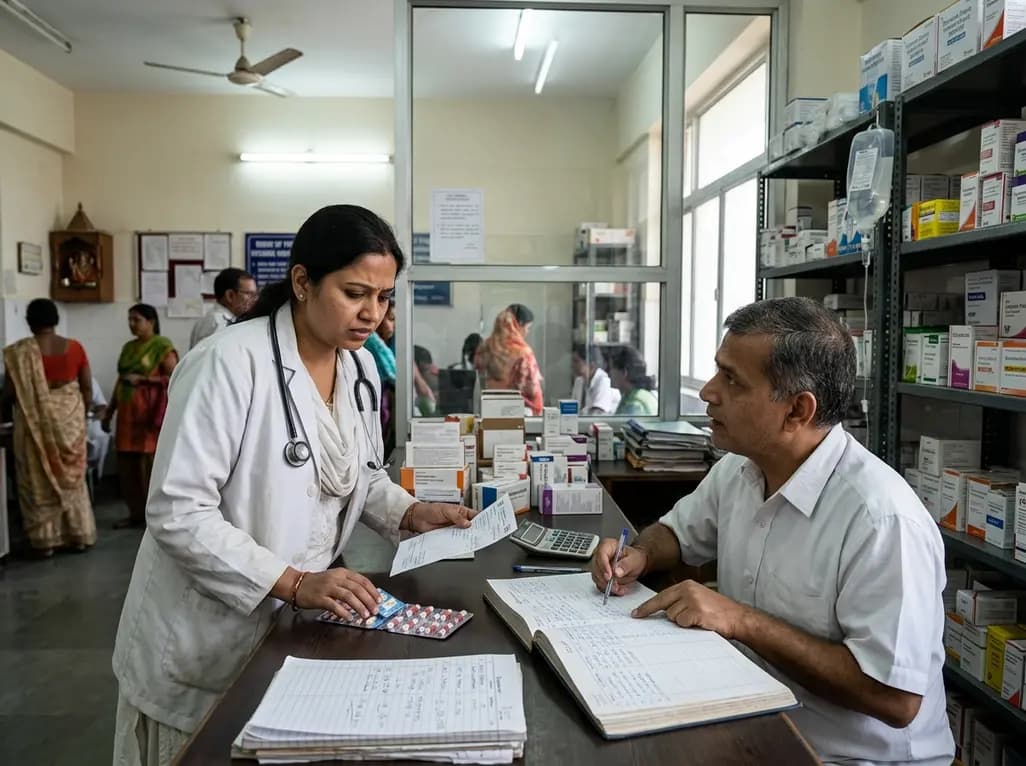
Recent judicial proceedings in India have intensified public scrutiny over excessive medicine price markups across private healthcare systems. During a decisive hearing, the Supreme Court of India questioned the Union Government regarding why statutory frameworks persistently favour pharmaceutical manufacturers over ordinary citizens. Consequently, the bench emphasised that equitable access to healthcare cannot exist without transparent, rational pricing structures for critical medical treatments.
A Supreme Court bench comprising Justice Vikram Nath and Justice Sandeep Mehta sharply criticised the executive branch for tolerating widening price gaps. Specifically, the justices observed that the National Pharmaceutical Pricing Authority appeared completely defunct in curbing aggressive market profiteering. The court asked why public policy continues to safeguard corporate interests while leaving vulnerable families exposed to financial distress. In response, the Additional Solicitor General contended that domestic medicine prices remain comparatively low on the global stage. However, the bench rejected this argument firmly. The judges stated that absolute affordability cannot be evaluated in isolation without factoring in India's low per capita income levels. Therefore, superficial global price comparisons fail to capture the severe economic realities confronting domestic households. Furthermore, the bench warned that the state cannot treat life-saving pharmaceutical access simply as an ordinary commercial transaction. Don't weigh patients against commerce, the bench observed, demanding immediate clarity on why trade margin caps have lagged behind urgent clinical needs. Additionally, the court highlighted that delayed regulatory interventions leave millions of vulnerable individuals exposed to catastrophic debt. Consequently, public health advocates insist that robust oversight must supersede unrestricted corporate profiteering.
During the hearing, the Supreme Court spotlighted glaring discrepancies between procurement costs and consumer charges. For instance, the bench highlighted an intravenous drip line purchased by retailers for fifteen rupees but billed to patients for two hundred and fifty rupees. Moreover, the judges cited an egregious case involving an oncology injection priced at eleven thousand rupees for distributors but billed at one lakh thirty thousand rupees. The bench bluntly asked the government how such massive increases could ever be rationalised as reasonable market calibration. Instead, the court remarked that unchecked commercial pricing has run amok under the government's direct oversight. Private hospital representatives defended these markups by citing steep operational expenses, round-the-clock intensive care staffing, and high overhead costs. They further claimed that restrictive sourcing prevents the infiltration of counterfeit supplies. Nevertheless, the judges firmly dismissed this defense. The bench stated unequivocally that commercial healthcare facilities cannot justify exploitative margins by pointing to institutional running costs. While hospitals maintain legitimate infrastructural expenses, surviving through predatory practices represents an unacceptable burden on suffering families. Thus, the court demanded uniform price calibration across clinical consumables.
The litigation also unmasked fundamental structural loopholes within India's current pharmaceutical regulatory framework. Specifically, the petitioner demonstrated that nearly eighty-two percent of circulating medicines fall entirely outside scheduled price controls. Under the Drugs (Prices Control) Order of 2013, only formulations explicitly listed within the National List of Essential Medicines undergo upfront price fixation. Consequently, manufacturers retain wide latitude when establishing the initial maximum retail price for non-scheduled formulations. In addition, existing rules permit companies to raise non-scheduled prices by up to ten percent annually without prior approval. As a result, huge margins emerge between the price to retailer and the final printed retail cost. The Supreme Court questioned the functional utility of the price control order if the vast majority of therapeutic products remain unregulated. Furthermore, mysterious corporate discounts negotiated between manufacturers and private healthcare chains distort fair market competition. Because statutory oversight remains restricted to essential lists, routine therapies often escape scrutiny. Therefore, judicial petitioners are actively demanding statutory margin caps that extend across all non-scheduled medicines and medical devices throughout India.
From a clinician's perspective, unbridled commercial markups directly undermine patient adherence and successful therapeutic outcomes. In critical specialties such as medical oncology, treatment continuity frequently collapses due to financial exhaustion. When life-saving targeted therapies carry artificial retail markups exceeding several hundred percent, patients often discontinue therapy prematurely. Furthermore, doctors face moral distress when clinical prescriptions generate insurmountable out-of-pocket expenses for families. Many households exhaust personal savings or sell productive assets simply to purchase hospital-mandated consumables. In addition, institutional mandates requiring inpatients to purchase medicines solely from in-house pharmacies exacerbate these financial pressures. Although hospital administrators claim these exclusive policies prevent sub-standard medicines, they effectively trap patients in closed micro-monopolies. Consequently, independent pharmacotherapy audits show that restricting patient choice inflates total hospitalisation bills dramatically. Therefore, medical practitioners increasingly advocate for transparent generic prescribing to shield patients from price gouging. Ultimately, clinicians recognise that clinical excellence cannot be divorced from economic justice. When medical therapies become unaffordable, even the most advanced therapeutic innovations fail to deliver their intended public health benefit.
To mitigate the crisis of inflated medical charges, regulatory agencies are now exploring broader trade margin rationalisation. Recently, the Union Government notified a thirty percent trade margin cap on selected anti-cancer formulations. According to official estimates, this targeted intervention should deliver annual patient savings exceeding two thousand five hundred crore rupees. However, the Supreme Court voiced dissatisfaction with this narrow scope, questioning why margin restrictions exclude other critical drugs. In fact, public interest petitioners suggest establishing a uniform sixteen percent ceiling across all therapeutic formulations. Furthermore, legal advocates urge statutory authorities to mandate generic drug prescribing by registered medical practitioners nationwide. Such regulatory reforms would also establish mandatory price controls over essential surgical devices and diagnostic equipment. Additionally, restructuring healthcare reimbursement requires private hospitals to separate professional clinical fees from pharmaceutical retail margins. By decoupling institutional survival from drug markups, healthcare providers can cultivate greater patient trust. In conclusion, the forthcoming Supreme Court judgment could fundamentally reshape India's healthcare economics, ensuring that life-saving medical care remains accessible, transparent, and ethically grounded for every citizen.
Q1: Why is the Supreme Court intervening in medicine price markups?
The Supreme Court intervened because massive disparities exist between manufacturer procurement rates and consumer retail prices. Furthermore, justices noted that market forces have failed to protect vulnerable patients from catastrophic out-of-pocket health expenditures. Because high markups frequently push families into severe debt, the apex court demanded accountability from regulatory bodies. Consequently, judicial intervention seeks to enforce equitable trade margins and ensure transparent pricing across private healthcare institutions.
Q2: How does the DPCO distinguish scheduled from non-scheduled medicines?
The Drugs (Prices Control) Order directly fixes ceiling prices for scheduled formulations listed under the National List of Essential Medicines. In contrast, non-scheduled medicines do not face upfront statutory price caps. Instead, manufacturers can adjust retail prices by up to ten percent annually under existing regulations. However, petitioners argue this permissive system leaves nearly eighty percent of market formulations vulnerable to unchecked markups, thereby undermining patient affordability across therapeutic categories.
Q3: What changes could hospitals face if trade margin rationalisation expands?
Hospitals may need to restructure their operational revenue models away from inflated pharmacy dispensing margins. Additionally, private facilities could encounter mandatory caps on consumable markups and diagnostic device charges. While hospital administrators often cite continuous infrastructure costs, regulatory changes will require greater unbundling of service fees. Consequently, institutions will have to rely on transparent bed charges and clinical consultations rather than cross-subsidising administrative overhead through pharmaceutical sales.
Disclaimer: This content is for informational and educational purposes only. It does not constitute medical advice or replace professional judgment. Refer to the latest local and national guidelines for clinical practice.
References

Read summarized clinical updates, watch expert medical content, and earn CME certifications right from your smartphone.
Open your smartphone camera to scan and install.





During landmark hearings, the Supreme Court demanded accountability from the Union Government regarding vast discrepancies between retailer procurement rates and consumer retail prices. The bench emphasized that vulnerable patients must not bear predatory hospital markups on essential drugs and consumables.
Today
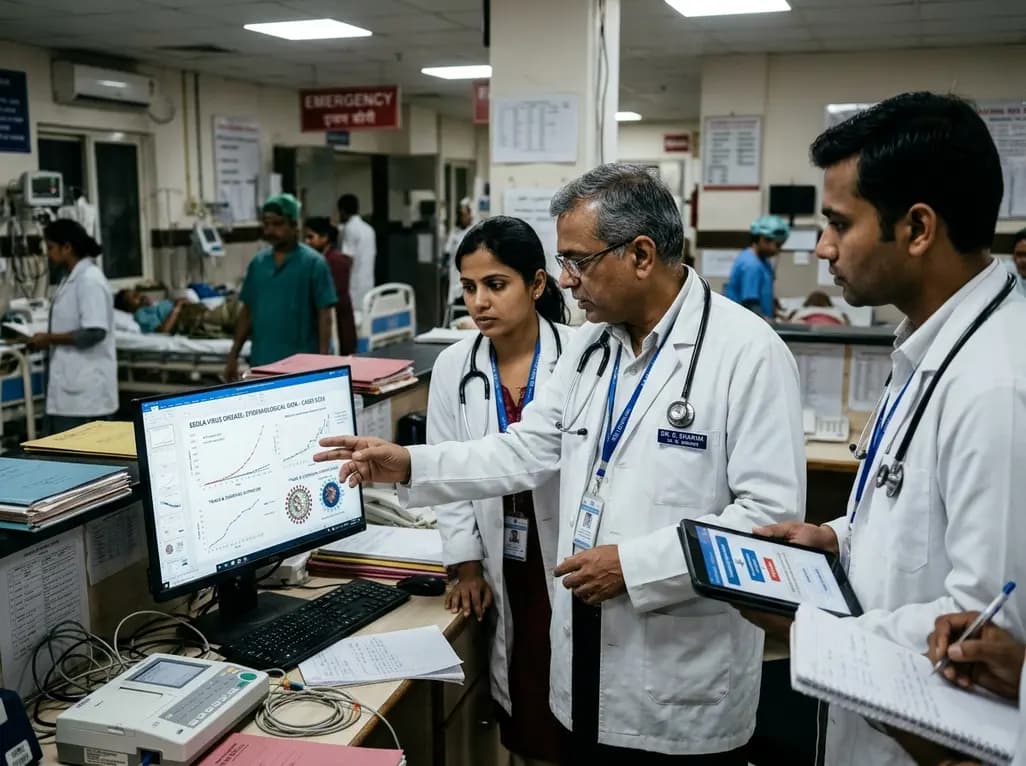
With confirmed filovirus infections climbing across Central and West Africa, healthcare teams worldwide must maintain heightened vigilance. Learn the core diagnostic indicators, emergency triage algorithms, supportive critical care standards, and point-of-entry screening workflows to stop secondary transmission.
Today
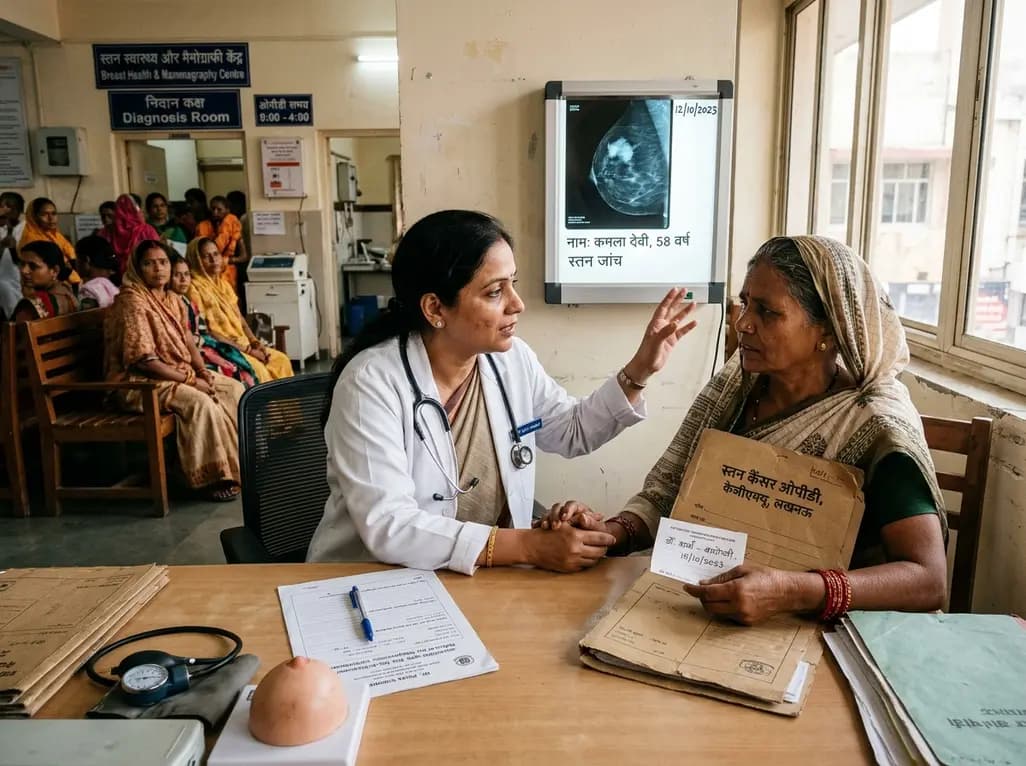
A KGMU study reveals over half of women with breast abnormalities fail to undergo diagnostic confirmation, leading to advanced-stage detection. Discover the socio-cultural barriers, clinical risks of incomplete resection, and community-level solutions needed to bridge the critical screening-to-diagnosis gap in India.
Yesterday
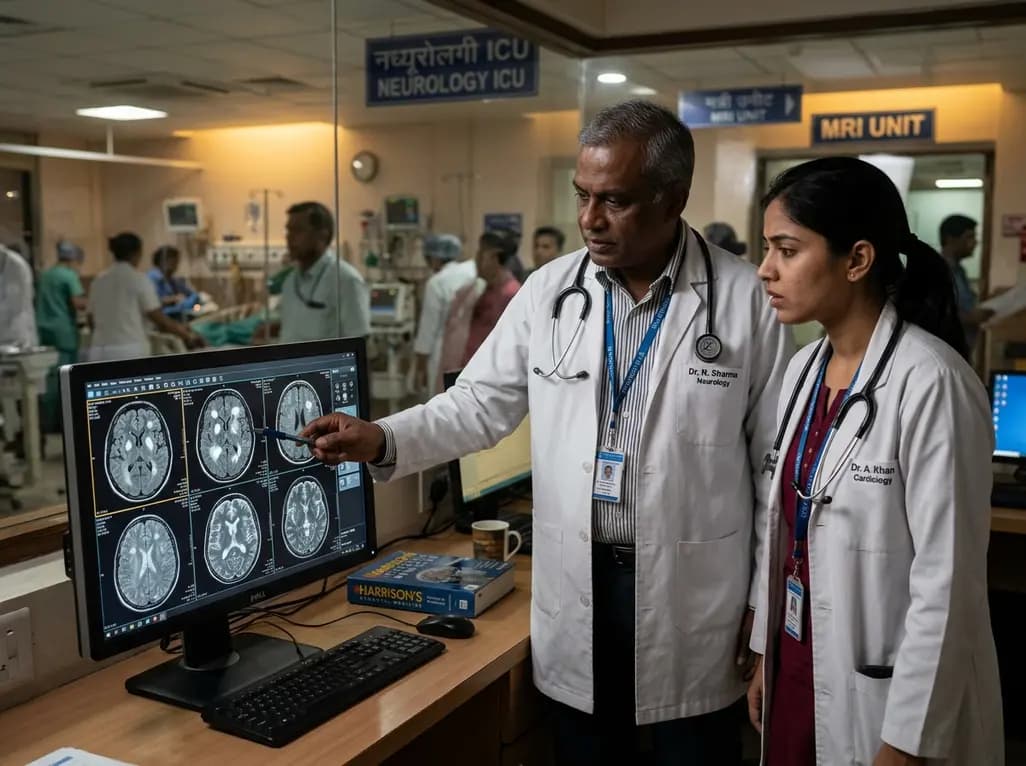
Recent findings from the VESUVE study demonstrate that brain MRI detects intracranial lesions in over 76% of patients with infective endocarditis. Acute ischemic stroke and subarachnoid hemorrhage independently elevate six-month mortality, underscoring the critical prognostic utility of neuroimaging.
Today

Modern 3D anthropometry reveals that pediatric leg growth ceases years before spinal elongation, exposing the clinical illusion of the classical Anderson-Green model. Learn how segmental growth dissociation improves surgical timing for epiphysiodesis in adolescent leg length discrepancy.
Today

A meta-analysis of 18 studies reveals that bariatric surgery does not significantly alter circulating homocysteine levels, regardless of follow-up duration. Clinicians must maintain vigilance over post-surgical micronutrient supplementation to prevent hyperhomocysteinemia.
Today
