.webp&w=384&q=75)

Loading, please wait...
Loading, please wait...

The Orissa High Court recently addressed the 2024-25 Medical Officer recruitment advertisement issued by the Odisha Public Service Commission (OPSC). Justice Biraja Prasanna Satapathy identified a significant breach of the constitutionally mandated 50% reservation cap. Consequently, the bench noted that the distribution of vacancies violated legal norms established by the Supreme Court of India.
The court examined a petition filed by 82 doctors challenging the March 2025 advertisement. Specifically, only 411 posts were available for unreserved candidates out of 5,248 total vacancies. Meanwhile, the remaining 4,837 posts were allocated to reserved categories, including SEBC, SC, and ST. This allocation clearly exceeded the 50% ceiling defined in the landmark Indra Sawhney case. Therefore, the court held that the advertisement should not have been issued in its current form because it marginalized unreserved applicants.
Odisha currently faces a severe shortage of medical professionals. As a result, the Advocate General urged the court to allow the recruitment process to conclude to support healthcare services. The bench subsequently vacated its previous interim order to balance legal compliance with public health needs. It permitted the OPSC to recommend 411 unreserved candidates for appointment. Additionally, an equal number of 411 reserved category candidates will receive recommendations based on their respective reservation percentages. Furthermore, the Health Department can address backlog vacancies separately after receiving official recommendations. This balanced approach ensures immediate healthcare support while maintaining legal integrity.
Q1: Why did the Orissa High Court intervene in the recruitment process?
The court intervened because the OPSC advertisement allocated over 90% of the vacancies to reserved categories. This distribution violated the 50% reservation limit set by the Supreme Court.
Q2: How will the current doctor shortage in Odisha be addressed?
To address the shortage, the court allowed the partial appointment of 822 candidates. This includes 411 unreserved and 411 reserved candidates to ensure the healthcare system gains necessary manpower.
Q3: What legal precedent did the court cite for its decision?
The court cited the landmark judgment of Indra Sawhney v. Union of India. This case established that total reservations should not exceed 50% except in extraordinary circumstances.
Disclaimer: This content is for informational and educational purposes only. It does not constitute medical advice or replace professional judgment. Refer to the latest local and national guidelines for clinical practice.
References

Read summarized clinical updates, watch expert medical content, and earn CME certifications right from your smartphone.
Open your smartphone camera to scan and install.





The Orissa High Court ruled that the 2024-25 Medical Officer recruitment breached reservation caps, permitting only 822 partial appointments to ease shortag...
7 months ago
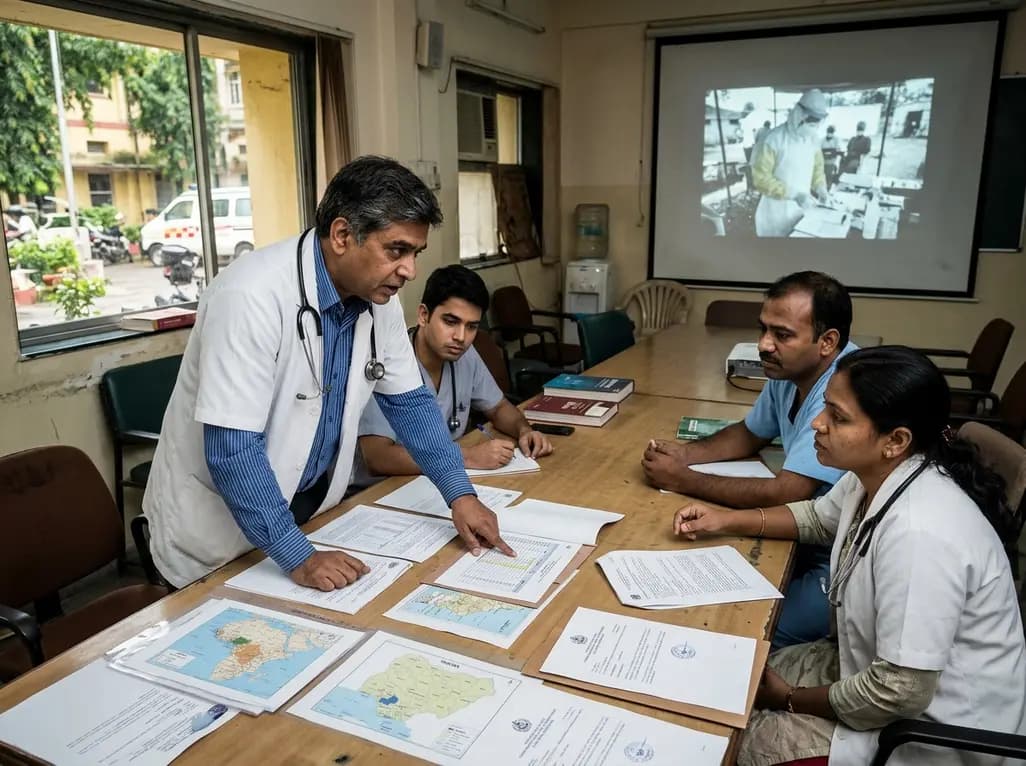
Following Nigeria's first recorded Ebola case linked to regional travel, the Africa CDC has convened an emergency ministerial summit. This alert underscores critical clinical priorities for healthcare professionals, including differentiating early viral infection from malaria, implementing barrier nursing, and triage.
Today

Leucine Rich Bio has introduced South Asia's first comprehensive vaginal microbiome test, BugSpeaks. By profiling microbial dysbiosis, pathogens, and antimicrobial resistance, this next-generation diagnostic platform provides clinicians with deeper insights into recurrent infections, fertility, and reproductive health.
Today

Review how tailored exercise programs benefit frail older patients with heart failure. Explore pathophysiological mechanisms, individualized training prescriptions, and strategies to overcome adherence barriers in clinical practice.
Today

This comparative study evaluates posterior labral tears with and without glenohumeral instability, highlighting distinct demographic patterns, MRI underestimation in stable shoulders, and successful arthroscopic repair outcomes.
Today

A clinical study demonstrates that early intervention with tocilizumab, either as monotherapy or bridged with corticosteroids, achieves significant proptosis reduction and resolves active inflammation in treatment-naive thyroid eye disease.
Today
