.webp&w=384&q=75)

Loading, please wait...
Loading, please wait...
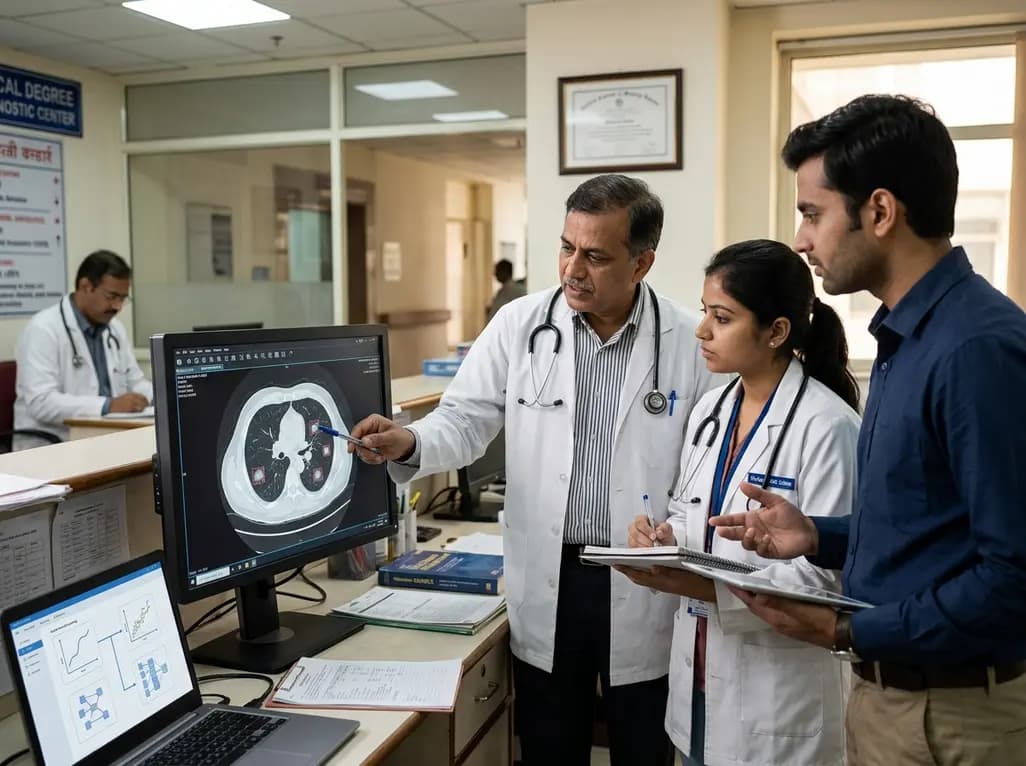
Medical image analysis AI is transforming modern diagnostics by enabling faster and more accurate disease detection. However, traditional deep learning models often struggle because they require massive amounts of labeled data. In medical settings, data scarcity and high labeling costs create significant hurdles. Consequently, researchers are exploring Few-Shot Learning (FSL) and Automated Machine Learning (AutoML) to overcome these limitations. Similarly, these technologies allow models to learn from fewer samples and automate complex design processes.
Moreover, AutoML reduces the need for human experts by automating model optimization. Because engineers integrate domain-specific knowledge, such as anatomical structures, the models become more interpretable. Therefore, this integration ensures that AI tools align more closely with clinical reality. In addition, metric-based FSL approaches offer more stability than gradient-based methods when data is scarce.
Current research indicates that unified frameworks improve diagnostic significance. Furthermore, the inclusion of clinical priors improves the clinical reliability of these automated systems. However, most existing studies still treat these technologies separately. For instance, a unified framework that combines domain knowledge with AutoML-enhanced FSL could revolutionize diagnostics. As a result, this synergy is particularly vital for rare diseases where large datasets are impossible to collect.
Additionally, future research must focus on creating pipelines that require less computational power. Standardized evaluation protocols are also necessary to ensure these tools work across different clinical environments. Finally, these advancements will lead to more robust and transparent diagnostic aids for healthcare professionals worldwide.
Few-Shot Learning allows AI models to detect diseases using very few training images, which is essential for diagnosing rare conditions where data is limited.
Domain knowledge incorporates medical expertise and anatomical facts into AI models, making the results more accurate and easier for clinicians to understand.
Disclaimer: This content is for informational and educational purposes only. It does not constitute medical advice or a professional relationship. Always seek the advice of a qualified healthcare provider for any questions regarding a medical condition. Refer to the latest local and national guidelines for clinical practice.
References
Ragu N et al. Towards integrating domain knowledge, AutoML and few-shot learning for medical image analysis: a mini review of current trends and research gaps. Radiol Phys Technol. 2026 Jun 06. doi: 10.1007/s12194-026-01077-3. PMID: 42250205.
Pachetti E, et al. A systematic review of few-shot learning in medical imaging. Artificial Intelligence in Medicine. 2024.
Ng YS & Westphalen AC. Artificial Intelligence Sees the Image, Radiologists See the Patient. American Journal of Roentgenology. 2026.

Read summarized clinical updates, watch expert medical content, and earn CME certifications right from your smartphone.
Open your smartphone camera to scan and install.





A mini-review exploring how Few-Shot Learning, AutoML, and domain knowledge integrate to enhance medical image analysis in data-constrained environments....
4 months ago

Review how tailored exercise programs benefit frail older patients with heart failure. Explore pathophysiological mechanisms, individualized training prescriptions, and strategies to overcome adherence barriers in clinical practice.
Today

Leucine Rich Bio has introduced South Asia's first comprehensive vaginal microbiome test, BugSpeaks. By profiling microbial dysbiosis, pathogens, and antimicrobial resistance, this next-generation diagnostic platform provides clinicians with deeper insights into recurrent infections, fertility, and reproductive health.
Today

In high-risk pulmonary embolism complicated by severe anemia and active uterine bleeding, systemic thrombolysis is contraindicated. Large-bore aspiration thrombectomy provides rapid hemodynamic rescue without fibrinolysis, supported by inferior vena cava filter placement and multidisciplinary critical care.
Today

This comparative study evaluates posterior labral tears with and without glenohumeral instability, highlighting distinct demographic patterns, MRI underestimation in stable shoulders, and successful arthroscopic repair outcomes.
Today

A clinical study demonstrates that early intervention with tocilizumab, either as monotherapy or bridged with corticosteroids, achieves significant proptosis reduction and resolves active inflammation in treatment-naive thyroid eye disease.
Today
