.webp&w=384&q=75)

Loading, please wait...
Loading, please wait...

Innovative pedagogical strategies are transforming undergraduate medical education worldwide. Specifically, the implementation of a medical escape room offers an experiential environment where preclinical students actively apply basic science principles. Medical educators often struggle to maintain high student engagement during conventional didactic lectures. In contrast, gamified simulations foster intrinsic motivation by placing learners in authentic, time-sensitive clinical scenarios. Preclinical training demands rigorous understanding of anatomy, physiology, and pathology. When learners encounter these concepts within interactive game environments, they contextualize abstract facts into practical problem-solving pathways. Furthermore, active gaming strategies encourage learners to confront clinical ambiguities without real-world patient risk. Consequently, students build psychological safety while tackling diagnostic hurdles together. Educational researchers increasingly recognize that gamification does not merely entertain; rather, it solidifies cognitive frameworks and sharpens collaborative instincts. Therefore, integrating structured game elements represents a necessary evolution in modern preclinical curricula. Ultimately, these interactive models inspire lifelong self-directed learning and professional curiosity among future clinicians.
Recent evidence underscores the substantial educational value of peer-led instructional design. In a comprehensive cross-sectional investigation, academic researchers evaluated 144 preclinical medical students across two consecutive academic years. The intervention featured an innovative, student-designed educational escape room that unified foundational medical sciences with simulation-based procedural stations. To capture student outcomes rigorously, investigators administered two validated psychometric instruments immediately following the exercise. Specifically, they utilized the Diabetes Escape Room Perception Scale to evaluate perceived educational value and professional teamwork. Simultaneously, researchers deployed the Gameful Experience Scale to measure multidimensional experiential factors, including absorption, creative thinking, activation, and mastery. Statistical analyses involved principal component analysis with Varimax rotation, Spearman rank correlations, and multiple linear regression models. Notably, 140 participants completed all questionnaires, yielding an outstanding completion rate of 97.2%. The cohort included 52.1% female participants with a mean age of 20.8 years. These rigorous statistical evaluations demonstrated that structured educational escape rooms reliably engage preclinical cohorts. Consequently, student-led curricular designs offer both high pedagogical integrity and robust psychometric validity across diverse academic cohorts.
The investigation revealed remarkably positive learner responses across all evaluated dimensions. Specifically, participants reported favorable overall perceptions, yielding an average perception score of 4.00 out of 5.00 on the validated scale. This result significantly exceeded the neutral midpoint, demonstrating genuine appreciation for the educational modality. Furthermore, reliability analyses confirmed excellent internal consistency for the gameful experience measurement tools. Participants experienced elevated levels of enjoyment, intense creative thinking, and strong feelings of mastery throughout the activity. Conversely, students reported a marked absence of negative affect, confirming that cognitive challenge did not trigger counterproductive distress or anxiety. More importantly, Spearman correlation analyses established strong, positive relationships between gameful experience dimensions and perceived educational utility. Subsequent multiple linear regression modeling identified enjoyment as the single most powerful predictor of overall positive perception and educational efficacy. In addition, creative thinking and mastery emerged as significant secondary predictors. Therefore, successful learning outcomes depend heavily on positive affective immersion and self-perceived competence during gamified clinical tasks.
Careful structural planning remains critical when faculty and students design gamified healthcare activities. Indeed, a successful medical escape room requires meticulous alignment between game mechanics and defined medical learning objectives. Creators must deliberately sequence puzzles so that solving each clue reinforces an essential clinical concept. For example, participants can decode physiological formulas, interpret abnormal electrocardiograms, or determine correct pharmacotherapy dosages to unlock successive diagnostic clues. Furthermore, incorporating physical procedural stations, such as basic airway management or sterile suturing tasks, bridges cognitive recall with essential psychomotor skills. Interprofessional collaboration also flourishes when puzzle mechanics require diverse team contributions and collective brainstorming. However, instructors must prevent cognitive overload by calibrating task difficulty appropriately. If challenges prove excessively difficult, participants experience frustration; conversely, overly simple clues induce boredom. Facilitators must maintain an optimal balance between challenge and competence to sustain flow. Additionally, scheduled post-game debriefing sessions anchor experiential learning into consolidated long-term memory. Through structured reflection, educators transform gameful excitement into lasting clinical acumen.
Modern competency-based medical curricula emphasize active inquiry, communication, and professional autonomy over passive memorization. Accordingly, the empirical success of student-designed escape rooms offers valuable insights for medical colleges navigating curricular reforms. In India and across global healthcare systems, regulatory bodies advocate learner-centric methodologies that foster critical thinking and compassionate teamwork. Gamified educational modules fulfill these mandates by cultivating non-technical competencies alongside clinical problem-solving. Moreover, involving junior and senior learners in co-creating escape rooms empowers them as proactive curricular partners. This collaborative co-design process deepens the designers' subject mastery while providing junior peers with highly relatable instruction. Additionally, low-cost physical materials combined with simple digital interfaces ensure that resource-limited institutions can replicate these activities effectively. Faculty development programs should therefore train academic clinicians in gamification theory, puzzle construction, and structured debriefing techniques. Ultimately, embedding gamified simulations within mainstream training programs modernizes healthcare education, fostering resilient, skilled, and team-oriented future physicians who thrive under real-world clinical demands.
A medical escape room bridges theoretical knowledge and practical application by immersing students in simulated clinical dilemmas. Consequently, learners must actively synthesize physiological principles, interpret diagnostics, and execute procedural skills under realistic time constraints. Furthermore, this dynamic setting promotes rapid clinical decision-making and collaborative problem-solving. As a result, students develop superior knowledge retention, heightened situational awareness, and enhanced diagnostic reasoning compared to passive lecture formats.
Educators frequently evaluate gamified interventions using validated psychometric instruments to capture experiential and pedagogical outcomes. Specifically, the Gameful Experience Scale assesses core dimensions such as enjoyment, absorption, activation, and mastery. Additionally, researchers adapt perception tools like the Diabetes Escape Room Perception Scale to measure collaborative teamwork, communication, and cognitive value. Consequently, combining these validated metrics provides instructors with comprehensive quantitative insights into both student engagement and curricular effectiveness.
Medical faculty can successfully embed escape rooms by directly aligning puzzle challenges with specific competency-based learning objectives. Moreover, educators should involve senior students in co-designing scenarios to guarantee peer relevance and realistic clinical complexity. Facilitators must also integrate structured debriefing sessions immediately following gameplay. Therefore, debriefing reinforces foundational concepts, clarifies clinical misconceptions, and allows participants to reflect meaningfully upon their teamwork and analytical problem-solving strategies.
Disclaimer: This content is for informational and educational purposes only... Refer to the latest local and national guidelines for clinical practice.
References

Read summarized clinical updates, watch expert medical content, and earn CME certifications right from your smartphone.
Open your smartphone camera to scan and install.





A cross-sectional study reveals that student-designed medical escape rooms significantly enhance preclinical education. By boosting enjoyment, collaboration, and mastery, serious gaming offers an effective, interactive pedagogy for healthcare learners navigating complex medical curricula.
Today

The Indian government is deliberating key amendments to Rule 30(1) of the Medical Devices Rules, 2017. Regulators including CDSCO and state licensing bodies may soon hold explicit legal authority to halt the production, distribution, and sale of substandard or spurious medical equipment and oversee rapid destruction.
Today

A recent longitudinal study evaluated the link between prenatal loss of control eating and cardiovascular health using Life's Essential 8 frameworks. While direct associations across pregnancy were non-significant, the high prevalence of dysregulated eating highlights critical implications for obstetric practice.
Today

Large-scale UK Biobank data reveals that persistent systemic inflammation driven by chronic psychosocial stress and adverse lifestyles silently induces myocardial remodeling. Patients exhibit thicker walls and reduced chamber volumes years before overt heart disease, demanding earlier biomarker-driven prevention.
Today
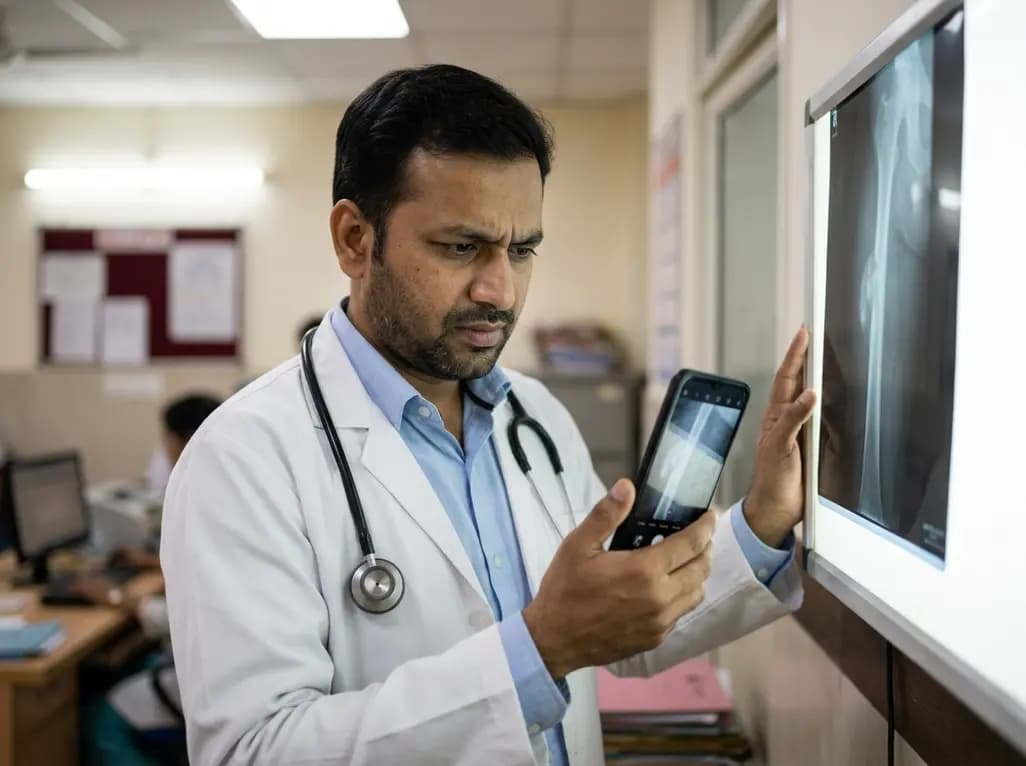
A retrospective study evaluating a locally deployed vision language model (Qwen3-VL) reveals that smartphone-captured radiographs and retrieval-augmented generation can paradoxically reduce diagnostic accuracy in bone tumor referrals due to optical noise and textual hallucinations.
Today
A real-world quasi-experimental study reveals that web-based apps fostering healthy habit formation significantly boost physical activity and dietary quality in adults. Discover key clinical insights on digital adherence, dose-response effects, and patient-specific modifiers in preventive medicine.
Today
