.webp&w=384&q=75)

Loading, please wait...
Loading, please wait...
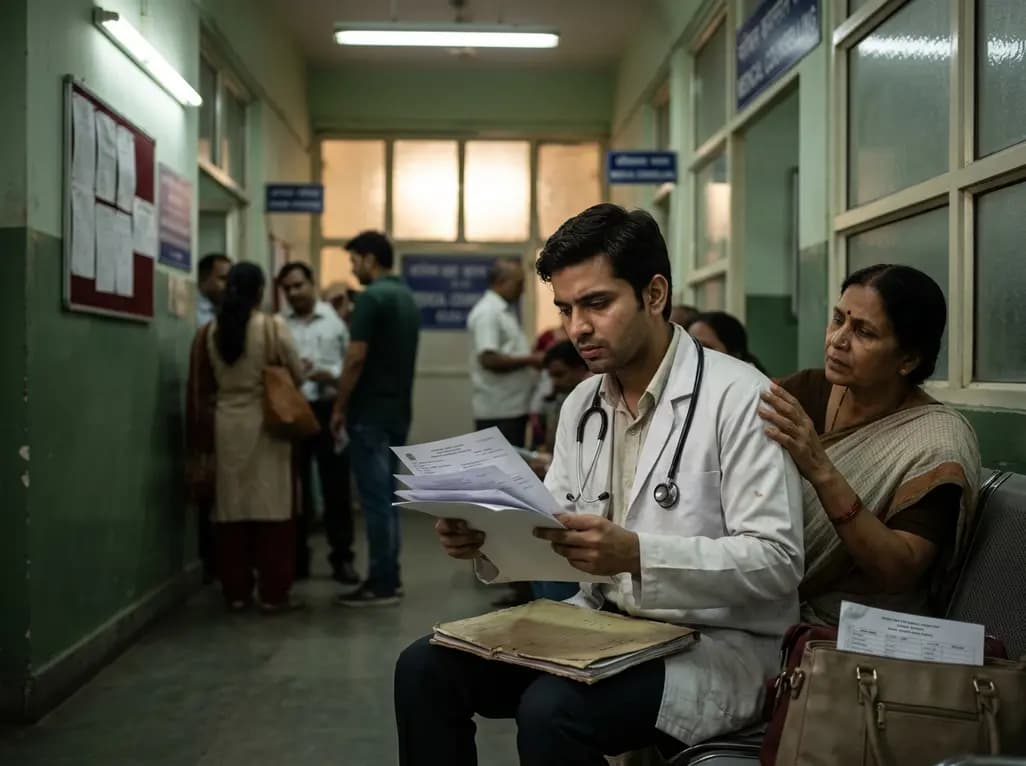
Medical admissions in India face an urgent structural dilemma during the concluding phases of undergraduate seat allocation. Recently, regulatory loopholes have highlighted the growing crisis of MBBS seat blocking across both central and state counselling portals. More than two thousand undergraduate medical seats, including over one thousand positions in prestigious government colleges, have unexpectedly transitioned into the stray vacancy round. Consequently, higher-scoring aspirants face severe disadvantages during regular counselling procedures. Therefore, medical educators and academic administrators must examine how these procedural failures disrupt fair student enrollment and meritocratic progression.
The current counselling framework inadvertently facilitates MBBS seat blocking through permissive allotment retention protocols. Under prevailing rules, candidates can secure a new allotment in subsequent rounds without forfeiting their earlier reservation immediately. Furthermore, students frequently participate concurrently in both the All India Quota managed by the Medical Counselling Committee and their respective state quotas. When an applicant secures an upgraded seat at an elite institution, they retain the freedom to decline it. Meanwhile, the system still holds their initial placement secure. For instance, a candidate admitted to Stanley Medical College gained an allotment at Madras Medical College during the third round. However, the student chose to remain at Stanley, causing the surrendered premier seat to bypass normal admission channels. Similarly, another candidate in Coimbatore declined an allotted government seat in Tiruvallur. Because neither seat was reallocated during the regular window, both positions lapsed directly into the stray round. Moreover, existing nominal financial penalties fail to deter candidates from hoarding valuable options. Thus, the lack of real-time seat forfeiture creates massive distortions across state and national medical rosters.
The systemic failure to fill seats during regular counselling imposes heavy financial hardships upon top NEET qualifiers. When higher-scoring candidates observe dwindling government vacancies during early rounds, they reluctantly secure admission in private medical colleges. In these private institutions, annual tuition charges frequently range from twenty-three lakh to thirty lakh rupees. Consequently, middle-class families incur enormous debts to protect their children's medical careers. However, when hundreds of government seats subsequently resurface in the stray round, these already enrolled students cannot participate. Counselling guidelines strictly prohibit previously admitted candidates from upgrading during stray allocations to prevent administrative disruption. As an unintended result, lower-scoring candidates gain unexpected entry into subsidized government institutions at a fraction of the cost. Meanwhile, meritorious students remain permanently bound to high-cost institutions despite achieving superior competitive ranks. This glaring discrepancy undermines the merit-based philosophy of standard national medical entrance examinations. Furthermore, it creates substantial moral distress among deserving candidates and their parents. Medical educators warn that such financial inequities erode institutional trust and academic morale across incoming professional cohorts.
Data published by the Medical Counselling Committee demonstrates the severe extent of seat abandonment following the third round. Specifically, the regulatory agency released a two-hundred-and-seventy-two-page compilation of candidates who failed to report by the designated October deadline. This extensive document confirmed that dozens of prestigious medical institutions suffered acute vacancy shortfalls. In Tamil Nadu alone, the third-round vacancy list cataloged one hundred and six unclaimed MBBS positions. Notably, two unclaimed seats emerged at Madras Medical College, one of India's most prestigious institutions. Furthermore, seven vacancies each were reported at Madurai Medical College and Government Medical College, Coimbatore. Most strikingly, AIIMS Madurai recorded ten unfilled positions despite tremendous national demand for premier central institute seats. In addition, dental and nursing courses experienced comparable patterns of last-minute seat non-reporting across multiple states. When premier government colleges lose candidates at this late stage, their infrastructure remains temporarily underutilized. Consequently, academic sessions begin with empty benches in vital tertiary medical facilities. These figures illustrate that vacancy accumulation is not an isolated occurrence, but a widespread institutional breakdown.
A fundamental driver of seat migration is the procedural disconnection between central and state selection authorities. Presently, the Medical Counselling Committee administers fifteen percent of all-India quota seats and all central university allotments. Conversely, state selection committees independently oversee eighty-five percent of local government seats alongside regional private college quotas. Although the Supreme Court directed authorities to weed out admitted candidates, integration remains poorly synchronized across portals. Therefore, candidates exploit timing lags by accepting one allotment while awaiting preferential results in another portal. Counselors observe that without an automated central registry, selection committees cannot detect concurrent seat engagements in real time. Additionally, current non-reporting fines between five thousand and ten thousand rupees offer virtually no deterrent for affluent candidates. Because candidate databases do not communicate instantaneously, seat blocking continues unchecked through the third round. As a direct consequence, authorities only discover vacant government seats after critical reporting deadlines expire. Without mandatory technical interoperability, state-level merit lists will perpetually suffer from distorted vacancy figures. Systemic harmonization must therefore replace fragmented administrative workflows to safeguard meritocratic admissions across India.
To restore fairness in medical admissions, education experts and faculty associations advocate for decisive structural reforms. First, authorities must establish a unified real-time dashboard linking central and state counselling databases prior to round three. Such an integrated software platform would automatically cancel a candidate's prior seat the instant a new allotment issues. Consequently, this immediate vacancy generation would allow higher-merit waitlisted students to secure rightful upgrades during regular cycles. Furthermore, regulatory bodies must introduce stringent deterrence mechanisms against casual seat abandonment. For instance, candidates who decline an allotted third-round seat should incur a mandatory one-year suspension from future NEET examinations. Additionally, administrative penalties must increase significantly beyond the current token fees to discourage reckless choice-locking practices. Synchronized counselling schedules between state directorates and central committees will also eliminate overlapping reporting windows. Most importantly, permitting controlled lateral upgrades for enrolled candidates before final stray rounds could rectify existing socioeconomic disparities. By enforcing transparent digital controls, regulatory agencies can ensure that public medical education remains fully accessible based on academic merit.
Q1: Why do government medical college seats move to the stray vacancy round?
Government MBBS seats transition to stray rounds when allotted candidates fail to report before official admission deadlines. Under existing counselling guidelines, students can decline newly assigned colleges while keeping their previous admissions secure. Furthermore, central and state selection databases lack real-time synchronization. Consequently, surrendered seats cannot undergo immediate reallocation during regular counselling rounds. These unclaimed positions inevitably lapse into final stray rounds, preventing regular waitlisted candidates from securing timely upgrades.
Q2: Why are previously enrolled private college students barred from stray rounds?
Counselling authorities enforce strict non-upgradation rules during stray vacancy rounds to establish institutional stability and conclude the academic admission cycle. If already enrolled students could freely vacate their seats at this late stage, private institutions would face sudden vacancies that cannot be refilled. Consequently, the Medical Counselling Committee restricts stray eligibility strictly to unallotted candidates. Unfortunately, this rigid safeguard penalizes higher-ranked students who previously joined costly private institutions to protect their academic careers.
Q3: What regulatory solutions can prevent seat blocking in NEET counselling?
Experts recommend implementing an automated national data dashboard that immediately cancels an existing seat when a candidate secures a higher preference. Additionally, authorities should replace minimal monetary penalties with strict academic consequences, such as a one-year examination debarment for candidates who abandon third-round allotments. Furthermore, aligning central and state counselling timelines ensures seamless seat processing. These coordinated measures prevent deliberate seat hoarding, preserve merit-based rankings, and ensure optimal seat utilization in subsidized government colleges.
Disclaimer: This content is for informational and educational purposes only. It does not constitute medical advice or replace professional judgment. Refer to the latest local and national guidelines for clinical practice.
References

Read summarized clinical updates, watch expert medical content, and earn CME certifications right from your smartphone.
Open your smartphone camera to scan and install.





Flaws in medical admission guidelines allow candidates to retain previously allotted seats while declining newly offered institutions. Consequently, hundreds of premier government medical seats migrate to stray vacancy rounds, leaving meritorious students trapped in expensive private colleges.
Today
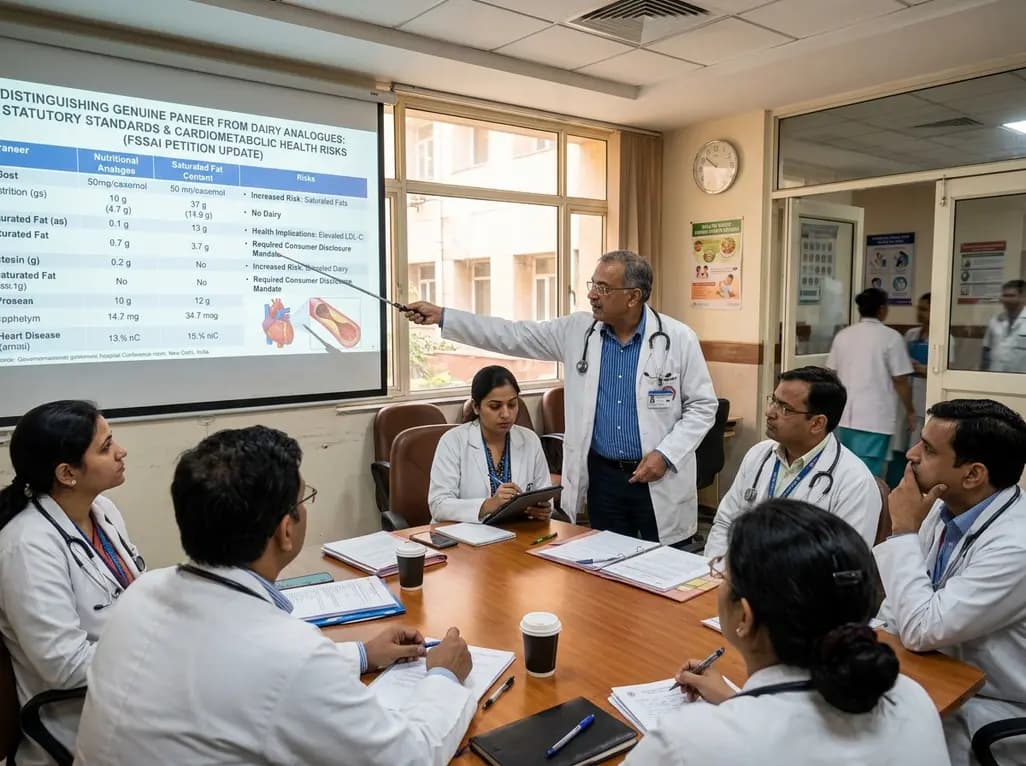
The Delhi High Court has directed the FSSAI and Centre to address petitions regarding dairy analogue products sold as genuine paneer. Learn about the statutory standards, nutritional differences, cardiometabolic health risks, and required consumer disclosure mandates in eateries across India.
Today

The government of Maharashtra is establishing a novel state-level Living Lab to elevate clinical outcomes, bridge public-private service gaps, and test real-world health interventions. By integrating digital innovations and frontline feedback, the platform fosters sustainable, equitable care models across communities.
Today
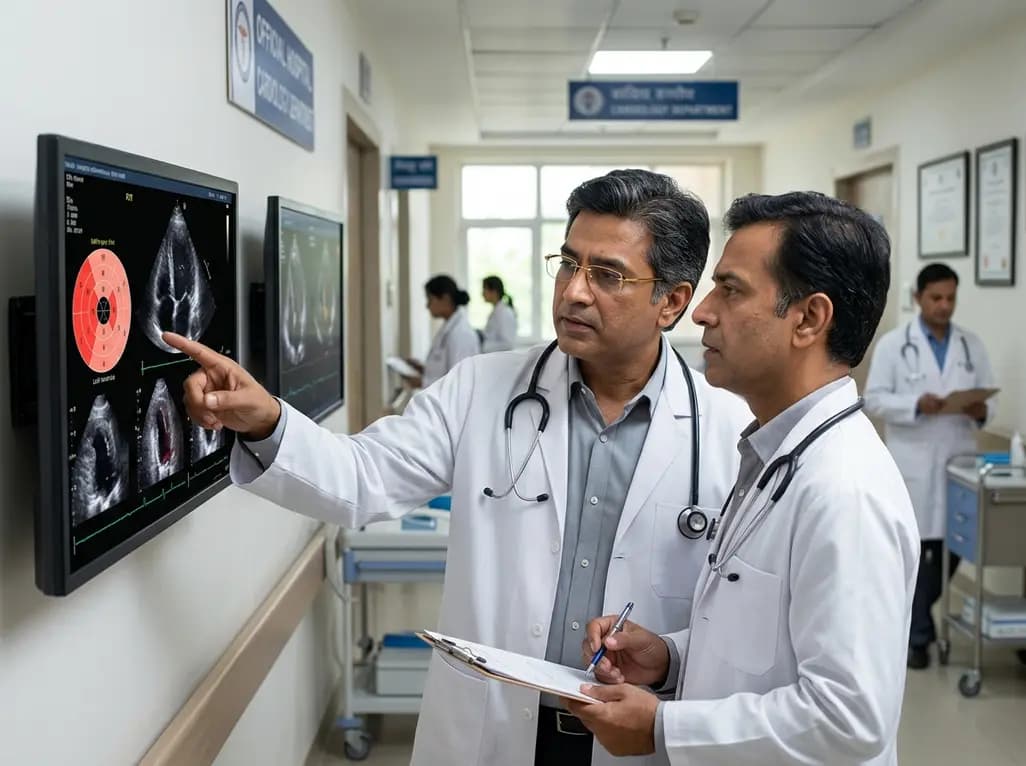
Cardiac involvement is the leading cause of mortality in EGPA. This report highlights an overlap phenotype of lymphocyte-predominant myocardial injury, Takotsubo-like cardiomyopathy, and left ventricular thrombus, emphasizing early multimodality diagnostics and aggressive immunosuppressive biologic therapy.
Today

The state government is deploying helicopter emergency medical services across the Mumbai-Pune Expressway, Samruddhi Mahamarg, and Mumbai-Goa Highway. This initiative establishes unified standard operating procedures to enable rapid triage, advanced prehospital resuscitation, and seamless trauma care transfers.
Today

A systematic review and meta-analysis of 5,406 participants reveals that tirzepatide significantly reduces hsCRP by 34.3%, improves cardiorenal biomarkers, and enhances functional capacity and exercise endurance in patients with heart failure.
Today
