.webp&w=384&q=75)

Loading, please wait...
Loading, please wait...

The Maharashtra government will launch an emergency air ambulance service across three major highways early next year. Consequently, this initiative accelerates acute trauma care for critically injured motorists. State authorities record 15,000 road accidents annually. Traffic congestion often delays conventional ambulances during the golden hour. Therefore, rapid aeromedical evacuation will bridge crucial transit intervals to save lives.
Road traffic crashes remain a leading cause of preventable mortality across Indian highways. Specifically, high-speed vehicular collisions inflict catastrophic polytrauma, massive internal hemorrhage, severe head trauma, and spinal injuries. In trauma medicine, the golden hour defines the crucial first hour following severe injury. During this specific window, rapid resuscitation and surgical intervention dramatically improve overall survival. However, ground-based ambulances frequently encounter debilitating gridlock on busy intercity expressways. Consequently, severely injured victims lose vital minutes awaiting roadside assistance or navigating congested corridors. Furthermore, secondary complications such as irreversible hemorrhagic shock, profound hypoxia, and brain ischemia rapidly worsen during prolonged transit. By introducing dedicated helicopter transport, medical teams can bypass surface congestion completely. As a result, critical care teams provide immediate point-of-injury resuscitation and expedite transfers directly to advanced trauma facilities. Additionally, international trauma registries show that reducing transport delays significantly lowers in-hospital mortality. Therefore, establishing rapid aerial evacuation along high-risk transport corridors resolves a longstanding healthcare vulnerability. In addition, early clinical stabilization reduces long-term physical disability and prevents multiple organ failure. Thus, rotary-wing deployment transforms trauma care into an effective, life-saving system.
State transport authorities have prioritized three critical expressways prone to high accident numbers and severe casualties. Specifically, the air ambulance service will cover the Mumbai-Nagpur Samruddhi Mahamarg, the Mumbai-Pune Expressway, and the Mumbai-Goa Highway. The Samruddhi Mahamarg stretches across broad rural distances where advanced surgical hospitals remain widely separated. Consequently, crash victims on this expressway frequently face protracted travel times before receiving essential neurotrauma treatment. Similarly, the Mumbai-Pune Expressway carries heavy daily vehicular traffic that repeatedly stalls ground ambulances during peak commuting hours. Meanwhile, the Mumbai-Goa Highway traverses challenging mountainous terrain that severely impedes rapid road transport. Therefore, positioning emergency aircraft along these designated corridors ensures dependable medical coverage for vulnerable transit routes. Furthermore, planners intend to build roadside helipads at regular intervals to expedite emergency landings and evacuations. Additionally, centralized dispatchers will track traffic monitoring cameras to identify collision locations immediately. As a result, flight paramedics can mobilize rapidly, initiate critical roadside interventions, and evacuate patients without highway delays. Moreover, this aerial network allows clinicians to direct unstable patients to hospitals with confirmed surgical capacity and ready operating suites.
Operating an efficient aeromedical response network requires meticulous administrative planning and inter-departmental collaboration. Consequently, the state government has mandated the finalization and approval of comprehensive standard operating procedures by mid-November. The transport department is working closely with health officials, regional police units, and aviation regulators. Furthermore, the Directorate General of Civil Aviation and air traffic control authorities must establish rapid flight authorization clearances. Local police teams will coordinate ground traffic management and secure safe helicopter landing zones along highway corridors. Meanwhile, receiving tertiary hospitals must establish dedicated trauma reception teams to meet inbound flights without procedural delays. Additionally, state authorities are creating a centralized command center to process emergency requests and coordinate flight logistics. This coordination hub will integrate emergency helpline services, highway patrols, and hospital networks into a unified system. Moreover, standardized clinical guidelines will ensure that flight paramedics adhere to uniform resuscitation standards aloft. Therefore, administrative alignment prevents communication failures and ensures swift airborne deployment when critical emergencies occur. In addition, scheduled inter-agency drills will test emergency communication channels and reinforce institutional readiness. Thus, structured multi-agency collaboration safeguards patient safety throughout prehospital transit.
Modern helicopter ambulances function as sophisticated intensive care units rather than simple patient transport vehicles. Specifically, these specialized aircraft carry advanced life-support equipment to stabilize severely injured polytrauma patients. Certified flight physicians and critical care paramedics can perform immediate airway interventions, including rapid sequence intubation. Furthermore, medical personnel can administer point-of-care blood transfusions, advanced electrocardiographic monitoring, and portable ultrasonography. In cases of massive hemorrhage, starting early blood product resuscitation suppresses the lethal triad of hypothermia, acidosis, and coagulopathy. Similarly, patients suffering from acute traumatic brain injuries receive controlled mechanical ventilation and targeted neuroprotective therapy aloft. However, flight transport introduces unique environmental stressors, such as airframe vibrations, acceleration forces, and barometric pressure fluctuations. Consequently, flight clinicians must continuously calibrate infusion pumps, secure endotracheal tubes, and evaluate chest drainage devices. Therefore, providing specialized critical care aloft bridges the dangerous interval between field injury and definitive hospital care. As a result, trauma surgeons receive pre-stabilized patients, enabling immediate damage-control surgery or emergent craniotomies without delay. In addition, real-time telemetry transmits vital clinical data directly to surgical teams well before the helicopter arrives. Thus, airborne care substantially improves patient survival odds.
Despite substantial clinical benefits, operating a 24x7 aeromedical evacuation network presents complex operational and financial challenges. Specifically, executing safe flights during severe monsoons, low-visibility fog, and nighttime hours demands specialized aviation technology. Helicopters require forward-looking infrared sensors, advanced terrain-awareness alert systems, and certified night-vision flight capabilities. Furthermore, roadside helipads require certified perimeter illumination, adequate fire suppression gear, and trained security personnel. Aviation analysts also caution that significant capital expenditures and continuous maintenance costs could strain state resources. Therefore, policymakers must establish sustainable healthcare financing mechanisms to maintain continuous emergency operations. Experts strongly recommend integrating aeromedical evacuation coverage into statutory motor vehicle insurance policies and public health schemes. In addition, allocating resources from the state road safety corpus can reliably subsidize recurring flight expenditures. Public-private partnerships can also optimize fleet operations while maintaining strict clinical and aeronautical standards. Ultimately, robust financial planning ensures that lifesaving air evacuation remains universally accessible rather than a luxury for privileged individuals. Consequently, stable funding prevents service interruptions while securing reliable emergency trauma coverage for all motorists. Thus, equitable funding models ensure durable emergency medical care across Maharashtra.
Q1: Why is the golden hour crucial for highway accident victims?
The golden hour represents the crucial sixty-minute window following traumatic injury when prompt medical intervention most effectively prevents death. During this vital period, uncontrolled hemorrhage, expanding intracranial hematomas, and respiratory failure can rapidly cause irreversible physiological collapse. Consequently, rapid aeromedical evacuation ensures that trauma victims reach specialized surgical care before catastrophic deterioration occurs, significantly reducing mortality and preventing permanent disability.
Q2: Which highway routes will feature the new air ambulance service?
The Maharashtra state government will deploy the emergency service along three high-risk transit routes: the Mumbai-Nagpur Samruddhi Mahamarg, the Mumbai-Pune Expressway, and the Mumbai-Goa Highway. These busy corridors frequently experience severe vehicle crashes alongside rugged terrain or traffic congestion that delay ground ambulances. Therefore, stationed emergency helicopters will provide rapid aerial extraction, seamlessly transporting unstable victims directly to tertiary trauma centers.
Q3: What critical medical care can flight crews provide during transit?
Air ambulances operate as flying intensive care suites staffed by specialized flight doctors and critical care paramedics. The aircraft carries advanced life-support equipment, including mechanical ventilators, cardiac monitors, defibrillators, and point-of-care ultrasound devices. Additionally, flight crews administer blood component transfusions, perform advanced airway intubations, and manage chest trauma aloft. Consequently, injured motorists receive continuous advanced resuscitation throughout their flight to the hospital.
Disclaimer: This content is for informational and educational purposes only. It does not constitute medical advice or replace professional judgment. Refer to the latest local and national guidelines for clinical practice.
References

Read summarized clinical updates, watch expert medical content, and earn CME certifications right from your smartphone.
Open your smartphone camera to scan and install.





The state government is deploying helicopter emergency medical services across the Mumbai-Pune Expressway, Samruddhi Mahamarg, and Mumbai-Goa Highway. This initiative establishes unified standard operating procedures to enable rapid triage, advanced prehospital resuscitation, and seamless trauma care transfers.
Today
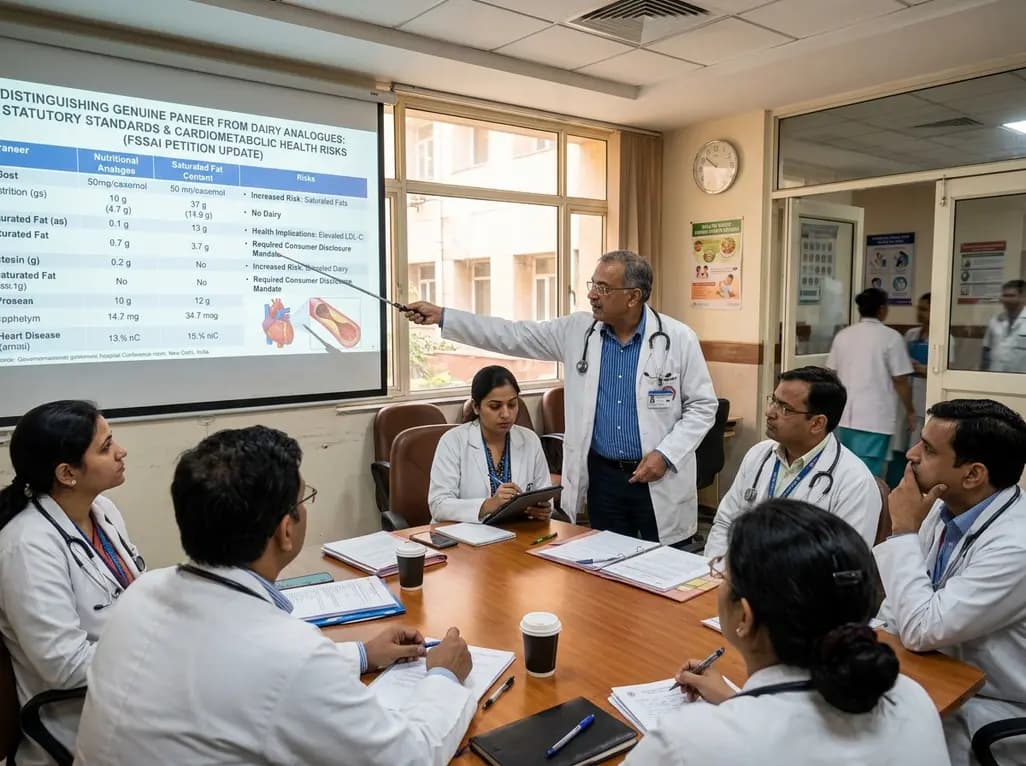
The Delhi High Court has directed the FSSAI and Centre to address petitions regarding dairy analogue products sold as genuine paneer. Learn about the statutory standards, nutritional differences, cardiometabolic health risks, and required consumer disclosure mandates in eateries across India.
Today

The government of Maharashtra is establishing a novel state-level Living Lab to elevate clinical outcomes, bridge public-private service gaps, and test real-world health interventions. By integrating digital innovations and frontline feedback, the platform fosters sustainable, equitable care models across communities.
Today
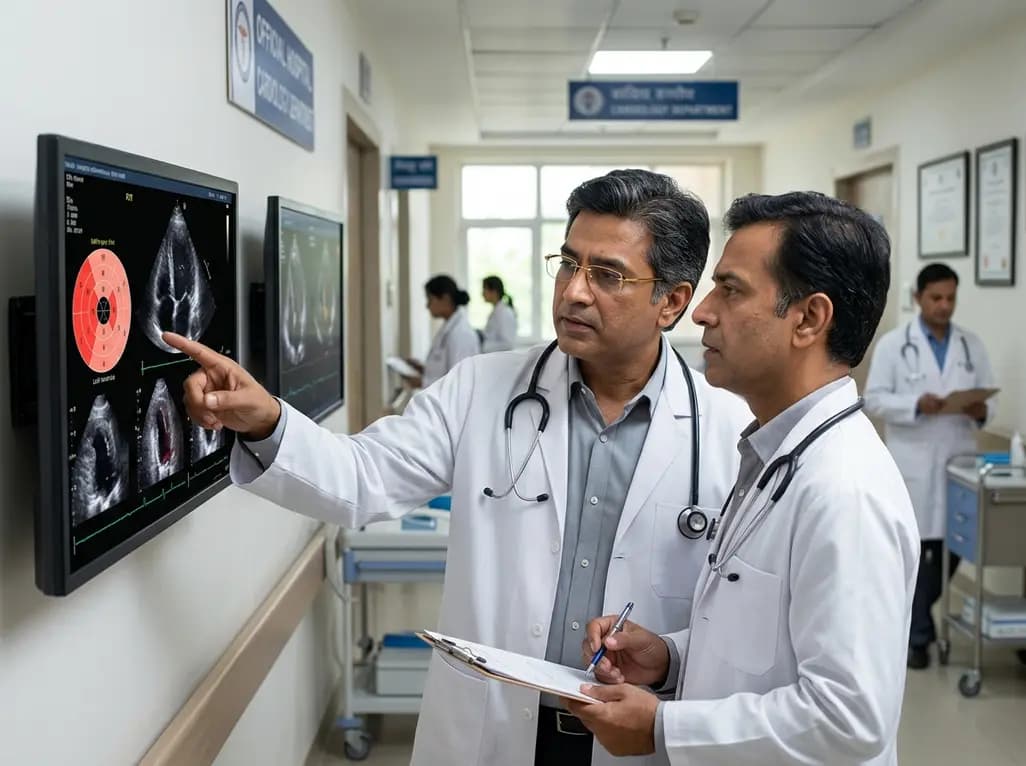
Cardiac involvement is the leading cause of mortality in EGPA. This report highlights an overlap phenotype of lymphocyte-predominant myocardial injury, Takotsubo-like cardiomyopathy, and left ventricular thrombus, emphasizing early multimodality diagnostics and aggressive immunosuppressive biologic therapy.
Today

A systematic review and meta-analysis of 5,406 participants reveals that tirzepatide significantly reduces hsCRP by 34.3%, improves cardiorenal biomarkers, and enhances functional capacity and exercise endurance in patients with heart failure.
Today
