.webp&w=384&q=75)

Loading, please wait...
Loading, please wait...

Healthcare systems across India face rapid transformation to meet increasing clinical demands. Consequently, health authorities continually seek scalable models to upgrade clinical outcomes and facility performance. Maharashtra has recently pioneered a progressive initiative to address these challenges. The state government is developing a state-level Living Lab designed to advance healthcare quality standards through systematic, real-world experimentation. Furthermore, this collaborative platform unites policymakers, medical practitioners, technology pioneers, and grassroots communities. By directly evaluating novel interventions within existing delivery systems, the program ensures that modern medical advances actively serve vulnerable populations. Ultimately, this approach reimagines clinical excellence and equitable care delivery.
Traditional health interventions often fail because developers test them in artificial isolation. In contrast, the Living Lab model embeds clinical problem-solving directly within local communities. Health administrators and medical professionals identify acute community priorities through structured dialogue. Subsequently, teams design targeted solutions that align with local cultural and operational contexts. This methodology allows healthcare workers to pilot interventions within functioning clinics and public hospitals. Therefore, practitioners can evaluate real-world efficacy before committing massive public resources. In addition, the initiative bridges academic researchers, technology developers, and frontline service providers. These diverse groups exchange real-time feedback to refine clinical protocols and workflow tools. For example, clinicians can swiftly report implementation bottlenecks to software developers and administrative leaders. As a result, hospitals avoid cumbersome administrative delays during system upgrades. Moreover, the platform cultivates local ownership among healthcare workers and citizens alike. This participative environment encourages physicians to champion operational changes rather than resist top-down mandates. Over time, validated concepts move from localized testing phases into standardized protocols across district facilities. Ultimately, this structured pipeline ensures that health innovations solve practical clinical hurdles efficiently.
Sustained clinical excellence requires strict adherence to standardized treatment guidelines and facility safety protocols. Therefore, the Living Lab prioritizes the institutionalization of robust healthcare quality standards across secondary and tertiary facilities. Health teams often struggle with inconsistent recordkeeping and irregular compliance audits. However, the integration of digital health architecture and artificial intelligence offers transformative solutions to these persistent challenges. Automated diagnostic algorithms and digital registries streamline patient data collection at the bedside. Consequently, medical officers can monitor clinical trajectories with unprecedented precision. Furthermore, predictive analytics assist doctors in identifying high-risk patients before acute deterioration occurs. Precision health approaches tailor disease management to specific patient demographics, which significantly reduces adverse events. Quality improvement teams also utilize centralized analytics dashboards to assess infection control, medication errors, and hospital readmissions. For instance, real-time surveillance helps nursing teams maintain strict sterilization protocols in intensive care settings. In addition, routine data synthesis eliminates subjective discrepancies in regulatory reporting. Public and private hospitals can benchmark their performance against established national guidelines seamlessly. Thus, frontline healthcare professionals deliver safer, evidence-based care consistently across clinical departments. Ultimately, this digital transformation shifts quality assurance from sporadic administrative audits to continuous, proactive clinical vigilance.
A resilient health ecosystem depends on meaningful synergy between public infrastructure and private expertise. Historically, fragmented efforts between these two sectors generated operational redundancies and resource waste. In contrast, Maharashtra’s new strategy actively connects private technical prowess with overarching public health priorities. Private healthcare providers possess sophisticated specialized equipment and advanced digital capabilities. Meanwhile, the public sector maintains extensive community reach and administrative trust. Therefore, joint initiatives enable both sectors to co-design affordable, practical solutions tailored to underserved communities. Additionally, structured public-private partnerships accelerate technology transfer to rural health centers and sub-district hospitals. Medical specialists from private institutions can conduct virtual case reviews with rural primary care doctors. As a result, complex cases receive expert multidisciplinary input without requiring burdensome patient transfers. Furthermore, private technology developers gain essential testing grounds to validate their tools under rigorous conditions. This collaborative dynamic prevents expensive medical innovations from serving only affluent metropolitan centers. Instead, strategic alignment ensures equitable resource allocation across all socioeconomic strata. Consequently, patients benefit from comprehensive, cost-effective treatment pathways throughout the care continuum. Ultimately, bridging public and private sectors fosters an interconnected ecosystem that enhances healthcare accessibility for every citizen.
Maternal and neonatal healthcare provides a compelling blueprint for this collaborative, quality-driven framework. Specifically, the 'Manyata' initiative spearheaded by FOGSI serves as a practical, foundational precedent. Manyata standardizes clinical quality in private maternity facilities through targeted training and rigorous peer-led assessments. Furthermore, the program coordinates closely with government initiatives like LaQshya to reinforce essential intrapartum care protocols. The MSD for Mothers initiative actively supports this model by fostering cross-sector partnerships and sustainable financing mechanisms. Consequently, obstetricians and labor room nurses receive hands-on training in managing postpartum hemorrhage and preeclampsia. In addition, participating nursing homes practice structured emergency obstetric drills to reduce preventable maternal morbidity. These standardized clinical guidelines dramatically improve patient safety during labor and delivery. Moreover, the Manyata framework demonstrates that private practitioners eagerly adopt quality benchmarks when training remains supportive and transparent. The Living Lab plans to adapt this successful methodology across other clinical specialties. For example, cardiology and oncology teams can emulate these structured certification pathways to standardize primary disease management. Accordingly, institutional deliveries achieve higher survival metrics and lower complication rates state-wide. Ultimately, continuous provider upskilling transforms maternal care into a predictable, high-quality experience for every mother.
Healthcare expansion requires not only medical infrastructure but also a highly skilled, adaptable workforce. Therefore, subsequent phases of the Living Lab emphasize local workforce development and healthcare entrepreneurship across rural districts. Health systems often experience severe technical talent shortages in remote primary care centers. However, targeted training programs can empower local youth as certified allied health professionals and medical technicians. These newly trained workers maintain biomedical equipment, operate teleconsultation suites, and manage digital health records. Consequently, rural clinics experience fewer diagnostic delays and equipment breakdowns. In addition, the initiative encourages community-level enterprise creation centered around preventative health and diagnostic point-of-care delivery. Local health entrepreneurs can establish accredited testing kiosks in remote villages. Furthermore, frontline workers, including community health officers and nurses, receive structured certifications in digital monitoring tools. This localized capacity-building model creates dignified employment opportunities while directly strengthening community health resilience. Moreover, retention rates improve because technicians and health assistants work within their home districts. As a result, public health expenditures yield double dividends in clinical improvement and local economic development. Thus, communities build self-sufficient ecosystems capable of addressing emergent healthcare crises independently. Ultimately, integrating employment generation with healthcare innovation ensures long-term operational sustainability across Maharashtra.
Q1: What is the primary purpose of the Maharashtra Living Lab in healthcare?
The Maharashtra Living Lab serves as a state-level collaborative platform designed to test, validate, and scale community-focused healthcare innovations within real-world clinical environments. By bridging the public health sector, private medical providers, academic researchers, and technology developers, it identifies localized health priorities. The initiative ensures that modern medical advances, such as artificial intelligence and precision medicine, directly improve clinical quality standards and treatment pathways in underserved rural and urban populations.
Q2: How does the FOGSI Manyata initiative contribute to this healthcare model?
The FOGSI Manyata initiative exemplifies how structured quality improvement protocols can strengthen maternal care across private maternity centers. Supported by MSD for Mothers, the program trains clinical staff in 16 evidence-based clinical standards, emergency obstetric drills, and infection management. Within the Living Lab framework, Manyata demonstrates that peer-led quality audits and provider upskilling can effectively integrate private facilities into broader public health priorities, drastically reducing maternal and perinatal complications statewide.
Q3: In what ways will the Living Lab impact healthcare employment and local skills?
Beyond technological adoption, the Living Lab invests heavily in local skill building, employment creation, and healthcare enterprise incubation. The program provides structured technical training for allied health personnel, laboratory technicians, and biomedical equipment operators in underserved districts. Furthermore, it supports rural youth in establishing decentralized diagnostic kiosks and teleconsultation services. This initiative bridges critical rural healthcare workforce shortages while driving local economic self-sufficiency and ensuring sustainable maintenance of community healthcare assets.
Disclaimer: This content is for informational and educational purposes only. It does not constitute medical advice or replace professional judgment. Refer to the latest local and national guidelines for clinical practice.
References

Read summarized clinical updates, watch expert medical content, and earn CME certifications right from your smartphone.
Open your smartphone camera to scan and install.





The government of Maharashtra is establishing a novel state-level Living Lab to elevate clinical outcomes, bridge public-private service gaps, and test real-world health interventions. By integrating digital innovations and frontline feedback, the platform fosters sustainable, equitable care models across communities.
Today
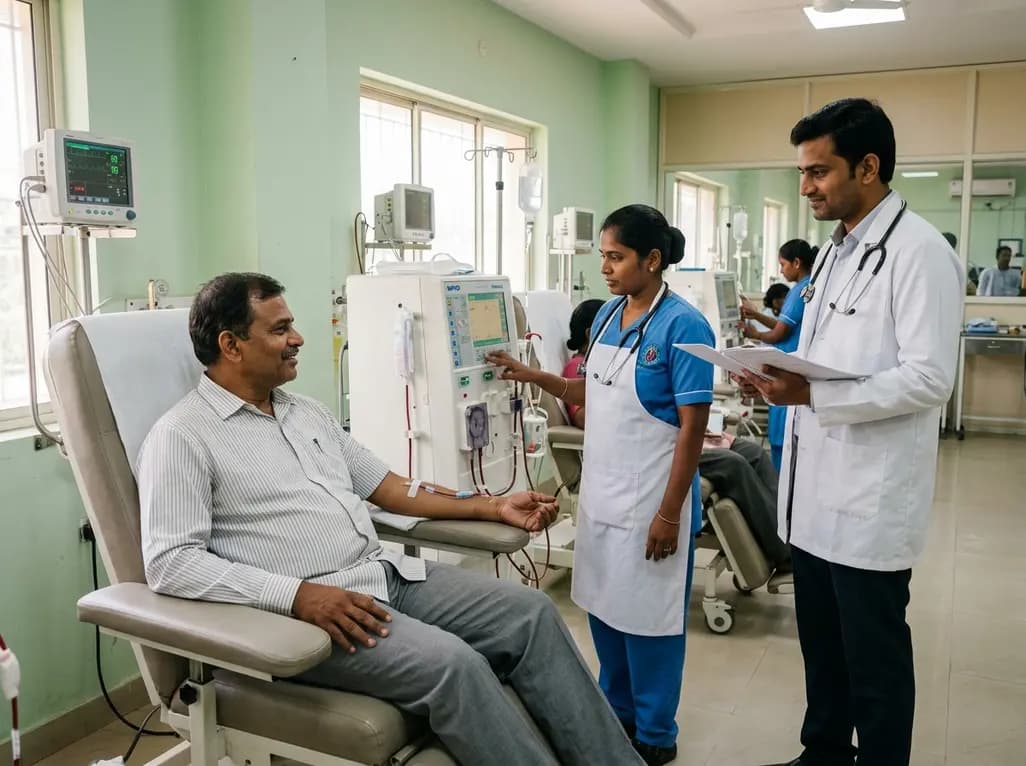
The Andhra Pradesh government is setting up 22 new dialysis units under the national program to broaden free renal replacement therapy. With high private care costs and growing end-stage renal disease cases, this decentralized expansion eases substantial financial and logistical burdens for rural kidney patients.
Today

Cardiac involvement is the leading cause of mortality in EGPA. This report highlights an overlap phenotype of lymphocyte-predominant myocardial injury, Takotsubo-like cardiomyopathy, and left ventricular thrombus, emphasizing early multimodality diagnostics and aggressive immunosuppressive biologic therapy.
Today

A landmark biomechanical study demonstrates that sports bra support and running shoe cushioning interact significantly to influence tibial acceleration, breast motion, and comfort in female runners, providing crucial insights for clinical counseling in sports medicine and women's health.
Yesterday

A systematic review and meta-analysis of 5,406 participants reveals that tirzepatide significantly reduces hsCRP by 34.3%, improves cardiorenal biomarkers, and enhances functional capacity and exercise endurance in patients with heart failure.
Today
