.webp&w=384&q=75)

Loading, please wait...
Loading, please wait...

Neonates in intensive care units frequently undergo essential yet painful medical procedures. In resource-limited settings, the shortage of analgesic medications often leaves these vulnerable patients with unmet needs. Consequently, clinicians are increasingly focusing on neonatal pain management interventions that are both safe and cost-effective. Non-pharmacological strategies offer a viable solution to mitigate pain while promoting maternal bonding. However, recent evidence suggests that the actual involvement of mothers in these interventions remains significantly suboptimal.
A descriptive qualitative study conducted in Malawi explored the experiences of 20 parents whose infants underwent painful procedures. The researchers identified several critical themes regarding maternal participation. While parents expressed a strong desire to be involved, they often felt excluded due to a lack of knowledge and systemic barriers within the healthcare system. Therefore, addressing these gaps is vital for improving neonatal outcomes in similar clinical environments.
Mothers can provide several effective non-pharmacological pain management interventions (NPPMI) during minor procedures. For instance, skin-to-skin contact, also known as Kangaroo Mother Care, significantly reduces physiological distress and crying time. Additionally, breastfeeding or the administration of expressed breast milk serves as a potent natural analgesic. Other techniques include swaddling, facilitated tucking, and non-nutritive sucking. These methods not only alleviate acute pain but also stabilize heart rates and oxygen saturation levels in preterm and term infants.
Despite the benefits, the study found that healthcare worker practices often hinder parental involvement. Many providers do not adequately educate parents on how to perform these techniques. Furthermore, the lack of clear clinical protocols makes maternal participation inconsistent. To rectify this, hospitals must implement structured educational programs. Moreover, healthcare teams should view parents as essential partners in care rather than passive observers.
The research highlighted that the lack of support from healthcare providers is a primary barrier to effective pain management. Mothers frequently reported feeling uncertain about their role during painful procedures. Similarly, environmental factors in busy neonatal units can discourage parental presence. Because untreated pain can lead to long-term neurodevelopmental issues, bridging the knowledge-practice gap is a medical priority. Clinicians in India and other developing nations can adopt these findings to enhance family-centered care models. In conclusion, empowering mothers with the right tools and information can transform neonatal pain management into a more holistic and successful practice.
Common methods include skin-to-skin contact (Kangaroo Mother Care), breastfeeding, non-nutritive sucking on a pacifier, and swaddling. These techniques help reduce the infant's perception of pain during needle pricks or other minor procedures.
Low involvement often stems from a lack of parental knowledge and insufficient guidance from healthcare staff. Additionally, a lack of formal protocols and busy ward environments can act as significant barriers to family-integrated care.
Disclaimer: This content is for informational and educational purposes only and does not constitute medical advice or a professional relationship. Always seek the advice of a physician or other qualified health provider with any questions you may have regarding a medical condition. Refer to the latest local and national guidelines for clinical practice.
References
1. Kilembe NCG et al. Maternal Involvement in Non-pharmacological Pain Management Interventions for Neonates. Adv Neonatal Care. 2026 Feb 11. doi: 10.1097/ANC.0000000000001326. PMID: 41671577.
2. Keels EL et al. Management of Pain in the Neonate. Pediatrics. 2016;137(2):e20154271. doi: 10.1542/peds.2015-4271.
3. Bhat BV. Non-pharmacologic Measures for Pain Relief in Preterm Neonates. Indian Pediatr. 2015;52(8):661-662.

Read summarized clinical updates, watch expert medical content, and earn CME certifications right from your smartphone.
Open your smartphone camera to scan and install.





A study explores maternal involvement in non-pharmacological pain relief for neonates, highlighting the need for parental education and structured protocols...
8 months ago
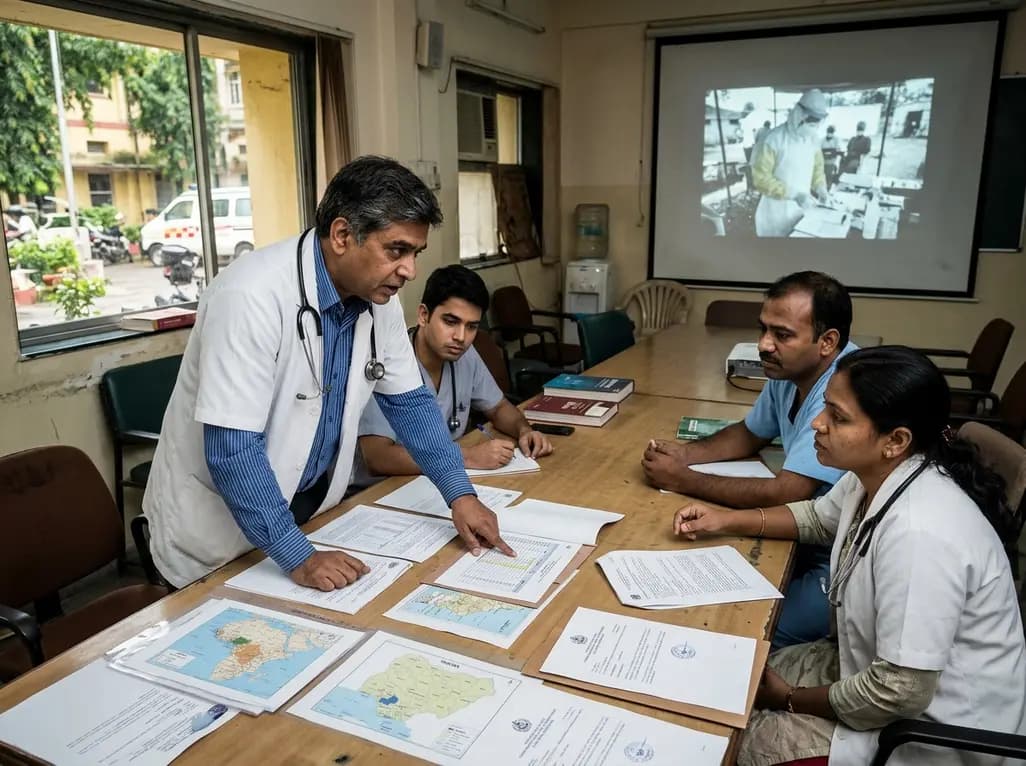
Following Nigeria's first recorded Ebola case linked to regional travel, the Africa CDC has convened an emergency ministerial summit. This alert underscores critical clinical priorities for healthcare professionals, including differentiating early viral infection from malaria, implementing barrier nursing, and triage.
Today

Leucine Rich Bio has introduced South Asia's first comprehensive vaginal microbiome test, BugSpeaks. By profiling microbial dysbiosis, pathogens, and antimicrobial resistance, this next-generation diagnostic platform provides clinicians with deeper insights into recurrent infections, fertility, and reproductive health.
Today

Review how tailored exercise programs benefit frail older patients with heart failure. Explore pathophysiological mechanisms, individualized training prescriptions, and strategies to overcome adherence barriers in clinical practice.
Today

This comparative study evaluates posterior labral tears with and without glenohumeral instability, highlighting distinct demographic patterns, MRI underestimation in stable shoulders, and successful arthroscopic repair outcomes.
Today

A clinical study demonstrates that early intervention with tocilizumab, either as monotherapy or bridged with corticosteroids, achieves significant proptosis reduction and resolves active inflammation in treatment-naive thyroid eye disease.
Today
