.webp&w=384&q=75)

Loading, please wait...
Loading, please wait...

Recent research highlights that maternal B-vitamin status plays a pivotal role in protecting fetal heart development from environmental toxins. Congenital heart disease (CHD) remains a leading cause of infant mortality worldwide. Emerging evidence suggests that prenatal exposure to persistent organic pollutants (POPs), including flame retardants and plasticizers, significantly increases this risk. However, a groundbreaking study published in BMC Medicine indicates that adequate levels of specific B vitamins may counteract these harmful effects.
The study analyzed prenatal exposure to 30 different POPs, including organophosphate esters (OPEs). Results showed that p-cresyl diphenyl phosphate was associated with a higher incidence of CHD (OR 1.36). Furthermore, the cumulative effect of chemical mixtures showed a consistent upward trend in cardiac risk. Notably, these pollutants are ubiquitous in modern environments, often found in household electronics and furniture, making them a significant concern for expectant mothers.
Researchers evaluated seven plasma B vitamins to determine their influence on fetal outcomes. Specifically, higher concentrations of pyridoxamine, pyridoxal, and Vitamin B12 were inversely associated with CHD risk. Maternal B-vitamin status essentially acted as a biological buffer against chemical stressors. In the interaction analysis, adequate B-vitamin levels significantly modified the association between POPs and CHD (OR 0.14). This suggests that nutritional interventions could attenuate the developmental cardiotoxicity of environmental pollutants during critical windows of gestation.
This study provides the first population-level evidence that maternal nutrition can modify environmental risk factors for CHD. For clinicians in India, where environmental pollution and nutritional deficiencies often coexist, these findings emphasize the importance of comprehensive prenatal screening. Consequently, supplementation and dietary counseling for B-complex vitamins may serve as a vital strategy to protect the developing heart from emerging chemical threats.
B vitamins like B6 and B12 are essential for one-carbon metabolism, which supports DNA synthesis and methylation. These processes are crucial for healthy organogenesis and help the body detoxify harmful environmental pollutants.
The study specifically identified p-cresyl diphenyl phosphate and various organophosphate ester mixtures as high-risk factors for congenital heart disease in offspring.
Disclaimer: This content is for informational and educational purposes only. It does not constitute medical advice or a professional relationship. Refer to the latest local and national guidelines for clinical practice.
References
Li S et al. Maternal B-vitamin status modifies the risk of congenital heart disease in offspring associated with prenatal persistent organic pollutants exposure. BMC Med. 2026 May 04. doi: 10.1186/s12916-026-04900-1. PMID: 42083004.
Wang L et al. Maternal B-vitamin intake and B-vitamin supplementation during pregnancy in relation to neonatal congenital heart defects: a case-control study with propensity score matching. BMC Pregnancy Childbirth. 2020 Nov 16;20(1):697. doi: 10.1186/s12884-020-03387-9.
Columbia University Mailman School of Public Health. Vitamin B Diminishes Effects of Air Pollution-Induced Cardiovascular Disease. 2017.

Read summarized clinical updates, watch expert medical content, and earn CME certifications right from your smartphone.
Open your smartphone camera to scan and install.





The first study to demonstrate that maternal B-vitamin status can attenuate the cardiotoxic effects of prenatal persistent organic pollutants (POPs) in offs...
5 months ago

A retrospective cohort study of 7,716 ICU patients from the MIMIC-IV database demonstrates that Gradient Boosting Decision Trees significantly outperform traditional SOFA scores in predicting in-hospital mortality among patients with sepsis and diabetes, with SHAP analysis providing clinical interpretability.
Today
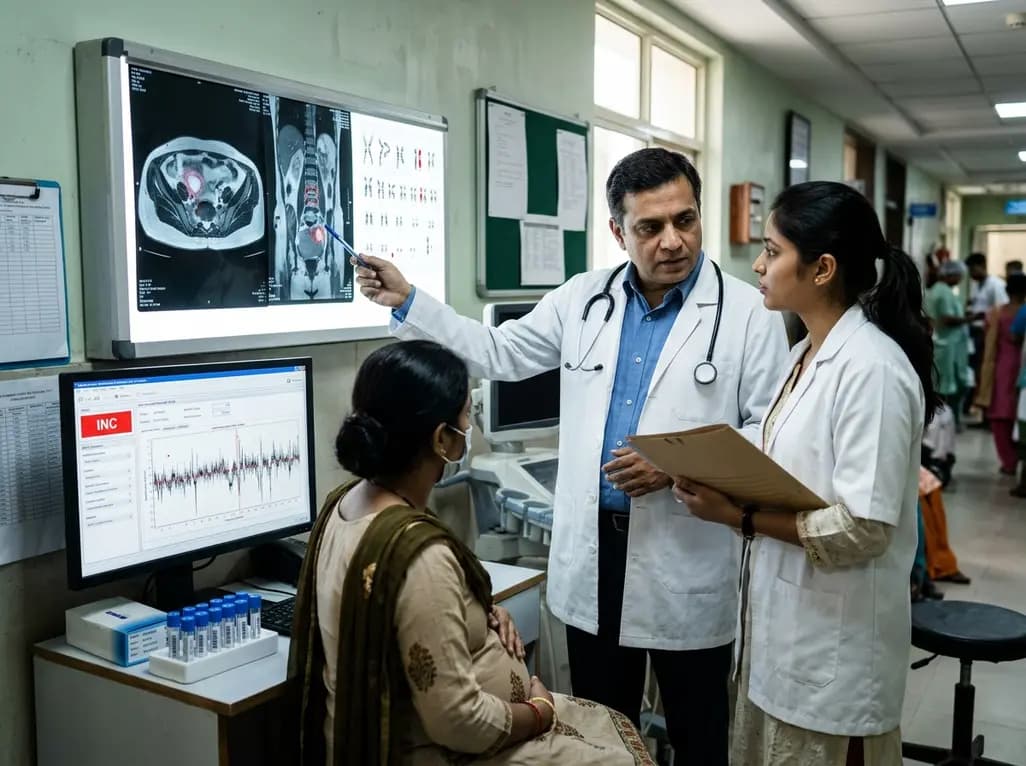
Occult maternal malignancy accounts for 3.82% of persistent unreportable NIPT results with genomic noise. Multiple chromosomal aberrations, notably on chromosome 18, warrant thorough oncological evaluation and whole-body MRI to ensure timely maternal diagnosis while preserving fetal care.
Today

This article reviews the forensic and clinical complexities of acute myocarditis arising on left ventricular hypertrophy in children, highlighting early diagnostic red flags and multidisciplinary postmortem autopsy protocols.
Today

This comparative study evaluates posterior labral tears with and without glenohumeral instability, highlighting distinct demographic patterns, MRI underestimation in stable shoulders, and successful arthroscopic repair outcomes.
Yesterday

A clinical study demonstrates that early intervention with tocilizumab, either as monotherapy or bridged with corticosteroids, achieves significant proptosis reduction and resolves active inflammation in treatment-naive thyroid eye disease.
Yesterday
