.webp&w=384&q=75)

Loading, please wait...
Loading, please wait...
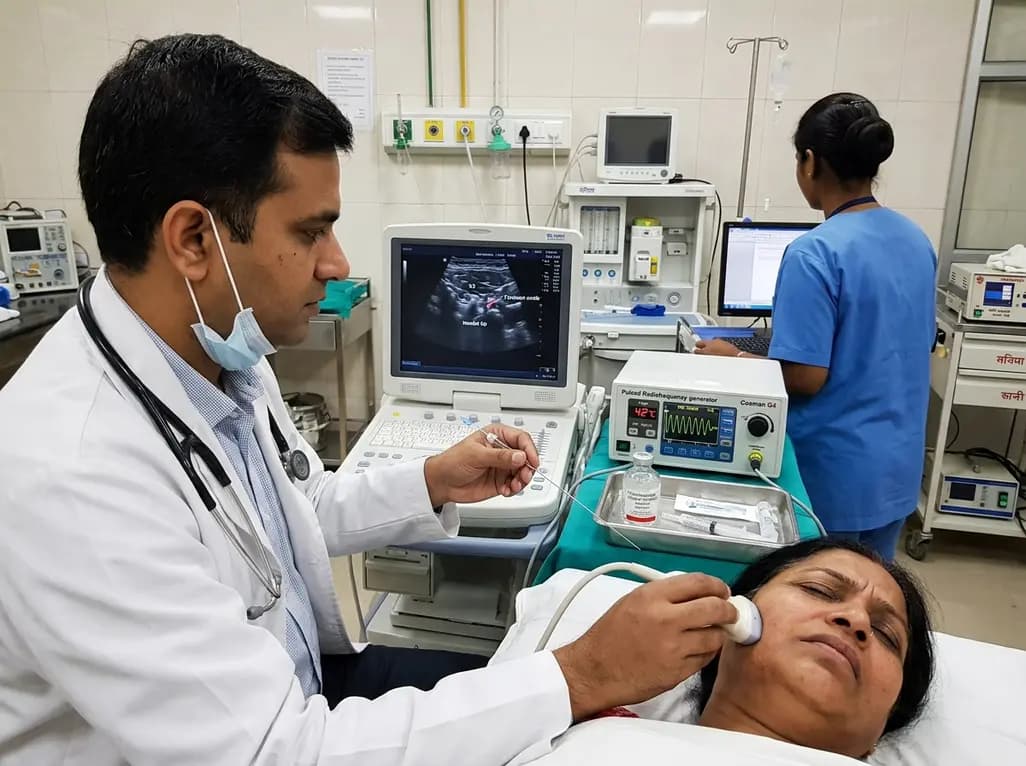
Managing refractory trigeminal neuralgia (TN) remains a significant challenge for pain specialists and neurologists. A recent retrospective study has shed light on the efficacy of mandibular nerve pulsed radiofrequency (PRF) when combined with low-dose perineural dexamethasone. This ultrasound-guided approach offers a minimally invasive alternative for patients who suffer from debilitating V3-distributed facial pain. Specifically, the integration of real-time imaging enhances precision while minimizing the risks associated with traditional fluoroscopic techniques.
Researchers analyzed 73 consecutive patients treated over a three-year period. Consequently, they observed a dramatic reduction in pain intensity. The mean Numeric Rating Scale (NRS) score dropped from nearly 7.0 at baseline to 2.22 at one month post-procedure. Although some pain intensity returned slightly by the six-month mark, the scores remained significantly lower than pre-treatment levels. Furthermore, the adjunct use of dexamethasone appeared to mitigate post-procedure inflammation, leading to high patient satisfaction and improved functional status.
The safety profile of this neuromodulatory technique is particularly noteworthy. Unlike thermal radiofrequency ablation, PRF does not rely on high temperatures to destroy nerve tissue. Instead, it uses electromagnetic fields to modulate pain signals at temperatures below 42°C. This distinction is vital because it reduces the incidence of sensory loss and anesthesia dolorosa. Moreover, the study reported no major complications, such as motor weakness or permanent numbness. Similarly, the reintervention rate remained low, suggesting that this protocol provides durable relief for many patients.
Clinicians should consider this ultrasound-guided method when medical management fails. Additionally, the transition to ultrasound allows for point-of-care delivery without exposing patients to radiation. In conclusion, the combination of V3 PRF and dexamethasone represents a promising, safe, and effective strategy for chronic facial pain management.
Pulsed radiofrequency is a non-destructive technique that uses electrical pulses to modulate nerve function without exceeding 42°C. In contrast, thermal ablation uses high heat to create a lesion, which carries a higher risk of permanent sensory deficits.
Dexamethasone serves as an anti-inflammatory adjunct. It helps reduce perineural edema and potential neuritis caused by needle placement or the electromagnetic field, thereby improving short-term recovery and comfort.
Ultrasound provides real-time visualization of soft tissues and vascular structures. This helps the clinician avoid blood vessels and ensures more accurate needle placement at the mandibular nerve without radiation exposure.
Disclaimer: This content is for informational and educational purposes only. It does not constitute professional medical advice, diagnosis, or treatment. Always seek the advice of your physician or other qualified healthcare provider with any questions you may have regarding a medical condition. Refer to the latest local and national guidelines for clinical practice.
References
Küçükbingöz Ç et al. Ultrasound-Guided Mandibular Nerve Pulsed Radiofrequency With Adjunct Dexamethasone in Trigeminal Neuralgia: A Retrospective Cohort Study. J Craniofac Surg. 2026 Jun 01. doi: 10.1097/SCS.0000000000012964. PMID: 42224005.
Zhao C, Ren H, Shrestha N, et al. The efficacy of combining pulsed radiofrequency with low-temperature continuous radiofrequency for the treatment of primary trigeminal neuralgia: a randomized controlled trial. J Neurosurg. 2025;143(1):100-110. doi: 10.3171/2024.10.JNS241274.
Can E, Genç Perdecioğlu GR, Yıldız G, et al. Evaluation of the efficacy of ultrasound-guided maxillary and mandibular nerve pulsed radiofrequency treatment for trigeminal neuralgia and factors associated with successful response: a retrospective study. Acta Neurol Belg. 2025 Feb;125(1):109-117. doi: 10.1007/s13760-024-02638-2.

Read summarized clinical updates, watch expert medical content, and earn CME certifications right from your smartphone.
Open your smartphone camera to scan and install.





A 2026 study highlights ultrasound-guided V3 pulsed radiofrequency with dexamethasone as a safe and effective treatment for trigeminal neuralgia pain relief...
4 months ago

As monsoon seasons elevate arboviral disease threats, Tamil Nadu has initiated an ICMR-monitored evaluation of the tetravalent dengue vaccine in Tenkasi district. Clinicians emphasize clinical monitoring, public prevention, and high-quality early pediatric care to reduce disease morbidity across endemic regions.
Today

Leucine Rich Bio has introduced South Asia's first comprehensive vaginal microbiome test, BugSpeaks. By profiling microbial dysbiosis, pathogens, and antimicrobial resistance, this next-generation diagnostic platform provides clinicians with deeper insights into recurrent infections, fertility, and reproductive health.
Today

Review how tailored exercise programs benefit frail older patients with heart failure. Explore pathophysiological mechanisms, individualized training prescriptions, and strategies to overcome adherence barriers in clinical practice.
Today

This comparative study evaluates posterior labral tears with and without glenohumeral instability, highlighting distinct demographic patterns, MRI underestimation in stable shoulders, and successful arthroscopic repair outcomes.
Today

A clinical study demonstrates that early intervention with tocilizumab, either as monotherapy or bridged with corticosteroids, achieves significant proptosis reduction and resolves active inflammation in treatment-naive thyroid eye disease.
Today
