.webp&w=384&q=75)

Loading, please wait...
Loading, please wait...
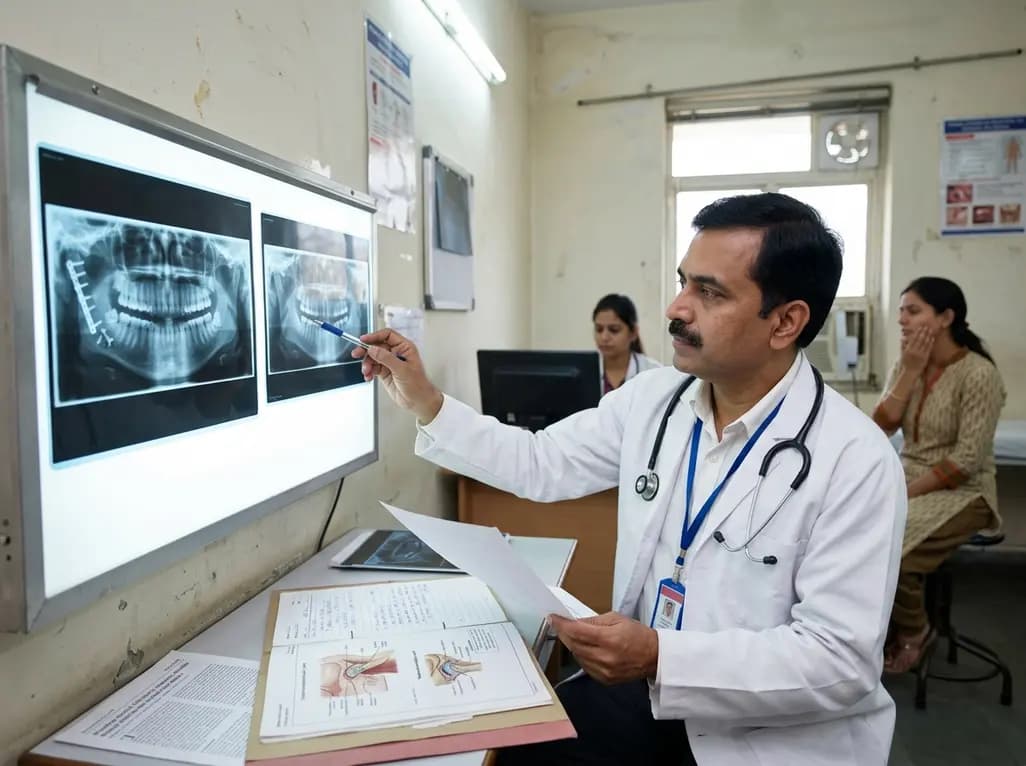
Mandibular condylar fracture management remains a critical topic in maxillofacial trauma due to the injury's high prevalence in males. While clinicians traditionally debated between open and closed approaches, recent studies offer clearer insights into long-term outcomes. This article examines a comparative study of 281 cases to help practitioners optimize their clinical decision-making.
The study analyzed outcomes for 144 conservative and 137 surgical cases. Interestingly, surgeons more frequently selected surgical intervention for complex scenarios, such as bilateral fractures. Consequently, the surgical group had a higher proportion of males and trauma cases related to violence. Both treatment modalities achieved comparable success in maintaining stable occlusion and painless jaw function. However, patients treated conservatively experienced joint sounds like clicking and crepitation more often.
Furthermore, multivariable analysis highlighted specific risk factors that influence recovery. For example, concurrent fractures significantly increased the likelihood of persistent joint sounds. Similarly, gender played a role, as women reported higher frequencies of pain both at rest and during movement. In addition, patients whose injuries resulted from interpersonal violence experienced more frequent symptoms. Therefore, clinicians must consider individual patient demographics and trauma etiology when planning the best course of action.
Ultimately, both conservative and surgical approaches provide effective functional results. While surgery is often necessary for complex injuries, conservative management remains a robust option for simpler cases. By understanding how gender and trauma type affect symptoms, doctors can better tailor their treatment strategies to improve long-term patient satisfaction.
Both treatments achieve comparable success in stable occlusion and jaw function, though surgery is often preferred for complex bilateral fractures.
Conservative management may lead to higher instances of clicking or crepitation because it does not involve the anatomical realignment achieved through open reduction.
Research indicates that women often report a higher frequency of pain during movement and at rest compared to men following treatment for condylar fractures.
Disclaimer: This content is for informational and educational purposes only. It does not constitute professional medical advice, diagnosis, or treatment. Always seek the advice of your physician or other qualified healthcare provider with any questions you may have regarding a medical condition. Refer to the latest local and national guidelines for clinical practice.
References
1. Eksell H et al. Conservative versus surgical management of mandibular condylar fractures: a comparative study. Acta Odontol Scand. 2026 Jun 15. doi: 10.2340/aos.v85.46063. PMID: 42290468.
2. Dikhit PS et al. A Comparative Evaluation of Surgical vs Conservative Modalities in Treatment of Condylar Fractures. Impactfactor. 2023; 25-09-2023.
3. Minervini G et al. Conservative treatment of temporomandibular joint condylar fractures: A systematic review conducted according to PRISMA guidelines and the Cochrane Handbook for Systematic Reviews of Interventions. J Oral Rehabil. 2023;50(8):725-738.

Read summarized clinical updates, watch expert medical content, and earn CME certifications right from your smartphone.
Open your smartphone camera to scan and install.





This comparative study evaluates conservative vs surgical management of mandibular condylar fractures. While both treatments achieve stable occlusion, factors like gender and trauma type significantly influence post-treatment symptoms such as pain and joint clicking.
4 months ago

As monsoon seasons elevate arboviral disease threats, Tamil Nadu has initiated an ICMR-monitored evaluation of the tetravalent dengue vaccine in Tenkasi district. Clinicians emphasize clinical monitoring, public prevention, and high-quality early pediatric care to reduce disease morbidity across endemic regions.
Today

Leucine Rich Bio has introduced South Asia's first comprehensive vaginal microbiome test, BugSpeaks. By profiling microbial dysbiosis, pathogens, and antimicrobial resistance, this next-generation diagnostic platform provides clinicians with deeper insights into recurrent infections, fertility, and reproductive health.
Today

Review how tailored exercise programs benefit frail older patients with heart failure. Explore pathophysiological mechanisms, individualized training prescriptions, and strategies to overcome adherence barriers in clinical practice.
Today

This comparative study evaluates posterior labral tears with and without glenohumeral instability, highlighting distinct demographic patterns, MRI underestimation in stable shoulders, and successful arthroscopic repair outcomes.
Today

A clinical study demonstrates that early intervention with tocilizumab, either as monotherapy or bridged with corticosteroids, achieves significant proptosis reduction and resolves active inflammation in treatment-naive thyroid eye disease.
Today
