.webp&w=384&q=75)

Loading, please wait...
Loading, please wait...

The Maharashtra government has established an expert task force to evaluate the social media impact minors experience. This initiative addresses growing concerns about children's mental health, behavior, and academic performance. Consequently, the panel will recommend regulatory and policy measures to ensure a safer digital environment. Notably, the decision follows findings that suggest a significant rise in mental health disorders among the youth.
The 13-member task force will examine usage patterns among individuals under 18 years old. Specifically, they will assess how digital platforms influence physical health and social development. Moreover, the group will investigate the effects of digital advertising on young minds. Furthermore, the committee aims to review national and international policies governing digital regulation. According to recent reports, nearly four crore children in Maharashtra may face mental health risks linked to excessive screen time.
Educators report that highly stimulating digital content often disrupts classroom engagement. For instance, quick-paced videos can adversely impact a student\'s attention span. Furthermore, schools are dealing with silent cases of cyberbullying within closed digital groups. These interactions often involve AI-generated deepfakes and memes that are difficult to track. Therefore, the task force includes representatives from academia and the Indian Psychiatric Society. They will review international regulations to propose practical, age-based restrictions. Finally, the focus remains on empowering parents and educators rather than implementing blanket bans.
Q1: What is the primary purpose of the Maharashtra task force?
The task force aims to study how social media affects the mental health, behavior, and learning of minors. It will recommend regulatory and policy measures to protect children while ensuring responsible technology use.
Q2: Who are the key members of this expert panel?
The panel is chaired by the school education department and includes officials from public health, IT, and law. It also features representatives from the Indian Psychiatric Society, NGOs, and various school principals.
Q3: How long does the task force have to submit its findings?
The government has asked the task force to submit a detailed report with specific recommendations within three months of its formation.
Disclaimer: This content is for informational and educational purposes only. It does not constitute medical advice or replace professional judgment. Refer to the latest local and national guidelines for clinical practice.
References

Read summarized clinical updates, watch expert medical content, and earn CME certifications right from your smartphone.
Open your smartphone camera to scan and install.





Maharashtra forms a task force to study the impact of social media on minors' mental health and behavior, aiming to frame a new regulatory policy framework....
6 months ago
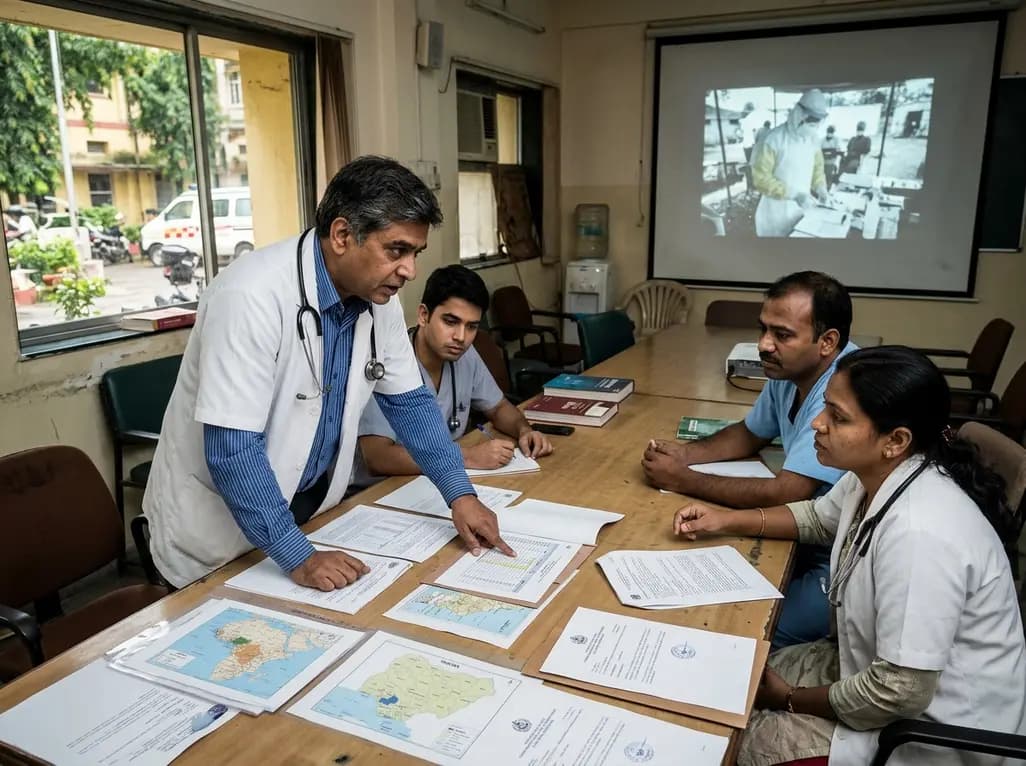
Following Nigeria's first recorded Ebola case linked to regional travel, the Africa CDC has convened an emergency ministerial summit. This alert underscores critical clinical priorities for healthcare professionals, including differentiating early viral infection from malaria, implementing barrier nursing, and triage.
Today

Leucine Rich Bio has introduced South Asia's first comprehensive vaginal microbiome test, BugSpeaks. By profiling microbial dysbiosis, pathogens, and antimicrobial resistance, this next-generation diagnostic platform provides clinicians with deeper insights into recurrent infections, fertility, and reproductive health.
Today

Review how tailored exercise programs benefit frail older patients with heart failure. Explore pathophysiological mechanisms, individualized training prescriptions, and strategies to overcome adherence barriers in clinical practice.
Today

This comparative study evaluates posterior labral tears with and without glenohumeral instability, highlighting distinct demographic patterns, MRI underestimation in stable shoulders, and successful arthroscopic repair outcomes.
Today

A clinical study demonstrates that early intervention with tocilizumab, either as monotherapy or bridged with corticosteroids, achieves significant proptosis reduction and resolves active inflammation in treatment-naive thyroid eye disease.
Today
