.webp&w=384&q=75)

Loading, please wait...
Loading, please wait...

Gastroenterologists frequently use Endoscopic Submucosal Dissection (ESD) to remove early gastrointestinal tumors. Nevertheless, this technique remains technically demanding for many practitioners. To address these challenges, researchers recently developed a sophisticated magnetic ESD traction system. This system utilizes computational modeling to improve procedural outcomes and surgical precision.
The study employed finite element simulations to analyze traction-force requirements. Furthermore, the team designed a specific external magnet geometry based on derived force-distance constraints. As a result, the numerical findings indicate a much smoother relationship between distance and force. This optimization significantly reduces the impact of positional variation during the procedure. Consequently, clinicians can achieve more predictable tissue regulation during complex dissections.
Moreover, these advancements might lower the risk of adverse events such as bowel perforation or muscle injury. Therefore, magnet-geometry optimization represents a promising future for minimally invasive oncology. Experts believe this numerical pathway will eventually lead to safer and more efficient clinical workflows in endoscopy units.
It provides dynamic countertraction during the procedure. This exposes the dissection plane more clearly than conventional static methods, making the dissection faster and safer for the patient.
Finite element modeling allows engineers to simulate complex magnetic fields numerically. Consequently, they can design magnets that provide a steady pulling force even when the external magnet moves slightly during the surgery.
Disclaimer: This content is for informational and educational purposes only. It does not constitute medical advice or professional services. Always seek the advice of your physician or other qualified health provider regarding a medical condition. Refer to the latest local and national guidelines for clinical practice.
References
Sun Y et al. Finite element optimization of a magnetic anchor traction system for colonic ESD. Comput Methods Biomech Biomed Engin. 2026 Apr 01. doi: 10.1080/10255842.2026.2650624. PMID: 41921213.
Zheng H et al. Novel Magnetic Countertraction Enhanced Performance in Colonic Endoscopic Submucosal Dissection. PMC. 2026 Feb 11.
Wang X et al. First pilot trial of colorectal ESD guided by a new magnetic anchor for ease of placement. Tech Coloproctol. 2023 Jan 17. doi: 10.1007/s10151-022-02750-6.

Read summarized clinical updates, watch expert medical content, and earn CME certifications right from your smartphone.
Open your smartphone camera to scan and install.





New research optimizes external magnet geometry to provide stable traction force for colonic ESD, reducing procedure risks and positional sensitivity....
6 months ago

An observational study from the NIH All of Us Research Program reveals that adding a multi-ancestry polygenic risk score to machine learning models provides only modest improvements in predicting adult weight gain, underscoring the enduring significance of routine clinical and lifestyle factors.
Today

A study in JAMIA Open shows lightweight open-source reasoning LLMs achieve up to 95% sensitivity and accelerate evidence synthesis screening by nearly twentyfold, presenting a cost-effective, scalable AI solution for biomedical research and systematic reviews.
Today
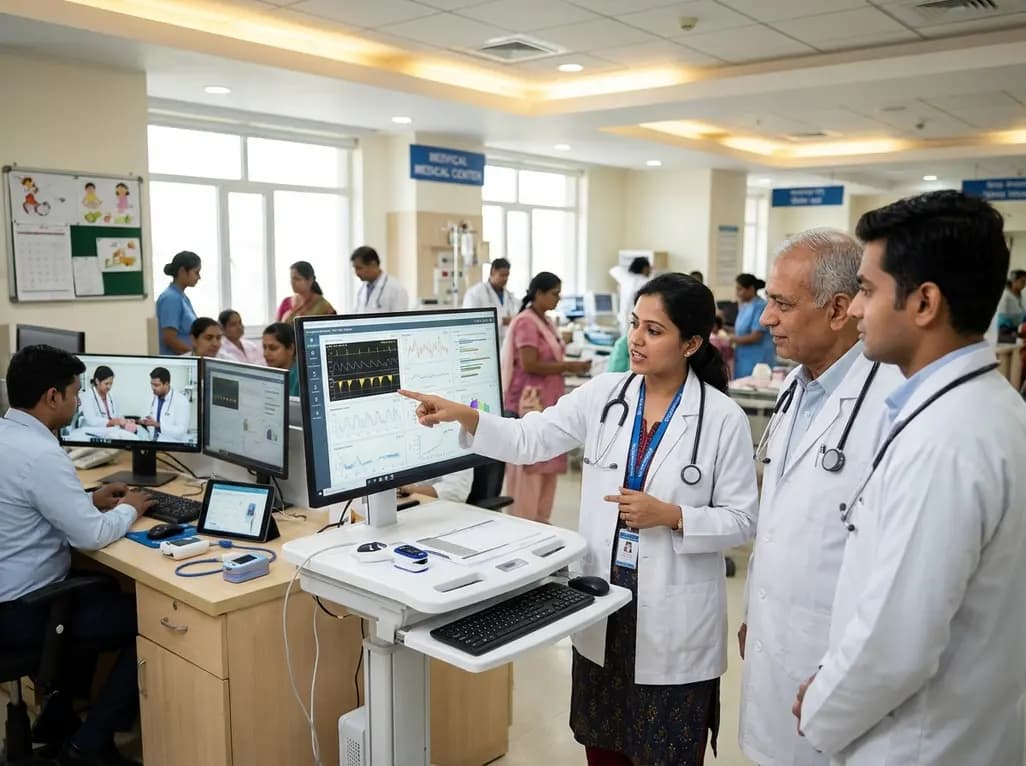
A landmark study details how an enterprise pediatric remote patient management model expanded from a single cardiology pilot to 16 diverse specialty programs by combining centralized digital operations with specialty clinical leadership.
Today
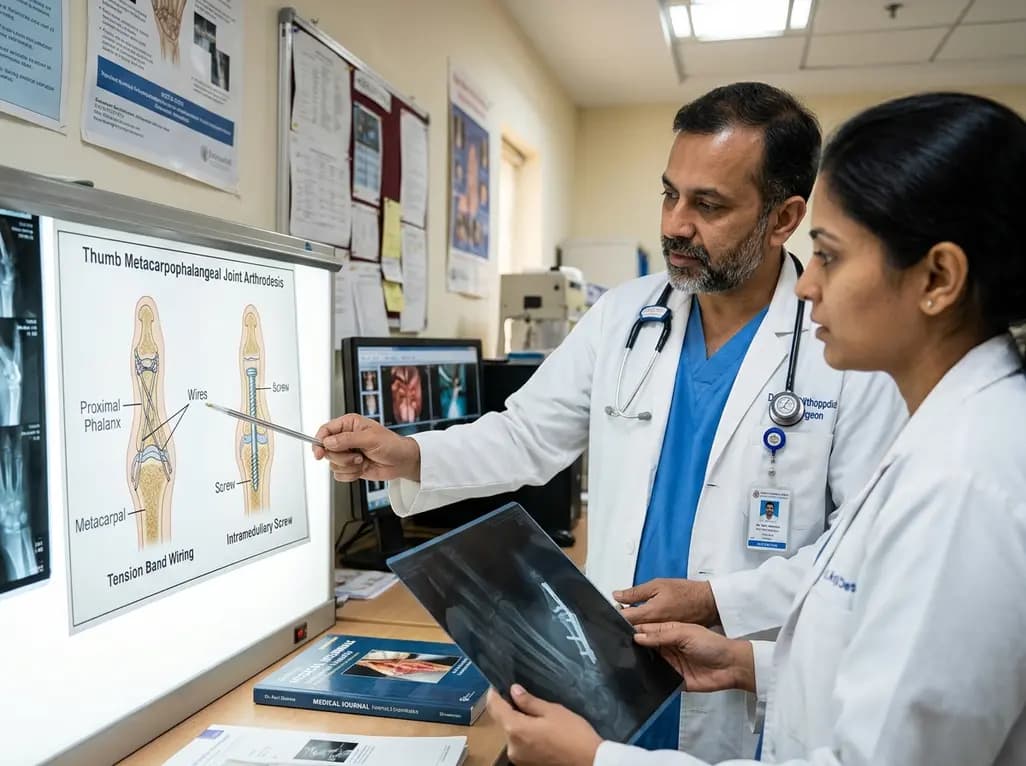
A comparative review of tension band wiring and intramedullary screw fixation in thumb metacarpophalangeal arthrodesis, evaluating union rates, hardware complications, and clinical outcomes.
Yesterday
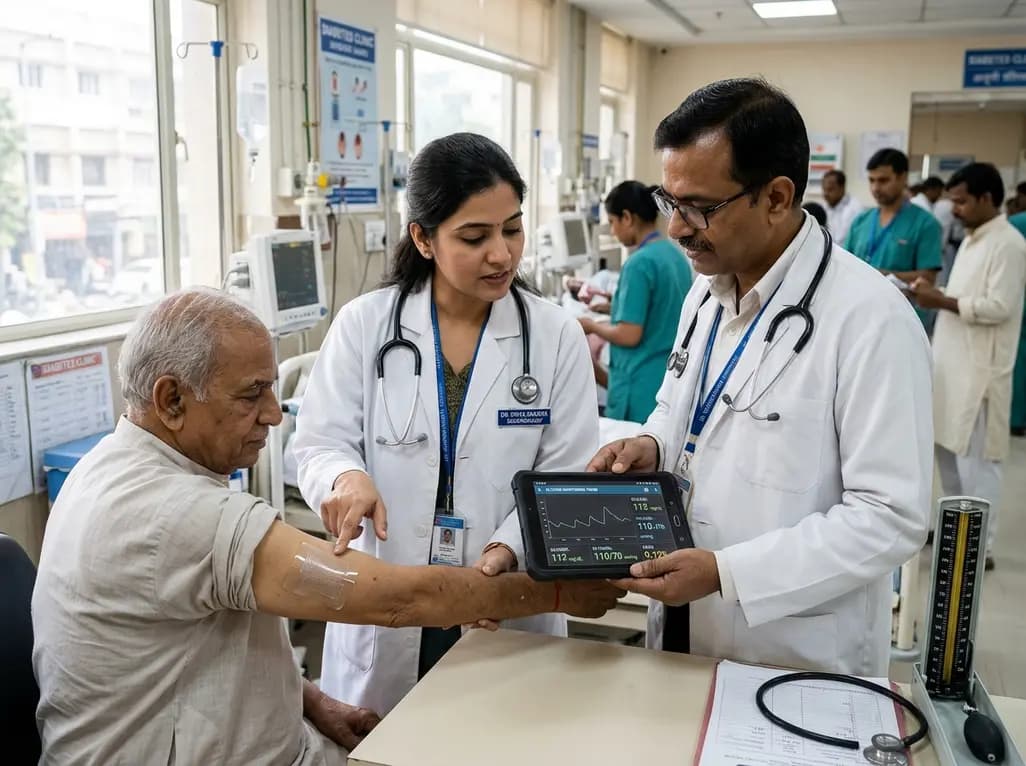
A breakthrough ultrathin multimodal sensor decouples physical hemodynamic monitoring from disposable electrochemical calibration, achieving long-term wearable glucose prediction with 81.36% accuracy and a 9.12% MARD. This offers a robust, drift-free solution for outpatient metabolic surveillance.
Yesterday
