.webp&w=384&q=75)

Loading, please wait...
Loading, please wait...

Evaluating excessive daytime sleepiness remains one of the most formidable challenges in clinical neurology and sleep medicine. The spectrum of central disorders of hypersomnolence includes conditions such as narcolepsy type 1, narcolepsy type 2, and idiopathic hypersomnia. Because many of these conditions share non-specific clinical presentations and lack unambiguous biomarkers, patients frequently experience diagnostic delays lasting several years. Clinicians routinely rely on comprehensive nocturnal polysomnography and the multiple sleep latency test, yet these tests can yield borderline or variable results. Consequently, investigators have turned to artificial intelligence to extract deeper insights from physiological and clinical datasets. A comprehensive systematic review evaluates the capacity of computational models to transform how clinicians identify and differentiate these challenging sleep disorders.
Accurate differentiation within central disorders of hypersomnolence has long challenged clinicians. While narcolepsy type 1 features distinct pathophysiological hallmarks, such as hypocretin deficiency and cataplexy, other hypersomnolence conditions lack definitive biochemical indicators. Narcolepsy type 2 and idiopathic hypersomnia often present with overlapping clinical manifestations, including severe daytime sleepiness, unrefreshing daytime naps, brain fog, and severe sleep inertia. Furthermore, the standard multiple sleep latency test exhibits known test-retest variability, occasionally leading to misclassification or ambiguous results.
In addition, concurrent medical conditions frequently cloud the diagnostic picture. Mood disorders, chronic sleep deprivation, circadian rhythm disturbances, and mild respiratory abnormalities can mimic or exacerbate central hypersomnolence. Because current diagnostic manuals impose rigid category boundaries on a continuous biological spectrum, clinicians frequently observe patients transitioning between diagnostic labels over time. These diagnostic gray zones underscore the critical need for advanced analytical tools that can analyze subtle physiological signatures beyond conventional visual scoring.
Supervised machine learning algorithms have demonstrated remarkable success in identifying narcolepsy type 1. By training on well-characterized datasets, classifiers such as support vector machines, random forests, and gradient boosting algorithms achieve high diagnostic precision. These computational models efficiently detect characteristic physiological signatures, such as sleep-onset rapid eye movement periods, altered rapid eye movement sleep architecture, and fragmented nocturnal sleep patterns.
Moreover, supervised algorithms readily capture spectral electroencephalographic alterations that human interpreters might overlook during routine polysomnographic scoring. Automated models analyze micro-architectural sleep dynamics, short-interval sleep transitions, and frequency-band power distributions with exceptional consistency. Consequently, supervised pipelines demonstrate robust diagnostic metrics when differentiating narcolepsy type 1 from healthy controls. However, these models demonstrate significantly lower classification performance when applied to narcolepsy type 2 or idiopathic hypersomnia, primarily because those subtypes lack single, highly discriminating physiological features.
To overcome the limitations of categorical diagnostic boundaries, researchers increasingly utilize unsupervised machine learning algorithms. Unsupervised clustering techniques, including k-means, hierarchical clustering, and t-distributed stochastic neighbor embedding, evaluate patient data without pre-assigned diagnostic labels. These methods objectively identify natural groupings based on multidimensional feature similarities across large patient cohorts.
Interestingly, unsupervised analyses consistently reveal distinct clinical subgroups within the traditional hypersomnolence spectrum. These algorithms uncover heterogeneous patient clusters that do not align neatly with conventional diagnostic classifications. For instance, data-driven clustering frequently identifies intermediate phenotypes situated between classic narcolepsy and idiopathic hypersomnia. By mapping these continuous clinical spectrums, unsupervised learning demonstrates that traditional boundaries may oversimplify complex neurobiological phenotypes. Consequently, these findings encourage clinicians to adopt a more personalized, trait-based framework when assessing patients with chronic hypersomnolence.
Modern machine learning workflows achieve superior diagnostic performance by integrating multimodal data sources. Advanced analytical models synthesize standardized questionnaires, demographic parameters, nocturnal polysomnography, and multiple sleep latency metrics into unified diagnostic frameworks. This comprehensive synthesis mirrors comprehensive clinical reasoning while processing complex variable interactions at scale.
Furthermore, structural and functional neuroimaging modalities provide rich feature sets for diagnostic classification. Functional magnetic resonance imaging and positron emission tomography studies evaluate alterations in thalamocortical connectivity, default mode network dynamics, and regional glucose metabolism. Machine learning algorithms process these high-dimensional neuroimaging datasets to detect subtle functional alterations in arousal and alertness circuits. When researchers combine neuroimaging metrics with electrophysiological and clinical data, computational pipelines achieve greater diagnostic stability, paving the way for multiparametric diagnostic assessments in specialized centers.
Despite impressive analytical capabilities, machine learning applications face substantial translational hurdles. Deep learning architectures, such as convolutional neural networks and recurrent models, excel at automatic feature extraction from raw physiological time-series data. However, their internal decision-making processes often operate as opaque black boxes, making it difficult for clinicians to interpret how an algorithm reaches a specific prediction.
Additionally, data quality and cohort size present significant challenges. Many published studies rely on relatively small, single-center cohorts, which introduces potential selection bias and limits model generalizability across diverse patient populations. Furthermore, training algorithms on existing diagnostic labels risks encoding historical diagnostic errors and biases into automated systems. If a model trains on inconsistent ground-truth labels, it inevitably perpetuates diagnostic inaccuracies. Therefore, establishing open-access, multicenter databases with rigorously validated clinical endpoints remains essential for future progress.
Integrating artificial intelligence into routine sleep medicine practice requires systematic validation and interdisciplinary collaboration. Rather than replacing clinical judgment, machine learning models should serve as intelligent diagnostic decision-support tools. Clinicians can leverage automated algorithms to rapidly prescreen polysomnography recordings, identify anomalous electroencephalographic patterns, and highlight patients who warrant advanced biomarker testing.
To transition these computational tools from research settings into clinical workflows, medical teams must prioritize transparent, explainable artificial intelligence frameworks. Clinicians, neurophysiologists, and data scientists must collaborate closely to design algorithms that align with real-world clinical requirements. Furthermore, prospective longitudinal validation across diverse socioeconomic and geographical populations will ensure algorithm reliability. Ultimately, artificial intelligence holds significant promise for refining diagnostic precision, minimizing diagnostic delays, and guiding targeted therapeutic interventions for individuals affected by disabling hypersomnolence disorders.
Diagnosing these conditions remains difficult because subtypes like narcolepsy type 2 and idiopathic hypersomnia share overlapping symptoms, including severe daytime sleepiness and unrefreshing sleep. Furthermore, these disorders lack definitive biomarkers, and conventional sleep latency tests often show high variability, leading to frequent misdiagnoses or prolonged clinical delays.
Supervised machine learning algorithms learn from annotated datasets to recognize distinctive diagnostic features, such as sleep-onset rapid eye movement periods and spectral electroencephalographic alterations. These models reliably identify classic narcolepsy type 1 patterns, helping clinicians rapidly detect subtle physiological anomalies across overnight and daytime sleep recordings.
Unsupervised clustering groups patient records without pre-existing diagnostic categories, uncovering natural phenotypic subgroups across multidimensional data. This approach reveals intermediate clinical phenotypes that traditional diagnostic criteria often overlook, encouraging clinicians and researchers to adopt more nuanced, individualized classification strategies for complex sleep-wake disorders.
Disclaimer: This content is for informational and educational purposes only. It is not intended to substitute for professional medical advice, diagnosis, or treatment. Refer to the latest local and national guidelines for clinical practice.
References
Helmy A et al. Machine Learning for Diagnosis and Differentiation of Central Disorders of Hypersomnolence: A Systematic Review. Eur J Neurol. 2026 Jun. doi: 10.1111/ene.70661. PMID: 42237746.
Bassetti CLA, Adamantidis A, Burdakov D, et al. Narcolepsy - clinical spectrum, aetiopathophysiology, diagnosis and treatment. Nat Rev Neurol. 2019;15(9):519-539. doi: 10.1038/s41582-019-0226-9.
Lammers GJ, Bassetti CLA, Dolenc-Groselj L, et al. European guideline on central disorders of hypersomnolence: technical report. Eur J Neurol. 2020;27(12):e77-e85. doi: 10.1111/ene.14494.
Morand R, Fregolente L, van der Meer J, et al. iSPHYNCS: Unsupervised clustering in questionnaires and metadata reveals distinct subtypes in the narcolepsy borderland. J Sleep Res. 2026;35(4):e70294. doi: 10.1111/jsr.70294.

Read summarized clinical updates, watch expert medical content, and earn CME certifications right from your smartphone.
Open your smartphone camera to scan and install.





A systematic review evaluates machine learning applications in central disorders of hypersomnolence. While supervised models excel in narcolepsy type 1, unsupervised clustering uncovers broader phenotypic heterogeneity across complex sleep disorders.
4 weeks back

Left bundle branch pacing is an emerging physiological resynchronization strategy for heart failure. While observational data and some trials show benefits over biventricular pacing, divergent trial outcomes highlight the importance of confirmed conduction capture and specialized operator technique.
Today

Postoperative adhesions cause severe complications, including bowel obstruction and infertility. This review highlights functional biomaterials, evaluating polysaccharide films and hydrogels while addressing retention, tissue conformability, and translational hurdles in clinical surgery.
Today
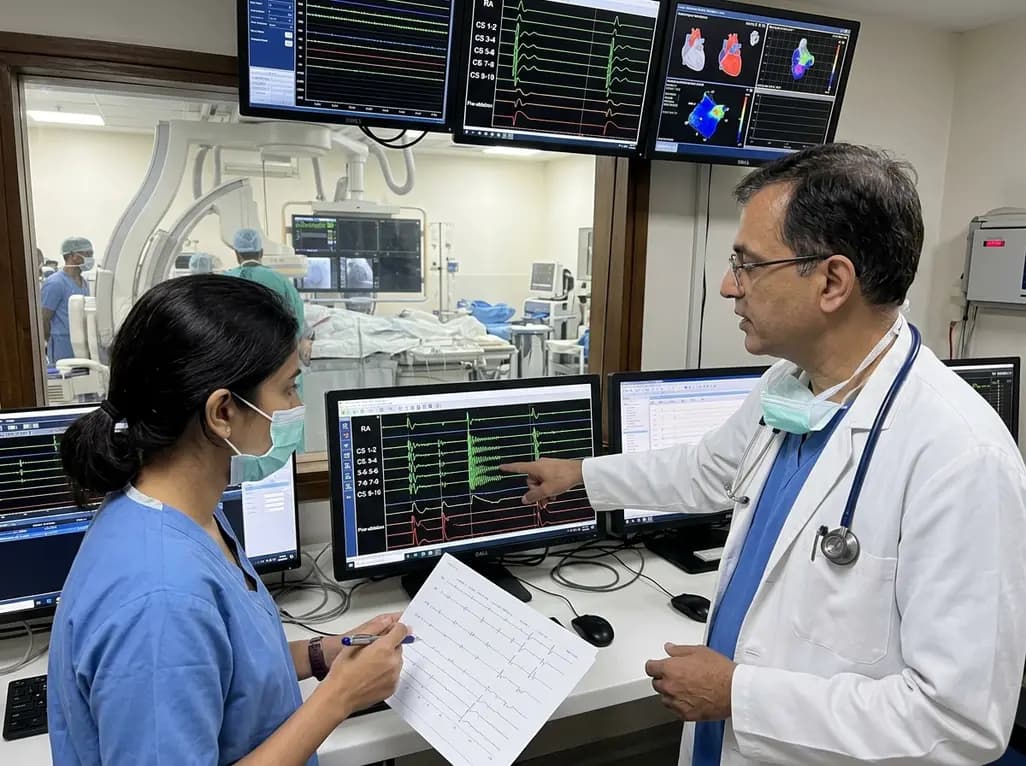
Radiofrequency catheter ablation of the cavotricuspid isthmus successfully terminates typical atrial flutter. This article reviews the mechanisms driving coronary sinus electrogram changes, wavefront activation pathways, and clinical criteria to verify bidirectional block during electrophysiology studies.
Today
New biomechanical research reveals that foot-strike angle significantly influences knee energy absorption during cutting tasks in female soccer players. Understanding these kinematic patterns offers clinicians valuable pathways for targeted ACL injury prevention and athletic retraining.
Today
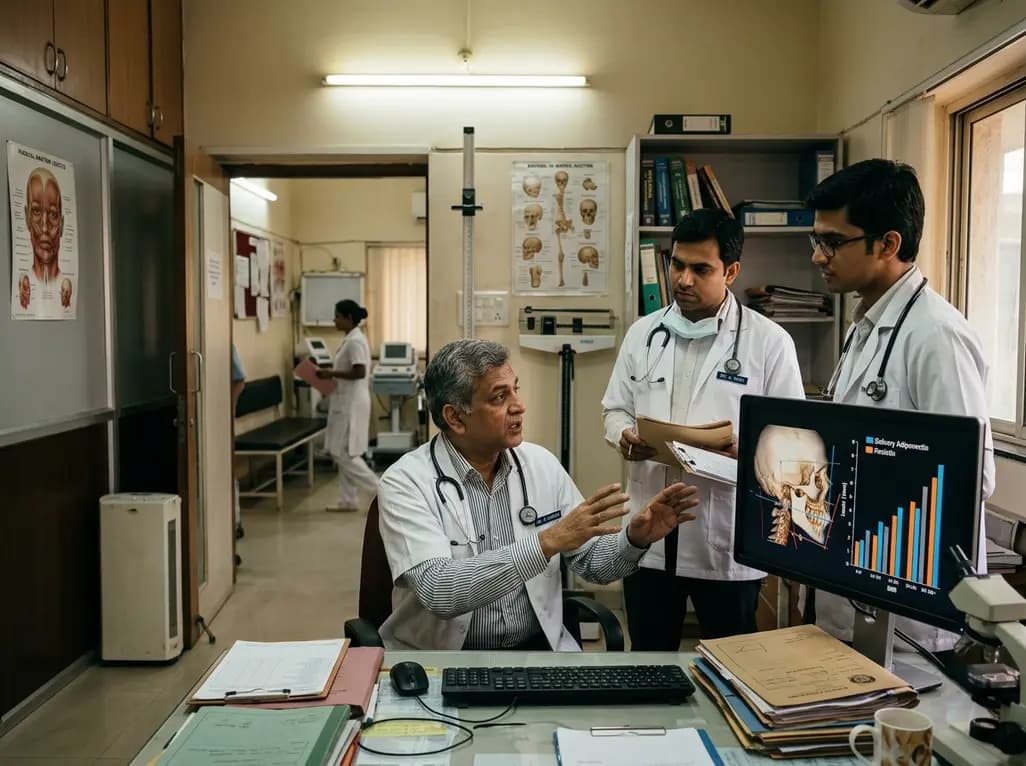
A cross-sectional study demonstrates that increased BMI in adolescents significantly enhances mandibular length and alters salivary adipokines like adiponectin and resistin, providing novel insights into craniofacial growth and orthodontic planning.
Today
