.webp&w=384&q=75)

Loading, please wait...
Loading, please wait...
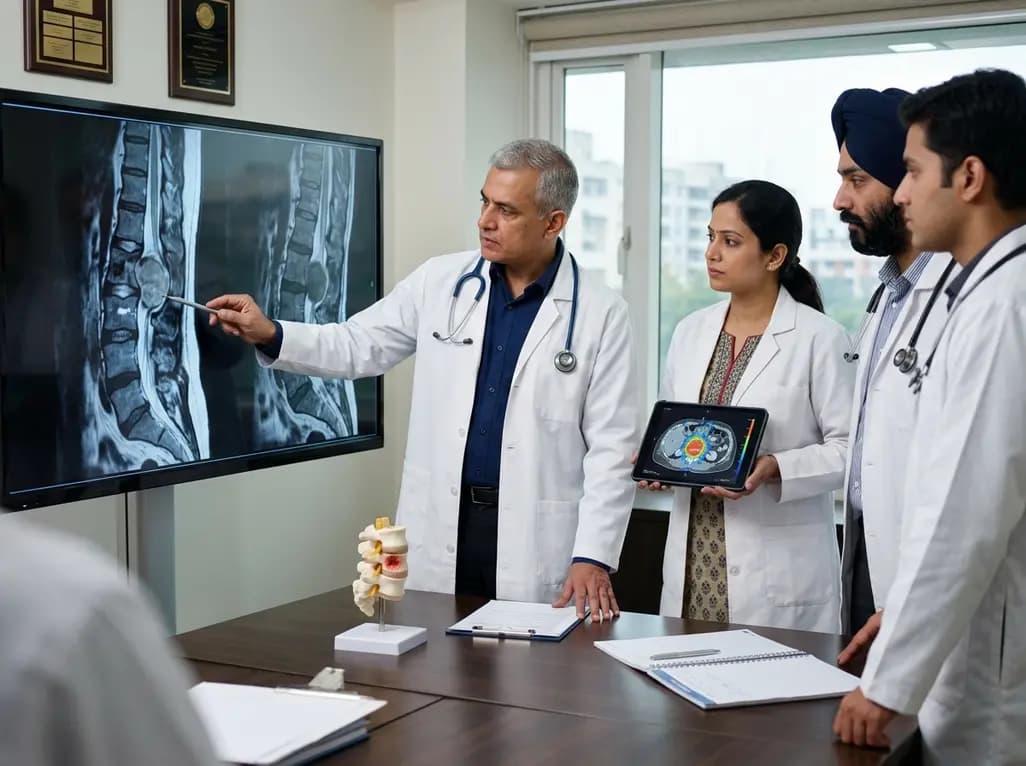
Chordoma is an exceptionally rare malignant bone tumor that presents significant clinical challenges due to its anatomical complexity and high risk of local recurrence. These tumors arise from remnants of the primitive notochord and typically occur along the axial skeleton. Because they exhibit an indolent yet locally aggressive nature, achieving long-term control remains difficult. Recently, the Global Chordoma Consensus Group convened in Milan to address these challenges. Consequently, the group released updated localized chordoma management guidelines to reflect nearly a decade of advancements in pathology, imaging, and therapeutic techniques. This consensus represents a vital effort to harmonize clinical practice globally. It ensures that patients receive standardized, evidence-based care regardless of their geographical location. For physicians in India, these recommendations provide a crucial framework for managing a disease where high-quality evidence was previously limited. Furthermore, the updated guidelines emphasize the importance of early and accurate diagnosis to avoid suboptimal initial treatments. By integrating modern multidisciplinary insights, the medical community can now offer better prognostic clarity. Ultimately, these guidelines serve as a cornerstone for improving survival rates and reducing the morbidity associated with this rare malignancy.
A fundamental principle established in the latest consensus is the absolute necessity of centralized care. Managing chordoma effectively requires more than just surgical expertise; it demands a collaborative multidisciplinary environment. Ideally, every patient should be evaluated at an experienced center that treats a high volume of rare bone tumors. These centers utilize multidisciplinary tumor boards where surgeons, radiation oncologists, and pathologists deliberate on each case. Such collaboration ensures that the treatment plan is tailored to the specific biological and anatomical characteristics of the tumor. Moreover, the consensus highlights that outcomes are significantly better when the initial treatment is performed correctly at a specialized facility. Suboptimal first-line therapy often leads to recurrence, which is notoriously harder to manage. Therefore, physicians should prioritize early referral to tertiary care centers. This approach allows for the integration of specialized supportive care, including dedicated rehabilitation and palliative services. Additionally, multidisciplinary teams are better equipped to handle the long-term morbidity associated with aggressive resections. By pooling resources and expertise, these centers offer the best hope for achieving local control while preserving the patient’s quality of life.
The localized chordoma management guidelines provide detailed, site-specific recommendations for surgical intervention. Because chordomas occur in the skull base, mobile spine, and sacrum, the surgical challenges vary significantly. For skull base tumors, the primary goal is maximally safe resection, often utilizing endoscopic endonasal approaches to minimize neurological deficits. Conversely, in the mobile spine and sacrum, the objective is typically en bloc resection with wide margins. Achieving negative margins is critical, as any tumor spill or incomplete resection drastically increases the risk of recurrence. Furthermore, the consensus provides guidance on managing tumors that involve critical neurovascular structures. In such cases, surgeons must balance the extent of resection with the risk of significant functional loss. Advances in reconstruction techniques have also improved the feasibility of complex spinal surgeries. However, the decision-making process must remain patient-centered, considering the potential impact on bowel, bladder, and motor functions. Specifically, the guidelines suggest that if wide margins are not achievable without unacceptable morbidity, a combined modality approach becomes even more essential. This nuanced strategy ensures that surgical efforts are optimized for each unique anatomical location.
High-dose radiotherapy plays a pivotal role in the management of localized chordoma, particularly after surgical resection. Chordomas are historically considered radioresistant, meaning they require radiation doses higher than those used for most other tumors. Consequently, the consensus advocates for highly conformal techniques, such as proton beam therapy or carbon ion radiotherapy. These advanced modalities allow for the delivery of therapeutic doses while sparing adjacent critical structures like the brainstem and spinal cord. The guidelines emphasize that radiotherapy should be part of the initial treatment plan rather than reserved solely for recurrence. Specifically, adjuvant or neoadjuvant radiation is recommended to address microscopic residual disease, especially when surgical margins are close or positive. Furthermore, the timing and planning of radiation must be meticulously coordinated with the surgical team. This coordination is vital to ensure that target volumes are accurately defined based on the preoperative tumor extent. Modern imaging techniques, including specialized MRI protocols, have greatly enhanced the precision of this planning. As a result, patients can achieve better local control with fewer long-term side effects. These advancements represent a significant shift toward more effective and less toxic treatment paradigms.
Given the prolonged natural history of chordoma, long-term follow-up is an indispensable component of the 2026 consensus. Patients often face risks of local or metastatic spread many years after their initial diagnosis. Therefore, the guidelines recommend a risk-adapted follow-up schedule that continues for at least 15 years. This monitoring should include regular high-quality imaging of the primary site and the chest to detect early signs of recurrence. Beyond oncological surveillance, the consensus places a strong emphasis on supportive and rehabilitative care. Many survivors live with chronic pain, neurological impairment, or psychological distress following aggressive treatments. Consequently, integrating physical therapy, pain management, and psychological support into the survivorship plan is essential. Furthermore, shared decision-making should be maintained throughout the patient's journey, ensuring that their values and quality of life are prioritized. The role of patient advocacy groups is also highlighted as a key resource for education and emotional support. By addressing these holistic needs, the medical community can support patients in navigating the lifelong challenges posed by a chordoma diagnosis. This comprehensive approach ensures that survivorship is characterized by both longevity and well-being.
The final pillar of the global consensus focuses on the future of chordoma research and the harmonization of clinical practice. Because the disease is so rare, individual centers often lack the volume required for large-scale clinical trials. Consequently, the guidelines call for international collaboration to identify priorities for future research. Specifically, there is a need for better biomarkers to predict tumor behavior and response to systemic therapies. While surgery and radiation remain the primary treatments, the role of targeted therapies and immunotherapies is an area of intense investigation. Furthermore, the consensus aims to create a unified data collection framework to support real-world evidence studies. This collaborative spirit is essential for uncovering the underlying biology of chordoma and developing more effective treatments. Moreover, the document serves as a tool to advocate for better access to specialized care and advanced radiotherapy technologies globally. By standardizing the localized chordoma management guidelines, the Global Chordoma Consensus Group has provided a roadmap for continuous improvement. This collective effort not only benefits current patients but also paves the way for the next generation of breakthroughs in chordoma care. Through persistent global cooperation, the challenges of this rare disease can be systematically overcome.
The primary goal is to provide a standardized, multidisciplinary framework for the diagnosis, treatment, and follow-up of pediatric and adult chordoma patients. By updating the 2015 recommendations, the 2026 consensus incorporates recent advancements in imaging, surgical techniques, and radiotherapy. It emphasizes centralized care at specialized centers to ensure that patients receive the most effective initial treatment, which is critical for reducing high recurrence rates and improving long-term survival outcomes across the globe.
Chordomas are relatively resistant to conventional radiation doses. Therefore, high-dose, highly conformal radiotherapy, such as proton beam or carbon ion therapy, is necessary to effectively kill tumor cells while sparing nearby vital structures like the spinal cord. The guidelines suggest that this should be integrated into the initial management plan, particularly when surgical margins are not wide. This approach significantly enhances local control and helps manage the high risk of recurrence associated with these tumors.
Follow-up must be long-term and risk-adapted, typically extending for 15 years or more due to the tumor's late recurrence patterns. It involves regular clinical assessments and high-quality imaging, such as MRI and CT scans, to monitor the primary site and check for metastatic spread. Additionally, the guidelines advocate for a holistic approach that includes rehabilitative care, pain management, and psychological support to address the long-term physical and emotional impacts of the disease and its treatment.
Disclaimer: This content is for informational and educational purposes only and does not constitute medical advice or a professional relationship. It is not a substitute for professional medical advice, diagnosis, or treatment. Always seek the advice of your physician or other qualified health provider with any questions you may have regarding a medical condition. Refer to the latest local and national guidelines for clinical practice.
References
Radaelli S et al. Global Consensus on the Management of Primary Localized Chordoma. JAMA Oncol. 2026 Jul 09. doi: 10.1001/jamaoncol.2026.2054. PMID: 42424068.
Stacchiotti S et al. Best practices for the management of local-regional recurrent chordoma: a position paper by the Chordoma Global Consensus Group. Ann Oncol. 2017;28(6):1230-1242.
Chordoma Foundation. Expert Recommendations for the Treatment of Chordoma. Accessed June 2025.

Read summarized clinical updates, watch expert medical content, and earn CME certifications right from your smartphone.
Open your smartphone camera to scan and install.





Discover the updated 2026 Global Consensus on the Management of Primary Localized Chordoma. This comprehensive guide covers multidisciplinary strategies, site-specific surgical approaches, and high-dose radiotherapy to improve outcomes in this rare and challenging malignant bone tumor.
3 months ago

As monsoon seasons elevate arboviral disease threats, Tamil Nadu has initiated an ICMR-monitored evaluation of the tetravalent dengue vaccine in Tenkasi district. Clinicians emphasize clinical monitoring, public prevention, and high-quality early pediatric care to reduce disease morbidity across endemic regions.
Today

Leucine Rich Bio has introduced South Asia's first comprehensive vaginal microbiome test, BugSpeaks. By profiling microbial dysbiosis, pathogens, and antimicrobial resistance, this next-generation diagnostic platform provides clinicians with deeper insights into recurrent infections, fertility, and reproductive health.
Today

Review how tailored exercise programs benefit frail older patients with heart failure. Explore pathophysiological mechanisms, individualized training prescriptions, and strategies to overcome adherence barriers in clinical practice.
Today

This comparative study evaluates posterior labral tears with and without glenohumeral instability, highlighting distinct demographic patterns, MRI underestimation in stable shoulders, and successful arthroscopic repair outcomes.
Today

A clinical study demonstrates that early intervention with tocilizumab, either as monotherapy or bridged with corticosteroids, achieves significant proptosis reduction and resolves active inflammation in treatment-naive thyroid eye disease.
Today
