.webp&w=384&q=75)

Loading, please wait...
Loading, please wait...
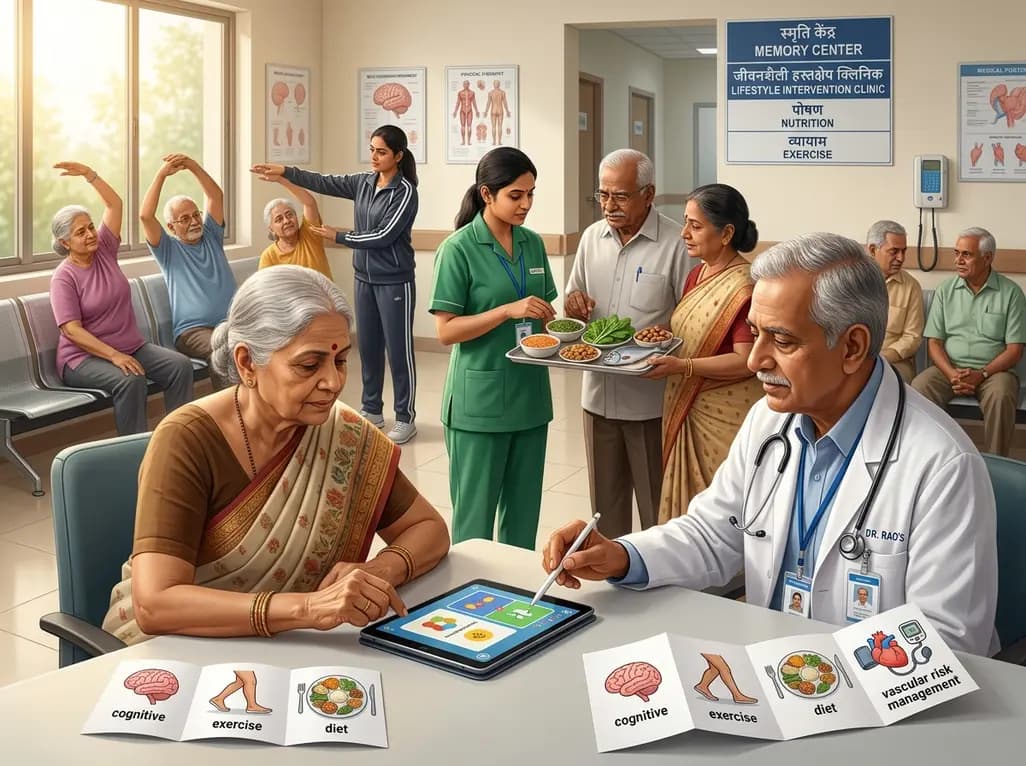
As the population of India ages, the prevalence of Mild Cognitive Impairment (MCI) continues to rise rapidly. Clinicians frequently encounter older adults who exhibit subtle cognitive changes that do not yet meet the criteria for dementia. However, these patients represent a high-risk group where early intervention can potentially alter the disease trajectory. A lifestyle intervention for dementia prevention offers a non-pharmacological pathway to sustain cognitive reserve and maintain independence. Recent data from South Korea's SUPERBRAIN-MEET trial provides significant evidence that such interventions are effective across diverse patient populations. This study examined a multidomain approach combining physical exercise, nutritional counseling, and cognitive training. Most importantly, researchers found that these benefits were consistent regardless of a patient's age or background. Given the diverse socioeconomic landscape of India, these findings are particularly encouraging for primary care physicians and specialists. By integrating multidomain strategies, we can address modifiable risk factors like hypertension and sedentary behavior early. This proactive approach helps in mitigating the expected surge in dementia cases over the next decade. Consequently, understanding the scalability and generalizability of these programs is essential for modern geriatric practice.
The SUPERBRAIN-MEET study employed a rigorous 24-week parallel-group randomized controlled trial design. Researchers recruited 300 adults aged 60 to 85 years who met the diagnostic criteria for Mild Cognitive Impairment. Participants were randomly assigned to either a multidomain lifestyle intervention group or a standard care control group. Specifically, the intervention group participated in face-to-face sessions and used digital platforms for cognitive training. The multidomain protocol included aerobic and resistance exercises, dietary modifications, and social engagement activities. Additionally, clinicians monitored vascular risk factors such as blood pressure and cholesterol levels throughout the study period. The primary outcome measure was the change in the Repeatable Battery for the Assessment of Neuropsychological Status (RBANS) total index score. Notably, the trial blinded the outcome assessors to minimize bias during the evaluation process. This robust framework allowed for a clear comparison between the active intervention and conventional management. By using a multicenter approach across 17 hospitals, the study ensured a representative sample of the elderly population. This diversity provides a strong foundation for the subsequent subgroup analyses. Ultimately, the methodology highlights how structured, multidimensional care can be delivered within a clinical environment.
One of the most significant findings from this subgroup analysis is the consistency of results across different demographics. Researchers analyzed whether the lifestyle intervention for dementia prevention varied based on sex, age, or education level. Remarkably, the cognitive improvements observed in the intervention group were not significantly influenced by these factors. For instance, older participants benefited just as much as their younger counterparts within the study group. Furthermore, individuals with lower levels of education achieved cognitive gains similar to those with higher educational backgrounds. This indicates that the program's design is accessible and effective for a broad range of patients. In addition, the analysis looked at living status, such as whether a patient lived alone or with family. Even in these different social contexts, the multidomain intervention demonstrated a significant positive effect on RBANS scores. These results are vital for clinicians who manage diverse patient populations with varying social supports. Therefore, the study confirms that a one-size-fits-all multidomain approach can be remarkably effective. It provides a blueprint for large-scale public health initiatives aimed at cognitive preservation in the elderly.
As healthcare increasingly adopts digital tools, many clinicians worry about the "digital divide" affecting older patients. The SUPERBRAIN-MEET trial specifically addressed this concern by evaluating "digital readiness" among its participants. This included assessing frequency of internet access and comfort with digital devices. Interestingly, the subgroup analysis revealed that the efficacy of the intervention was not dependent on prior digital literacy. Participants who were less familiar with technology still experienced significant cognitive improvements through the platform-assisted sessions. This finding suggests that well-designed digital interfaces can bridge the gap for seniors who are not tech-savvy. Moreover, using digital platforms allows for a hybrid model of care, combining clinic visits with home-based activities. Consequently, this increases the potential for the intervention to be scaled in regions with limited specialist access. In the Indian context, where smartphone penetration is increasing but digital literacy among seniors varies, this is a promising outcome. It proves that technology-assisted cognitive training can be a feasible component of a wider prevention strategy. Furthermore, these tools can provide real-time data to clinicians, allowing for more personalized patient monitoring and adjustments.
Vascular health is intrinsically linked to cognitive function, particularly in Asian populations where metabolic syndrome is prevalent. The subgroup analysis investigated whether vascular risk profiles, such as BMI, smoking status, and cholesterol levels, modified the intervention's success. The results showed that the cognitive benefits remained significant across all vascular risk categories. Whether a patient had high blood pressure or diabetes, the multidomain lifestyle intervention provided meaningful cognitive protection. This is a critical insight for practitioners who manage patients with multiple comorbidities. By addressing nutrition and exercise simultaneously, the program likely improved systemic vascular health alongside cognitive performance. Furthermore, managing total cholesterol and glucose levels through lifestyle changes directly supports brain health. Notably, the study found no significant interaction between baseline cognitive status and the intervention's outcome. This suggests that even those at the lower end of the MCI spectrum can achieve substantial gains. Therefore, clinicians should not hesitate to recommend lifestyle modifications even for patients with complex medical histories. Integrated care that targets both physical and mental health appears to be the most robust approach for preventing decline.
The success of the SUPERBRAIN-MEET subgroup analysis underscores the potential for global scalability of multidomain programs. Because the intervention was effective regardless of socioeconomic or digital barriers, it can be adapted for various healthcare systems. For doctors in India, this means that simple, structured advice on diet and exercise can be a powerful clinical tool. Furthermore, the findings support the integration of community-based or digital programs into standard geriatric care. Although the analysis was exploratory, the consistency of the data is compelling. It encourages a shift from reactive care to proactive prevention in the management of cognitive decline. Additionally, the study highlights the importance of maintaining high adherence through motivational support and social engagement. Future research should focus on the long-term sustainability of these cognitive gains over several years. Nevertheless, the current data provides a strong evidence base for implementing lifestyle intervention for dementia prevention immediately. By focusing on modifiable risk factors, we can improve the quality of life for millions of aging adults. Ultimately, these multidimensional strategies represent the future of holistic geriatric medicine in an increasingly digital world.
A multidomain lifestyle intervention typically includes a combination of aerobic and resistance exercises, dietary guidance like the Mediterranean or MIND diet, and structured cognitive training. It also involves the management of vascular risk factors, such as blood pressure control, and social engagement activities to stimulate brain health and emotional well-being.
Yes, research from the SUPERBRAIN-MEET trial indicates that digital readiness does not limit the effectiveness of multidomain interventions. Even participants with low digital literacy experienced significant cognitive improvements. This suggests that with user-friendly interfaces and minimal guidance, technology-assisted programs are accessible and beneficial for a wide range of elderly patients.
The study found that cognitive benefits were consistent across various vascular risk profiles. Patients with hypertension, high cholesterol, or diabetes benefited just as much as those without these conditions. This highlights that lifestyle modifications can effectively protect cognitive function even in the presence of common age-related metabolic and cardiovascular comorbidities.
Disclaimer: This content is for informational and educational purposes only and does not constitute professional medical advice, diagnosis, or treatment. Always seek the advice of your physician or other qualified health provider with any questions you may have regarding a medical condition. Refer to the latest local and national guidelines for clinical practice.
References
Kim DA et al. Multidomain Lifestyle Intervention in Mild Cognitive Impairment: Subgroup Analysis of the SUPERBRAIN-MEET Randomized Trial. Neurology. 2026 Aug 11. doi: 10.1212/WNL.0000000000218297. PMID: 42475653.
Livingston G et al. Dementia prevention, intervention, and care: 2024 report of the Lancet standing Commission. The Lancet. 2024. doi: 10.1016/S0140-6736(24)01296-0.
Vargese SS et al. Prevalence and factors associated with mild cognitive impairment in older adults in Kerala, India: Baseline results from TINAGE trial. Indian Council of Medical Research (ICMR). 2024.

Read summarized clinical updates, watch expert medical content, and earn CME certifications right from your smartphone.
Open your smartphone camera to scan and install.





A subgroup analysis of the SUPERBRAIN-MEET trial confirms that multidomain lifestyle interventions significantly improve cognitive scores in adults with MCI. These benefits remain consistent across various demographics, digital readiness levels, and vascular risk profiles, supporting global scalability.
3 months ago

Review how tailored exercise programs benefit frail older patients with heart failure. Explore pathophysiological mechanisms, individualized training prescriptions, and strategies to overcome adherence barriers in clinical practice.
Today

Leucine Rich Bio has introduced South Asia's first comprehensive vaginal microbiome test, BugSpeaks. By profiling microbial dysbiosis, pathogens, and antimicrobial resistance, this next-generation diagnostic platform provides clinicians with deeper insights into recurrent infections, fertility, and reproductive health.
Today

In high-risk pulmonary embolism complicated by severe anemia and active uterine bleeding, systemic thrombolysis is contraindicated. Large-bore aspiration thrombectomy provides rapid hemodynamic rescue without fibrinolysis, supported by inferior vena cava filter placement and multidisciplinary critical care.
Today

This comparative study evaluates posterior labral tears with and without glenohumeral instability, highlighting distinct demographic patterns, MRI underestimation in stable shoulders, and successful arthroscopic repair outcomes.
Today

A clinical study demonstrates that early intervention with tocilizumab, either as monotherapy or bridged with corticosteroids, achieves significant proptosis reduction and resolves active inflammation in treatment-naive thyroid eye disease.
Today
