.webp&w=384&q=75)

Loading, please wait...
Loading, please wait...

Many adults aged 60 years or older take thyroid hormone medication for life. However, long-term use is not always necessary for everyone. A recent study investigated levothyroxine discontinuation in elderly patients. Researchers conducted a prospective trial involving 370 participants in the Netherlands. They aimed to determine who could safely stop treatment while maintaining normal thyroid function. These findings provide vital evidence for clinicians managing thyroid health in older populations.
Specifically, the study reported that 25.7% of participants successfully stopped taking levothyroxine. These individuals maintained stable thyrotropin (TSH) and free thyroxine (fT4) levels for one year. Notably, the success rate jumped to 63.6% for those taking a dose of 50 µg/day or lower. Furthermore, thyroid-related quality of life did not change significantly after stopping the drug. This suggests that many patients do not experience negative symptoms when they deprescribe thyroid hormones. Consequently, doctors should consider evaluating the need for ongoing therapy in older adults.
Moreover, the protocol involved a stepwise dose reduction rather than immediate cessation. This cautious approach ensures patient safety and allows for regular laboratory monitoring. Additionally, the study included community-dwelling adults who had stable dosages for at least one year. These results highlight a significant opportunity to reduce polypharmacy and avoid potential overtreatment. Therefore, clinicians should prioritize TSH evaluation for those on low-dose supplementation. Identifying suitable candidates for discontinuation can improve overall geriatric care and health outcomes.
No, discontinuation is not suitable for every patient. This study focused on adults 60 or older with stable low doses and TSH levels below 10 mIU/L. Always consult a physician before changing or stopping your dosage.
Patients on a levothyroxine dose of 50 µg/day or lower have a much higher success rate. In this trial, over 60% of those on low doses successfully stopped the medication without negative effects.
Disclaimer: This content is for informational and educational purposes only. It is not a substitute for professional medical advice, diagnosis, or treatment. Always seek the advice of your physician or other qualified health provider with any questions you may have regarding a medical condition. Refer to the latest local and national guidelines for clinical practice.
References

Read summarized clinical updates, watch expert medical content, and earn CME certifications right from your smartphone.
Open your smartphone camera to scan and install.





A prospective study reveals that 25.7% of adults aged 60 or older can successfully discontinue levothyroxine, particularly those on low dosages (≤50 µg/d)....
6 months ago

Following regulatory scrutiny from FSSAI regarding promotional representations and lean muscle preservation claims, Dr. Reddy's Laboratories and Nestlé Health Science are currently reviewing the branding and marketing strategy for their joint nutritional supplement Celevida GLP+.
Today

Demanding exhaustive hormonal profiling can inadvertently discourage clinical studies involving females. Methodological standards must align with the specific scientific question to expand, not restrict, equitable evidence for women.
Today

The Directorate General of Health Services directs Indian states to halt the hazardous reuse and reprocessing of single-use medical devices. Discover regulatory implications under the Drugs and Cosmetics Act, critical infection risks, legal liabilities, and operational changes required across clinical specialties.
Today
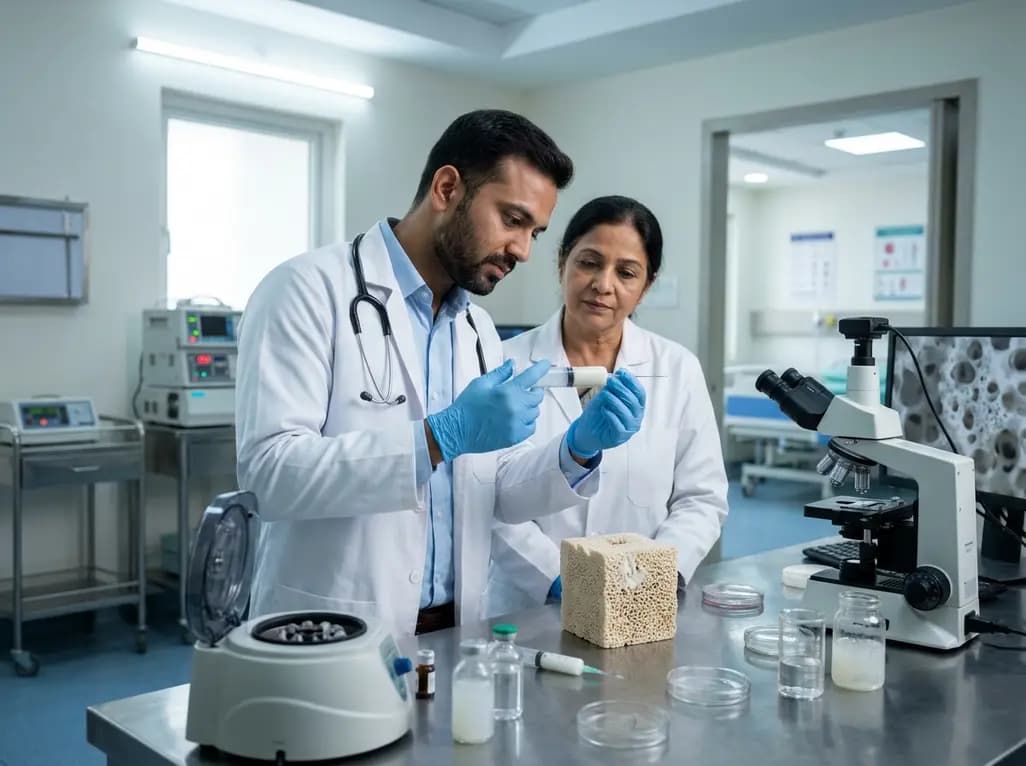
A novel calcium polyphosphate coacervate enables injectable bone implants with in situ hierarchical porosity via phase separation and gas foaming, significantly enhancing cell proliferation, energy metabolism, and osteogenic differentiation for minimally invasive bone defect repair.
Today

India is advancing preventive healthcare by integrating genomics, artificial intelligence, and quantum technologies. With the SANGAM programme sequencing one million Indian genomes, clinicians can unlock personalized therapies, detect cardiometabolic risks early, and curb the burden of diabetes and heart disease.
Today
