.webp&w=384&q=75)

Loading, please wait...
Loading, please wait...

Managing a large vestibular schwannoma represents one of the most demanding technical challenges in modern skull base surgery. These benign skull base tumors arise from the vestibular nerve within the internal auditory canal. However, as they expand beyond three centimeters into the cerebellopontine angle, they distort adjacent brainstem structures. Consequently, preserving critical neurological function while achieving safe cytoreduction becomes exceptionally difficult. Otolaryngologists and neurosurgeons prioritize facial nerve preservation as a primary functional goal. When tumors attain substantial dimensions, severe distortion of surrounding anatomy elevates surgical complexity. Therefore, surgical teams require precise preoperative imaging parameters to optimize clinical decision-making. While standard volumetric assessments provide general anatomical orientation, they do not capture intricate directional relationships. Specifically, variations in internal auditory canal extension and brainstem displacement create distinct operative corridors. Modern skull base teams seek objective imaging metrics that accurately predict operative morbidity. By understanding these subtle radiologic patterns, clinicians can refine risk stratification during preoperative counseling. Furthermore, detailed imaging characterization enhances individualized surgical approach selection.
To identify reliable prognostic indicators, researchers evaluated 116 sporadic cases of large tumors. The investigators intentionally excluded neurofibromatosis type 2 cases to prevent biologic confounding. They quantified brainstem compression on axial contrast-enhanced T1-weighted magnetic resonance images. Specifically, they measured the perpendicular distance from the baseline brainstem-cerebellar margin to the point of maximal tumor compression. In addition, the surgical team assessed internal auditory canal orientation relative to an anatomical midline axis. This reference line bisected the canal from the porus to the fundus. Consequently, this method allowed objective measurement of anterior and posterior canalicular extension. Clinicians previously hypothesized that asymmetrical intracanalicular growth restricts surgical working angles and complicates tumor dissection. Moreover, deep medial displacement of the brainstem stretches the cisternal segments of cranial nerves. By standardizing these distinct linear parameters, the researchers established an objective anatomical framework. Ultimately, these measurements provide reproducible data that skull base surgeons can apply during preoperative multidisciplinary planning conferences.
Preserving facial nerve function represents a critical measure of surgical success in acoustic neuroma resection. In this cohort, investigators observed a significant correlation between brainstem compression and early facial nerve weakness. Specifically, greater brainstem compression significantly increased the odds of poorer facial function at two to three weeks postoperatively in univariate analysis. Furthermore, this association approached statistical significance during multivariate analysis after controlling for clinical covariates. When a large tumor compresses the brainstem, it severely attenuates and splays the seventh cranial nerve across the capsule. Consequently, mechanical manipulation during microsurgical dissection triggers acute microvascular ischemia within stretched nerve fibers. Although surgeons utilize continuous intraoperative electromyographic monitoring, severe physical distortion leaves the nerve functionally vulnerable. Therefore, early postoperative paresis occurs frequently in patients who present with pronounced brainstem indentation. However, clinicians must remember that early postoperative weakness does not inevitably cause permanent facial paralysis. Many patients achieve meaningful functional recovery over time as neural regeneration progresses. Thus, preoperative quantification of brainstem displacement assists clinicians in preparing patients for temporary postoperative deficits.
Achieving gross total resection remains desirable for oncological control, yet surgeons must balance radical excision against neurological preservation. Initially, univariate analysis suggested that greater anterior canalicular extension correlated with lower resection completeness. However, this association lost statistical significance after the researchers controlled for overall tumor volume and patient age. Instead, multivariate regression identified older patient age as the sole independent predictor of subtotal resection. As patients age, tumor capsules develop firmer arachnoid adhesions to vital neural structures and the brainstem surface. Furthermore, skull base surgeons deliberately choose conservative resection boundaries in older individuals to avoid devastating neurological complications. Rather than pursuing aggressive total resection, clinicians frequently perform subtotal debulking followed by planned stereotactic radiosurgery. Consequently, chronological age and overall tumor size exert greater influence on resection completeness than internal canalicular vectors. This crucial finding demonstrates that anterior canalicular extension does not prevent complete tumor clearance when teams apply modern microsurgical techniques. Therefore, surgeons should not allow canalicular anatomy alone to deter them from pursuing safe, maximal cytoreduction.
Optimizing postoperative recovery and shortening hospital length of stay remain vital goals for inpatient skull base care. In univariate testing, greater posterior canalicular extension correlated with longer hospitalization times. Nevertheless, this statistical relationship disappeared completely during multivariate analysis. Instead, advanced patient age served as the only independent factor associated with increased hospitalization. Older individuals routinely experience slower systemic recovery after lengthy intracranial procedures under general anesthesia. Additionally, baseline balance impairment, reduced vestibular reserve, and systemic medical comorbidities often delay physical rehabilitation in elderly patients. Because posterior canalicular extension does not independently drive prolonged admissions, teams should focus on systemic geriatric factors rather than canal anatomy. Therefore, optimizing preoperative physical conditioning holds greater clinical promise for reducing inpatient days than modifying surgical corridors. Multidisciplinary skull base teams can implement enhanced recovery pathways that prioritize early balance therapy and mobilization. Ultimately, combining quantitative radiologic assessments of brainstem compression with patient-specific age factors enables clinicians to deliver safe, realistic, and highly individualized skull base care.
Marked brainstem compression stretches and attenuates the facial nerve across the expanding tumor capsule. Consequently, surgical manipulation during cerebellopontine angle dissection causes transient microvascular ischemia and mechanical strain. This leads to higher rates of early postoperative facial weakness, although many patients recover substantial functional control over several months.
Although initial univariate analyses suggested that anterior canalicular extension reduced resection completeness, multivariate models revealed that canal vectors do not independently limit gross total resection. Instead, overall tumor dimensions and advancing patient age primarily govern resection rates, allowing modern microsurgeons to achieve thorough tumor removal despite asymmetrical canalicular growth.
Advanced patient age correlates with slower physiological recuperation following extensive intracranial procedures. Furthermore, elderly individuals frequently experience diminished baseline vestibular compensation, reduced functional reserve, and pre-existing medical comorbidities. These combined clinical factors prolong inpatient physical rehabilitation and balance recovery, resulting in significantly longer hospital stays regardless of specific radiographic tumor vectors.
Disclaimer: This content is for informational and educational purposes only and is not intended to be a substitute for professional medical advice, diagnosis, or treatment. Always seek the advice of your physician or other qualified health provider with any questions you may have regarding a medical condition. Never disregard professional medical advice or delay in seeking it because of something you have read on this website. The views expressed are those of the author and do not necessarily reflect the official policy or position of any other agency, organization, employer, or company. Refer to the latest local and national guidelines for clinical practice.
References

Read summarized clinical updates, watch expert medical content, and earn CME certifications right from your smartphone.
Open your smartphone camera to scan and install.





A recent investigation evaluated 116 patients with sporadic large vestibular schwannoma to assess the impact of brainstem compression and canalicular extension on resection extent, facial nerve preservation, and hospital stay, finding critical associations with short-term nerve function and patient age.
last month
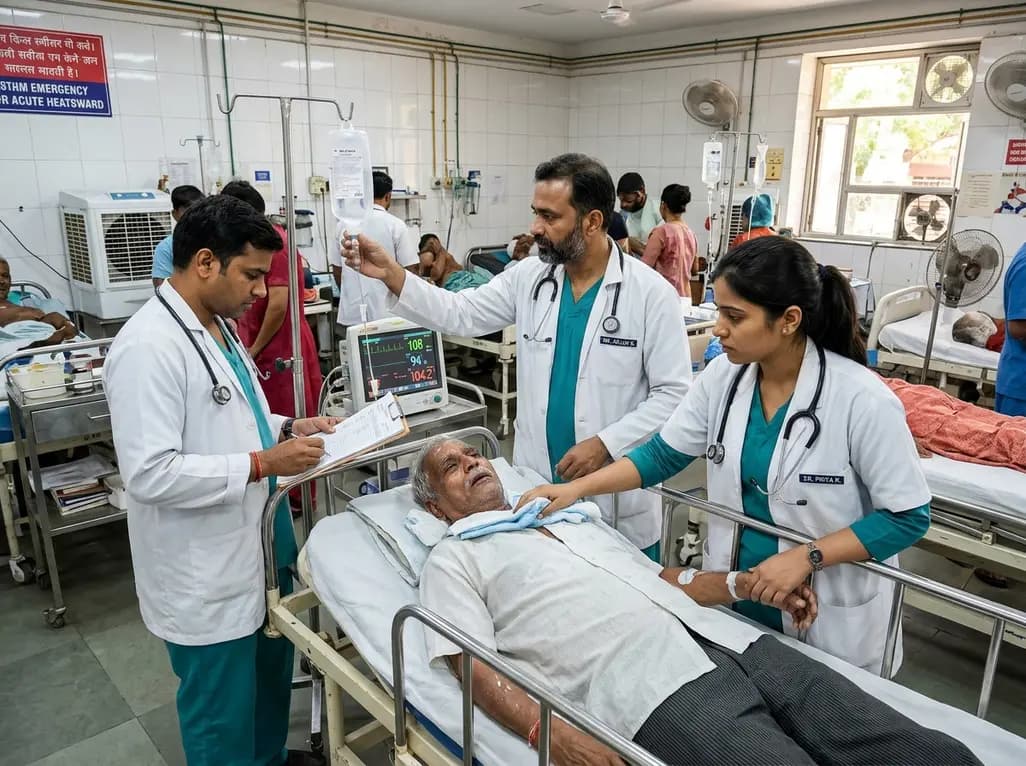
Recent epidemiological data reveals a dramatic surge in summer heat mortality driven by human-induced climate warming. This analysis explores the pathophysiological impacts on cardiac and renal systems, diagnostic dilemmas in death certification, and essential emergency cooling protocols for acute clinical care.
Today

Odisha has established India's first state-level clinical protocol specifically tailored for pregnant women with sickle cell disease. Developed with NHM and UNICEF, the framework provides structured antenatal screening, crisis mitigation, standardized referral pathways, and specialized interdisciplinary care.
Today

India is advancing preventive healthcare by integrating genomics, artificial intelligence, and quantum technologies. With the SANGAM programme sequencing one million Indian genomes, clinicians can unlock personalized therapies, detect cardiometabolic risks early, and curb the burden of diabetes and heart disease.
Today

A randomized controlled trial demonstrates that an eight-week dual-task training intervention significantly improves static and dynamic postural control over standard balance exercises in individuals with chronic ankle instability, addressing critical neurocognitive deficits during athletic and daily activities.
Today

A retrospective cohort study of 7,716 ICU patients from the MIMIC-IV database demonstrates that Gradient Boosting Decision Trees significantly outperform traditional SOFA scores in predicting in-hospital mortality among patients with sepsis and diabetes, with SHAP analysis providing clinical interpretability.
Today
