.webp&w=384&q=75)

Loading, please wait...
Loading, please wait...

Acute ischemic stroke caused by emergent large vessel occlusion represents a critical medical emergency where rapid recanalization preserves neurological function. For years, clinicians routinely excluded individuals with extensive established infarcts from reperfusion therapies due to concerns surrounding futile recanalization and reperfusion injury. However, recent landmark clinical trials demonstrated substantial functional benefits from endovascular intervention in these severe presentations. Emerging multicenter observational research now reveals how rapidly health systems translate these trial findings into routine acute practice through large core thrombectomy. This evidence-to-practice transition demonstrates that expanding interventional criteria safely transforms real-world stroke triage, providing meaningful recovery chances to patients previously managed with medical therapy alone.
Historically, endovascular intervention guidelines restricted mechanical recanalization to patients presenting with small or moderate ischemic cores. Clinicians routinely used non-contrast computed tomography or perfusion imaging to screen candidates, commonly excluding individuals with an Alberta Stroke Program Early CT Score of five or lower. Clinicians feared that restoring arterial flow into severely ischemic parenchyma would precipitate catastrophic intracerebral hemorrhage or fatal malignant edema. Consequently, standard supportive care remained the only alternative for patients presenting with extensive tissue damage.
Nevertheless, groundbreaking randomized controlled trials completely disrupted this long-standing clinical paradigm. Landmark studies, including SELECT2, ANGEL-ASPECT, and RESCUE-Japan LIMIT, systematically demonstrated that mechanical intervention consistently achieved superior functional independence compared to best medical therapy alone. Although mortality remained notable across this vulnerable population, endovascular recanalization prevented profound bedbound disability and drastically reduced institutionalization rates. Therefore, vascular neurology societies promptly updated their therapeutic guidelines, encouraging clinicians to evaluate candidates based on salvageable penumbral tissue rather than rigid ischemic core cutoffs alone.
While prospective clinical trials established rigorous efficacy data, evaluating real-world translation across heterogeneous hospital networks remained essential. The RAPID-LC study investigated this evidence-to-practice uptake by evaluating three hundred forty-five adults presenting within twenty-four hours of stroke onset with extensive tissue infarction. Researchers compared intervention rates during a pre-publication control period against a post-publication observational window across an integrated stroke consortium.
The findings demonstrated a remarkable and rapid shift in everyday clinical decision-making. Endovascular intervention utilization increased substantially from forty-two percent in the pre-trial cohort to over sixty percent following trial publication. Furthermore, multivariable logistic regression confirmed that presentation during the modern era served as the strongest independent predictor of receiving endovascular recanalization, showing an adjusted odds ratio of 3.11. Consequently, this multicenter investigation verified that intervention teams actively integrated published trial evidence without extensive institutional lag. The analysis highlighted that interventional neuroradiologists and emergency neurologists rapidly embraced broader reperfusion criteria across real-world practice settings.
A primary concern among neurointensivists and stroke physicians remains the balance between therapeutic efficacy and serious procedural hazards. Expanding endovascular treatment to extensive infarcts inherently introduces concerns regarding symptomatic intracranial hemorrhage and mechanical vessel perforation. Fortunately, observational registries provide reassuring safety metrics when experienced neurointerventionalists perform timely arterial recanalization.
Throughout the RAPID-LC investigation, researchers meticulously monitored thirty-day and ninety-day modified Rankin Scale scores, all-cause mortality, and critical procedural complications. Importantly, the expanded delivery of mechanical intervention did not trigger unacceptable surges in symptomatic hemorrhage or catastrophic intraprocedural events. Reperfusion therapy consistently preserved viable brain tissue surrounding the ischemic core, thereby mitigating progressive malignant herniation. While overall mortality in large vessel occlusion with low baseline scores naturally remains elevated compared to small-core presentations, functional trajectory curves distinctly favor active revascularization. Thus, real-world data confirm that modern aspiration catheters, stent retrievers, and advanced imaging algorithms maintain a favorable benefit-risk profile even among high-risk patients.
Despite encouraging uptake statistics, significant operational hurdles persist across regional emergency medical systems. Many spoke hospitals lack immediate access to round-the-clock endovascular suites or specialized neurointerventional personnel. Consequently, delays during interfacility transfer frequently erode the crucial therapeutic window, converting salvageable penumbra into nonviable necrotic tissue.
Additionally, selecting appropriate candidates across the extreme lower spectrum of imaging scores requires nuanced clinical judgment. While trial datasets primarily enrolled individuals with scores between three and five, patients presenting with scores between zero and two remain underrepresented in clinical literature. Clinicians must carefully evaluate patient age, baseline functional status, time from symptom onset, and collateral vascular circulation before proceeding to the catheterization laboratory. Implementing automated neuroimaging software substantially accelerates perfusion estimation, empowering regional networks to identify eligible transfer candidates without delay. Furthermore, standardized telestroke consultations assist emergency physicians in determining optimal transfer pathways for severe stroke presentations.
The clear paradigm shift documented by multicenter real-world cohorts mandates urgent protocol updates across tertiary hospitals and regional referral centers. Emergency physicians should avoid reflexively excluding patients from neurointerventional consideration solely due to low early computed tomography scores. Instead, clinicians must prioritize rapid vascular imaging, including computed tomography angiography and advanced perfusion maps, to locate proximal arterial occlusions.
Moreover, post-procedure neurocritical care demands intensive hemodynamic monitoring to maximize functional recovery. Clinicians must maintain tight blood pressure targets to avoid hyperperfusion injury while simultaneously ensuring adequate cerebral perfusion pressure. Specialized nursing protocols, routine neuroimaging surveillance, and proactive intracranial pressure management collectively safeguard procedural gains. By aligning local institutional protocols with contemporary trial evidence and consortium benchmarks, multidisciplinary stroke teams can deliver timely revascularization, ultimately reducing long-term disability for patients presenting with massive hemispheric strokes.
A large ischemic core typically refers to an acute infarction demonstrating an Alberta Stroke Program Early CT Score of five or lower. Alternatively, advanced perfusion imaging defines it as an established core volume exceeding fifty to seventy milliliters of nonviable brain tissue within an occluded vascular territory.
Clinicians historically excluded these individuals because early clinical trials assumed that extensive established tissue injury was irreversible. Furthermore, medical teams feared that revascularizing severely infarcted brain tissue would cause massive reperfusion injury, catastrophic symptomatic intracerebral hemorrhage, malignant cerebral edema, and ultimately futile clinical interventions.
Real-world evidence from the RAPID-LC study demonstrates rapid adoption. Following the publication of landmark clinical trials, intervention rates across comprehensive stroke centers rose from forty-two percent to over sixty percent within two years, confirming that clinical teams swiftly incorporated new evidence into standard emergency practice.
Disclaimer: This content is for informational and educational purposes only and does not constitute medical advice, diagnosis, or treatment. Always consult with a qualified healthcare professional regarding any medical condition or before making healthcare decisions. Never disregard professional medical advice or delay seeking it because of something you have read here. The views expressed are based on current evidence and guidelines, which may evolve over time. Refer to the latest local and national guidelines for clinical practice.
References

Read summarized clinical updates, watch expert medical content, and earn CME certifications right from your smartphone.
Open your smartphone camera to scan and install.





The multicenter RAPID-LC study demonstrates a rapid transition of trial evidence into clinical practice, showing endovascular thrombectomy rates surged from 42% to 60.5% in acute stroke patients with large ischemic cores, establishing safety and practical feasibility beyond trial settings.
Today

Left bundle branch pacing is an emerging physiological resynchronization strategy for heart failure. While observational data and some trials show benefits over biventricular pacing, divergent trial outcomes highlight the importance of confirmed conduction capture and specialized operator technique.
Today

A retrospective study of 86,012 pregnancies demonstrates that size-selective cfDNA enrichment boosts mean fetal fraction to 18.88% and achieves a 59.20% PPV for fetal copy number variants. However, 85.83% of CNVs showed size discrepancies, underscoring the mandatory role of confirmatory microarray testing.
Today
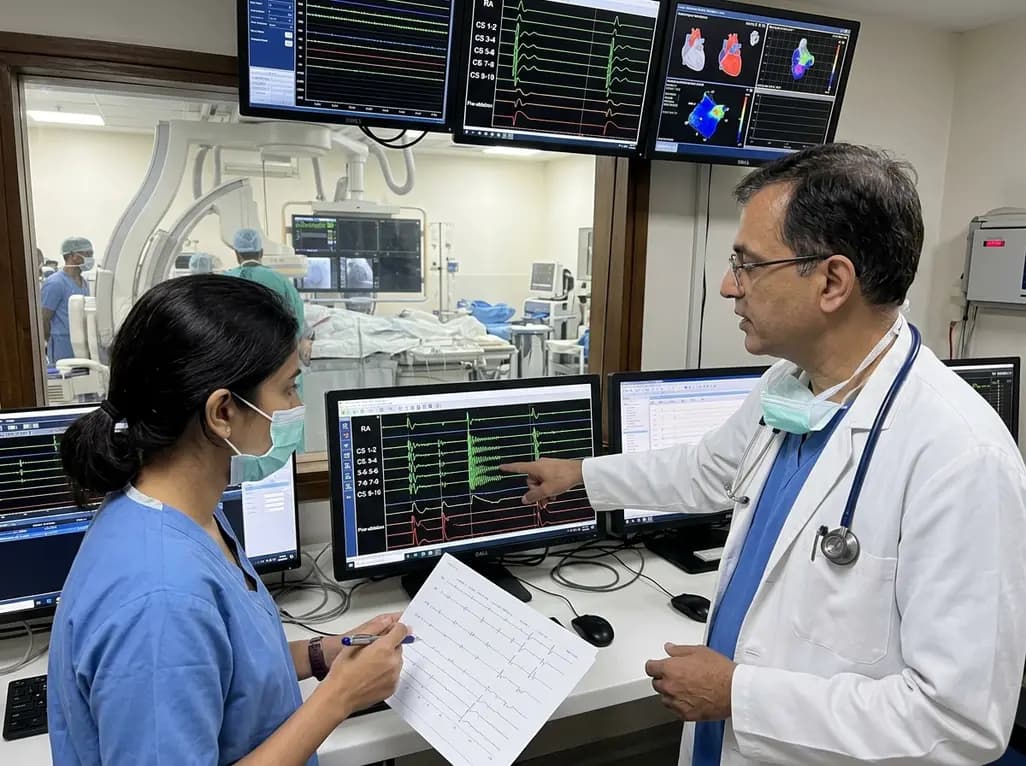
Radiofrequency catheter ablation of the cavotricuspid isthmus successfully terminates typical atrial flutter. This article reviews the mechanisms driving coronary sinus electrogram changes, wavefront activation pathways, and clinical criteria to verify bidirectional block during electrophysiology studies.
Today

A recent investigation examined load-dependent kinetic and kinematic profiles during two-way ballistic exercise across 30% to 80% 1-RM. Findings highlight load effects on velocity, impulse, and power, offering sports physicians objective guidance for neuromuscular conditioning and rehabilitation.
Today

A cross-sectional study demonstrates that increased BMI in adolescents significantly enhances mandibular length and alters salivary adipokines like adiponectin and resistin, providing novel insights into craniofacial growth and orthodontic planning.
Today
