.webp&w=384&q=75)

Loading, please wait...
Loading, please wait...

The development of a novel L-glutamine cancer biosensor, known as the Glutameter, represents a significant breakthrough in oncology diagnostics. Cancer cells frequently exhibit a metabolic reprogramming known as "glutamine addiction" to sustain their rapid proliferation. Therefore, detecting L-glutamine levels in biological fluids offers a reliable way to identify metabolic shifts associated with malignancy. Researchers have now developed a highly sensitive tool that leverages this biomarker for early screening purposes.
This new technology utilizes a Plasmonic Fiberoptic Absorption Biosensor (P-FAB) platform. The device incorporates a compact U-shaped optical fiber that creates an enhanced evanescent field. Additionally, it uses plasmonic labels to significantly boost the signal of the target analyte. By employing a competitive immunoassay, the system achieves ultra-high detection sensitivity. Consequently, clinicians may soon be able to detect cancer at a pre-diagnostic stage using portable, fiberoptic technology.
The Glutameter provides several advantages over conventional diagnostic methods. For instance, current diagnostic tools often rely on structural changes that appear later in the disease course. However, metabolic biomarkers like L-glutamine fluctuate much earlier. Moreover, the fiberoptic nature of the P-FAB system allows for a compact and cost-effective design. Furthermore, the high specificity of the competitive immunoassay ensures that results remain accurate even in complex biological samples. This combination of speed and sensitivity could revolutionize primary care screening protocols.
L-glutamine is a versatile nutrient that supports energy production and macromolecular synthesis in cancer cells. Because tumors consume this amino acid at accelerated rates, its concentration changes serve as a functional indicator of metabolic activity related to cancer growth.
The P-FAB system uses a U-shaped optical fiber to maximize light-matter interaction in the evanescent field. This design, combined with plasmonic labels, allows the sensor to detect extremely low concentrations of L-glutamine that standard laboratory tests might miss.
Disclaimer: This content is for informational and educational purposes only. It does not constitute medical advice, diagnosis, or treatment. Always seek the advice of your physician or other qualified health provider with any questions you may have regarding a medical condition. Refer to the latest local and national guidelines for clinical practice.
References

Read summarized clinical updates, watch expert medical content, and earn CME certifications right from your smartphone.
Open your smartphone camera to scan and install.





The Glutameter biosensor (P-FAB) leverages L-glutamine as a metabolic biomarker to enable highly sensitive early cancer detection via competitive immunoassa...
6 months ago

An observational study from the NIH All of Us Research Program reveals that adding a multi-ancestry polygenic risk score to machine learning models provides only modest improvements in predicting adult weight gain, underscoring the enduring significance of routine clinical and lifestyle factors.
Today

A study in JAMIA Open shows lightweight open-source reasoning LLMs achieve up to 95% sensitivity and accelerate evidence synthesis screening by nearly twentyfold, presenting a cost-effective, scalable AI solution for biomedical research and systematic reviews.
Today
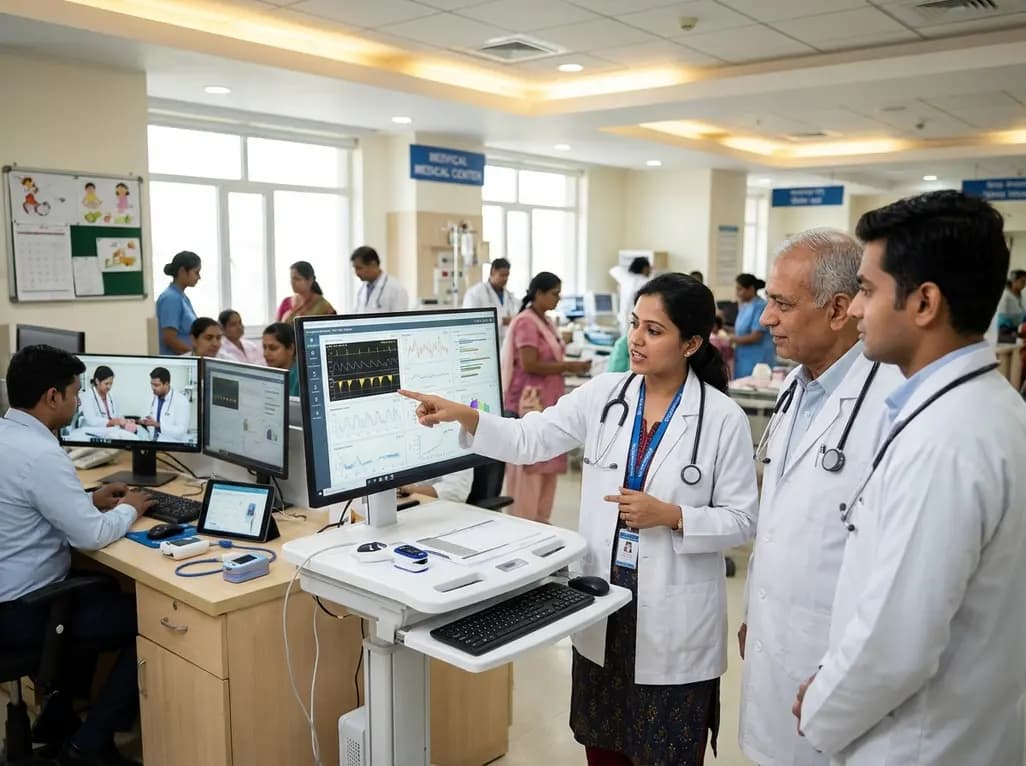
A landmark study details how an enterprise pediatric remote patient management model expanded from a single cardiology pilot to 16 diverse specialty programs by combining centralized digital operations with specialty clinical leadership.
Today

A comparative review of tension band wiring and intramedullary screw fixation in thumb metacarpophalangeal arthrodesis, evaluating union rates, hardware complications, and clinical outcomes.
Yesterday

A breakthrough ultrathin multimodal sensor decouples physical hemodynamic monitoring from disposable electrochemical calibration, achieving long-term wearable glucose prediction with 81.36% accuracy and a 9.12% MARD. This offers a robust, drift-free solution for outpatient metabolic surveillance.
Yesterday
