.webp&w=384&q=75)

Loading, please wait...
Loading, please wait...
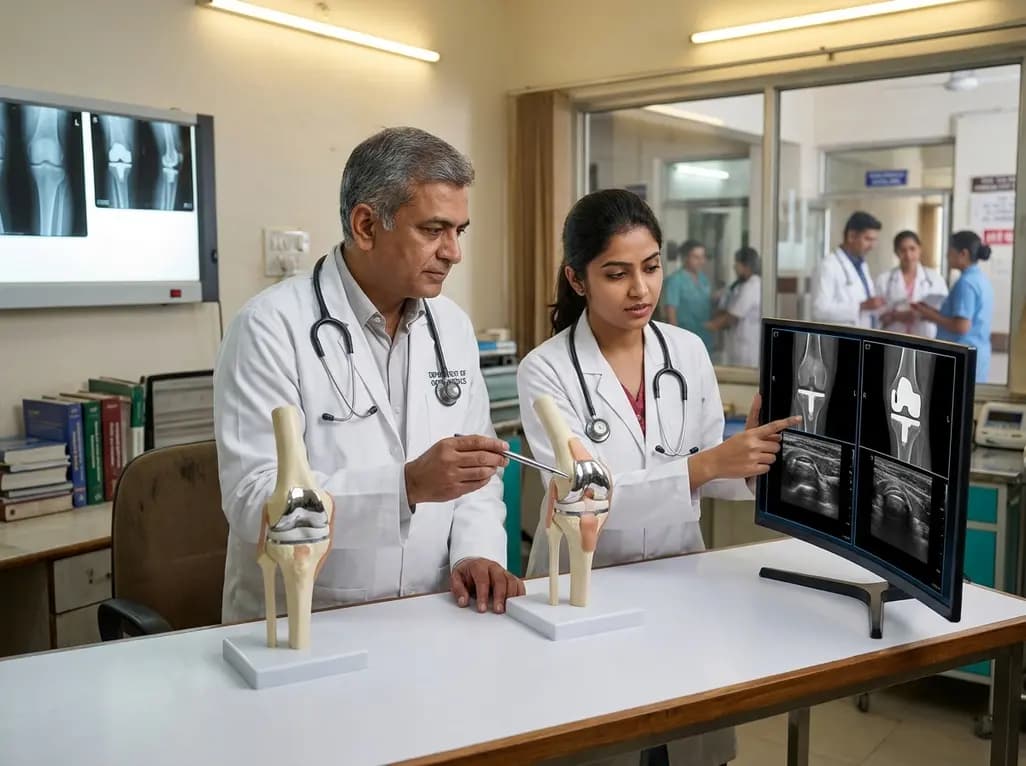
Total knee replacement has traditionally relied on the mechanical alignment (MA) principle to ensure long-term implant survival. Surgeons have aimed to create a neutral mechanical axis by performing bone resections perpendicular to the mechanical axes of the femur and tibia. However, a significant portion of patients remains dissatisfied with the functional feel of their replacement. This dissatisfaction has led to the rise of kinematic total knee arthroplasty (KA-TKA). Unlike the traditional method, kinematic alignment seeks to restore the native joint line and the patient’s individual pre-arthritic anatomy. Consequently, this approach often preserves more natural ligamentous tension and joint kinetics. Furthermore, the interest in kinematic strategies has grown as surgeons look for ways to improve patient-reported outcome measures and joint awareness. Specifically, researchers are now focusing on how these different alignment philosophies affect the patellofemoral joint. Understanding the nuances between these techniques is essential for modern orthopedic practice in India, where patient demands for high-function recovery are increasing. Therefore, comparing the radiological and clinical outcomes of both techniques provides critical insights into surgical refinement.
Patellar tracking remains a critical determinant of success following any knee arthroplasty procedure. Proper tracking ensures that the patella moves smoothly within the femoral trochlear groove throughout the entire range of motion. When tracking is suboptimal, patients often experience anterior knee pain, instability, or premature polyethylene wear. Several radiological parameters help clinicians assess this phenomenon, including patellar tilt and lateral displacement. Historically, mechanical alignment has sometimes necessitated lateral retinacular releases to correct tracking issues caused by the shift in joint line orientation. In contrast, the kinematic approach aims to keep the native patellar kinematics intact by matching the femoral component to the patient’s individual anatomy. Many surgeons believe that a kinematically aligned femoral component naturally guides the patella into a more physiological position. Moreover, maintaining the original joint line height and obliquity may reduce the stress on the extensor mechanism. Consequently, evaluating whether kinematic alignment truly offers superior tracking compared to mechanical alignment is a major research goal. By looking at sunrise X-ray views postoperatively, specialists can objectively measure tilt angles and shift patterns. These measurements ultimately reflect the harmony between the prosthetic design and the surrounding soft tissues.
Implementing kinematic total knee arthroplasty requires a shift in surgical perspective from a standardized approach to a personalized one. In a kinematic setup, the bone cuts are made to replace the thickness of the cartilage and bone that has been lost to disease. This technique avoids the extensive soft tissue releases often required in mechanical alignment to achieve a balanced knee. Because the natural joint line is preserved, the patella typically tracks more naturally within the femoral component’s groove. Many studies have indicated that KA-TKA leads to better flexion and improved patient satisfaction scores in the early postoperative period. Furthermore, the restoration of the native femoral anatomy means that the trochlear groove is positioned in a way that respects the individual’s Q-angle. Consequently, the incidence of lateral patellar tilt might be lower in kinematically aligned knees. Surgeons must be meticulous during the procedure, often using calipers or robotic assistance to ensure resections match the planned thickness. This precision is vital for achieving the theoretical benefits of the kinematic philosophy. As more evidence emerges, it becomes clear that this patient-specific strategy is not just about the tibiofemoral joint but also about optimizing the entire extensor mechanism for better function.
Recent retrospective and prospective analyses have shed light on the differences between MA-TKA and KA-TKA regarding patellar stability. One significant study analyzed over 200 patients to compare patellar tilt and displacement between the two groups. Interestingly, the results showed that both alignment strategies produced comparable patellar tracking. Neither group demonstrated a statistically significant difference in postoperative patellar tilt or lateral displacement. This suggests that both techniques, when executed correctly, can achieve a stable patellofemoral interface. However, a notable finding was the difference in the incidence of lateral joint line releases. Mechanically aligned knees required lateral releases more frequently than kinematically aligned knees. Specifically, the data showed a 3.9% incidence in the MA group compared to 0% in the KA group for joint line releases. Although some metrics did not reach statistical significance, the trend suggests that kinematic alignment may reduce the surgical trauma associated with soft tissue manipulation. Surgeons in India, who often manage complex and late-stage osteoarthritis, may find this reduction in releases beneficial for faster recovery. These findings reinforce the idea that kinematic alignment is a safe and potentially more conservative alternative to the mechanical gold standard.
The decision to perform a lateral retinacular release is often made intraoperatively when the patella fails the "no-thumb" test. While these releases can correct tracking, they may also lead to complications like hematoma, skin necrosis, or patellar devascularization. Therefore, a surgical technique that inherently minimizes the need for such releases is highly desirable. Kinematic alignment appears to fulfill this requirement by preserving the natural constraints and orientation of the knee. By avoiding the deviation from the native joint line, surgeons can maintain a more balanced tension in the lateral structures. Additionally, reducing the need for lateral joint line releases contributes to less postoperative pain and better blood supply to the patella. Patients who undergo KA-TKA often report a "forgotten joint" feeling more frequently than those with mechanical alignment. This subjective improvement is likely linked to the preservation of natural kinematics. Nevertheless, clinicians must continue to monitor long-term outcomes to ensure that these anatomical alignments do not compromise the longevity of the prosthesis. Current data support the conclusion that both MA and KA provide satisfactory tracking, but KA offers a potential advantage in soft tissue preservation. This makes it an attractive option for surgeons aiming to refine their surgical outcomes and enhance patient satisfaction.
The debate between kinematic and mechanical alignment is far from over, but the evidence for kinematic benefits is growing. Future research should focus on long-term survivorship data and more sensitive patient-reported outcomes. Currently, it appears that kinematic total knee arthroplasty provides a reliable method for restoring knee function with minimal disruption to the patellofemoral joint. While radiological metrics like tilt and displacement are similar between the two techniques, the reduced need for lateral releases in KA-TKA is a significant clinical find. Surgeons should consider the individual patient’s anatomy and deformity when choosing an alignment strategy. Robotic-assisted technologies will likely play a massive role in standardizing the execution of kinematic alignment in the coming years. By providing real-time feedback and high precision, these tools can help surgeons achieve perfect tracking every time. For the Indian medical community, staying updated on these advancements is crucial for providing world-class orthopedic care. Ultimately, the goal is to provide a knee replacement that feels and functions as close to the original joint as possible.
Kinematic alignment aims to restore the patient's individual pre-arthritic anatomy by matching bone resections to native joint lines. Because this method preserves the natural ligamentous balance and joint orientation, the patella tends to track more physiologically within the prosthetic groove. Consequently, surgeons often find that they need to perform fewer lateral retinacular or joint line releases compared to the traditional mechanical alignment approach.
Current clinical research indicates that there is no statistically significant difference in postoperative patellar tilt or lateral displacement between mechanical and kinematic alignment. Both techniques are capable of achieving satisfactory patellar tracking when the components are positioned accurately. However, the kinematic approach achieves these radiological results with a lower overall incidence of additional soft tissue releases, suggesting a more natural fit for the extensor mechanism.
Most patients undergoing primary total knee arthroplasty can be candidates for kinematic alignment, particularly those who desire a more natural-feeling joint. This approach is especially useful for patients with non-standard anatomy that mechanical alignment might struggle to accommodate without extensive releases. However, surgeons must evaluate each case individually, as severe deformities may sometimes require restricted kinematic or traditional mechanical strategies to ensure long-term implant stability and durability.
Disclaimer: This content is for informational and educational purposes only and does not constitute medical advice. It is intended for healthcare professionals. Readers should always consult with a qualified healthcare provider for specific medical concerns. Refer to the latest local and national guidelines for clinical practice.
References
Benson M et al. Patellar tracking and patellar tilt in kinematic versus mechanical knees. J Exp Orthop. 2026 Jul undefined. doi: 10.1002/jeo2.70848. PMID: 42472071.
Migliorini M, et al. Mechanical versus kinematic alignment for total knee arthroplasty: a meta-analysis. Arch Orthop Trauma Surg. 2025;145(3):455-467.
Sappey-Marinier E, et al. Patellofemoral Joint Outcomes in Kinematically vs. Mechanically Aligned Total Knee Arthroplasty: A Systematic Review and Meta-Analysis. MDPI J. Clin. Med. 2026;15(6):1234.

Read summarized clinical updates, watch expert medical content, and earn CME certifications right from your smartphone.
Open your smartphone camera to scan and install.





This study compares patellar tracking and tilt in kinematic versus mechanical total knee arthroplasty. Results indicate that kinematic alignment achieves comparable patellar tracking while potentially reducing the need for lateral joint line releases, supporting its use as a patient-specific surgical approach.
3 months ago

Review how tailored exercise programs benefit frail older patients with heart failure. Explore pathophysiological mechanisms, individualized training prescriptions, and strategies to overcome adherence barriers in clinical practice.
Today

Leucine Rich Bio has introduced South Asia's first comprehensive vaginal microbiome test, BugSpeaks. By profiling microbial dysbiosis, pathogens, and antimicrobial resistance, this next-generation diagnostic platform provides clinicians with deeper insights into recurrent infections, fertility, and reproductive health.
Today

In high-risk pulmonary embolism complicated by severe anemia and active uterine bleeding, systemic thrombolysis is contraindicated. Large-bore aspiration thrombectomy provides rapid hemodynamic rescue without fibrinolysis, supported by inferior vena cava filter placement and multidisciplinary critical care.
Today

This comparative study evaluates posterior labral tears with and without glenohumeral instability, highlighting distinct demographic patterns, MRI underestimation in stable shoulders, and successful arthroscopic repair outcomes.
Today

A clinical study demonstrates that early intervention with tocilizumab, either as monotherapy or bridged with corticosteroids, achieves significant proptosis reduction and resolves active inflammation in treatment-naive thyroid eye disease.
Today
