.webp&w=384&q=75)

Loading, please wait...
Loading, please wait...
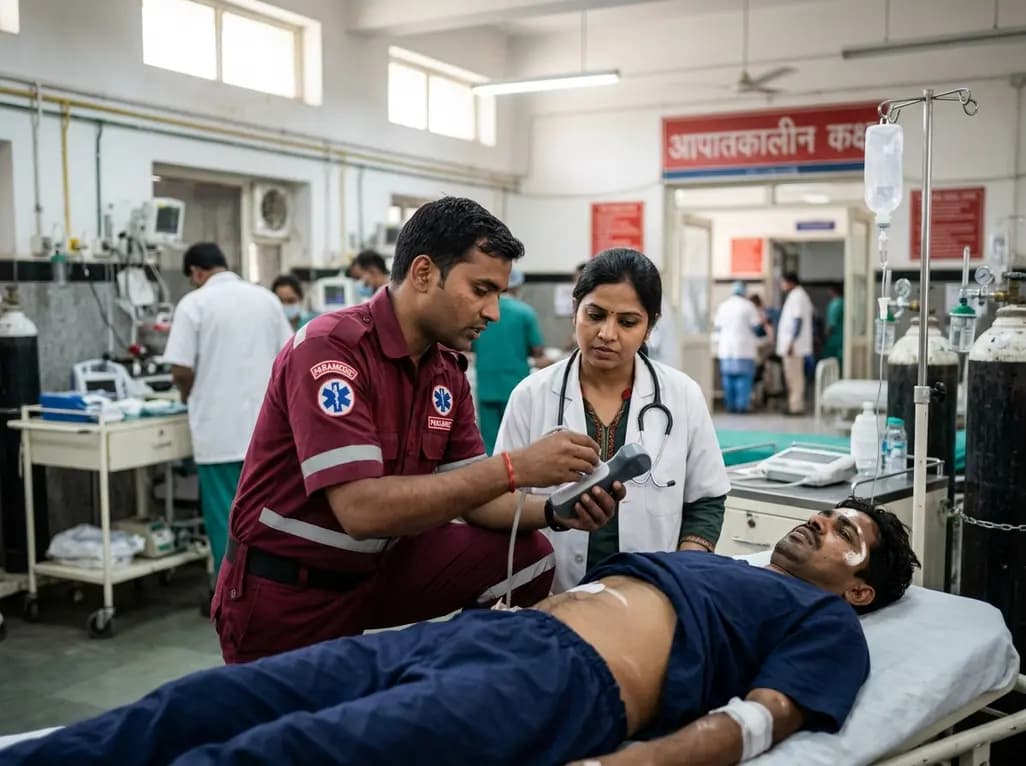
Traumatic injuries from road traffic accidents represent a major cause of preventable mortality globally, particularly when occult hemorrhage remains undetected during early transport. To address this clinical challenge, researchers at King George's Medical University (KGMU) in Lucknow have engineered an innovative internal bleeding detection device. Designed by Chief Medical Superintendent and trauma surgeon Prof Prem Raj Singh alongside Medical Superintendent Prof Amiya Agarwal, this novel tool aims to revolutionize prehospital triage. Internal hemorrhage often goes unnoticed during initial clinical assessments because visible external wounds dominate focus. Consequently, patients frequently suffer life-threatening hypovolemic shock before reaching specialized tertiary facilities. The newly developed point-of-care probe addresses this diagnostic blind spot by providing rapid fluid analysis directly at the scene or inside an ambulance.
Furthermore, the device functions without requiring complex imaging setups or elaborate diagnostic machinery. Traditional bedside assessments usually depend on formal sonographic evaluations that demand specialized operator expertise. In contrast, this innovation offers an accessible mechanism that non-physician first responders can operate easily. Therefore, ambulance crews can rapidly evaluate abdominal trauma without delaying transit. Consequently, early identification of hemoperitoneum allows emergency personnel to initiate supportive measures earlier. Subsequently, this streamlined approach ensures that high-risk trauma victims receive prioritized transport to comprehensive trauma centers, ultimately mitigating severe risks associated with delayed surgical intervention.
The technical design of this internal bleeding detection device emphasizes simplicity, durability, and operational efficiency in resource-limited environments. Unlike standard diagnostic equipment, the probe operates completely without a display screen. Responders place the ergonomic probe over the patient's abdominal region, where it analyzes localized tissue and fluid density. If abnormal fluid collection like free blood is detected, the probe provides an immediate, unambiguous alert signal to the user. Additionally, the device features a dual-power architecture that supports direct electrical supply alongside battery operation. Consequently, emergency personnel can rely on the unit during remote field rescue operations or power outages.
Moreover, the absence of a display monitor significantly reduces manufacturing costs while lowering device fragility during emergency handling. Traditional point-of-care ultrasound machines require dedicated screens, high processing power, and specialized interpretation skills that paramedic staff often lack. By replacing complex visual interpretation with automated diagnostic signaling, this tool removes technical barriers. First responders require minimal training to position the probe correctly and interpret its binary outputs. Furthermore, the lightweight, compact profile allows seamless integration into standard paramedic kits. Thus, emergency response teams can deploy the unit instantly upon arriving at an accident scene.
Diagnostic limitations in primary healthcare centers and rural clinics pose significant hurdles to effective trauma management across developing regions. While external bleeding control remains straightforward using compression bandages and first-aid protocols, hidden internal bleeding remains notoriously difficult to evaluate outside major medical hubs. Smaller peripheral facilities rarely possess round-the-clock radiological services or specialized trauma care teams. Consequently, healthcare workers in rural centers often misjudge the severity of internal abdominal trauma. As a result, critical transfer decisions are frequently delayed until overt hemodynamic instability occurs, severely compromising patient outcomes.
However, integrating portable point-of-care diagnostic tools into rural emergency workflows can fundamentally transform patient triage. Prof Amiya Agarwal emphasized that many accident victims present first to district hospitals lacking comprehensive trauma facilities. By deploying this handheld device in peripheral clinics and ambulances, primary care teams can rapidly screen patients for occult abdominal bleeding. Consequently, healthcare providers can identify high-risk individuals immediately upon arrival. This timely identification prevents catastrophic delays by facilitating swift referral to specialized tertiary trauma care centers. Therefore, this innovation bridges the technology gap between rural primary care centers and advanced academic medical institutions.
The concept of the golden hour in emergency medicine highlights the crucial sixty-minute window following severe physical trauma. During this critical timeframe, prompt medical intervention and surgical control of hemorrhage yield the highest survival rates. Statistics indicate that approximately 30% to 35% of trauma victims experience internal bleeding requiring specialized surgical management. Delaying definitive care beyond this golden hour exponentially increases the risk of multiorgan failure, profound hemorrhagic shock, and death. Therefore, rapid prehospital triage tools are essential for expediting clinical decision-making before patients arrive at hospital emergency departments.
Specifically, Prof Prem Raj Singh noted that early detection of invisible internal blood loss transforms decision-making for emergency responders. When paramedics confirm internal fluid accumulation early, they can immediately bypass non-specialized facilities in favor of comprehensive trauma units. Additionally, pre-hospital notification enables receiving surgical teams to prepare operating rooms and blood products prior to patient arrival. Subsequently, this seamless chain of care reduces overall time-to-intervention dramatically. Ultimately, expediting definitive surgical repair within the golden hour offers the best opportunity to preserve organ function and save patient lives.
Beyond initial prehospital screening, the innovative probe offers critical clinical utility through continuous serial monitoring. Traumatic internal bleeding is dynamic and may develop gradually as injured solid organs continue to bleed. Consequently, an initial negative assessment does not entirely rule out ongoing internal hemorrhage. Because the handheld device is non-invasive and easy to operate, healthcare workers can perform repeated assessments throughout transport or observation. Serial monitoring enables clinical teams to evaluate whether abdominal fluid accumulation is expanding over time. Thus, providers can detect subtle clinical deterioration early and adjust resuscitation strategies accordingly.
Regarding intellectual property, the inventing surgeons at KGMU have filed a comprehensive patent covering both the core conceptual methodology and physical design of the device. Although official patent application publishing has occurred, final regulatory approval and patent grant remain pending. Moreover, commercialization partnerships and extensive clinical validation trials represent the next steps in bringing this device to widespread clinical adoption. Once fully approved and mass-produced, this affordable point-of-care technology could standardise prehospital trauma care across India. Consequently, its deployment promises to enhance emergency medical services nationwide and dramatically reduce trauma-related mortality.
Q1: How does the new KGMU internal bleeding detection device differ from conventional ultrasound machines?
Unlike conventional ultrasound machines, this device is screen-free, highly portable, and remarkably simple to operate. Standard point-of-care ultrasound requires specialized radiological training, high power consumption, and visual screen interpretation. In contrast, the KGMU probe automatically analyzes abdominal fluid density and alerts the user directly if abnormal fluid or blood is detected. Consequently, paramedics and emergency responders can perform rapid prehospital screenings with minimal specialized training.
Q2: Why is early detection of internal bleeding crucial during the trauma golden hour?
Internal bleeding affects roughly 30% to 35% of trauma patients and often remains hidden during initial physical examination. Delayed diagnosis leads to rapid blood loss, hypovolemic shock, and severe organ failure within the critical golden hour after injury. Early detection allows prehospital teams to bypass peripheral clinics, prioritize urgent transfer to specialized trauma centers, and alert surgical teams in advance, significantly improving overall patient survival outcomes.
Q3: Can non-medical personnel or paramedics operate this handheld diagnostic device?
Yes, the device is specifically engineered as a point-of-care tool for ambulance drivers, paramedics, and first responders who receive minimal training. Because it eliminates the need for visual image interpretation and screen analysis, users simply place the probe over the affected abdominal area to receive automated feedback. Additionally, the device operates on both battery power and electricity, making it ideal for field emergency deployments.
Disclaimer: This content is for informational and educational purposes only. It does not constitute medical advice or replace professional judgment. Refer to the latest local and national guidelines for clinical practice.
References

Read summarized clinical updates, watch expert medical content, and earn CME certifications right from your smartphone.
Open your smartphone camera to scan and install.





Surgeons at KGMU have developed a screen-free handheld probe to detect internal abdominal bleeding in trauma patients. The portable point-of-care device empowers paramedics and emergency responders to rapidly identify occult blood loss during the critical golden hour and facilitate timely tertiary referrals.
last month

A 2026 meta-analysis evaluates PDE5 inhibitors in advanced ILD with severe gas exchange impairment. While overall mortality was not significantly reduced, a targeted subgroup with pulmonary hypertension showed a 49% risk reduction, underscoring the necessity of precise hemodynamic phenotyping.
Today

At the 79th Regional Committee session, the World Health Organization commended India's public health advancements. Key achievements include the operationalization of 160,000 Ayushman Arogya Mandirs, higher institutional delivery rates, strong ASHA networks, and persistent efforts to eliminate tuberculosis nationwide.
Today

The Supreme Court questioned FSSAI's phased warning approach, urging single-phase implementation for foods exceeding limits in any nutrient of concern. Backed by ICMR-NIN recommendations, the proposed red hexagonal warnings target added sugar, salt, and fat to combat India's escalating chronic disease epidemic.
Today

A premature neonate developed upper limb compartment syndrome after uterine rupture extruded the arm through a scar defect. Conservative management with continuous monitoring yielded complete functional recovery and normal limb growth at 10-year follow-up, highlighting non-operative safety in selected cases.
Today
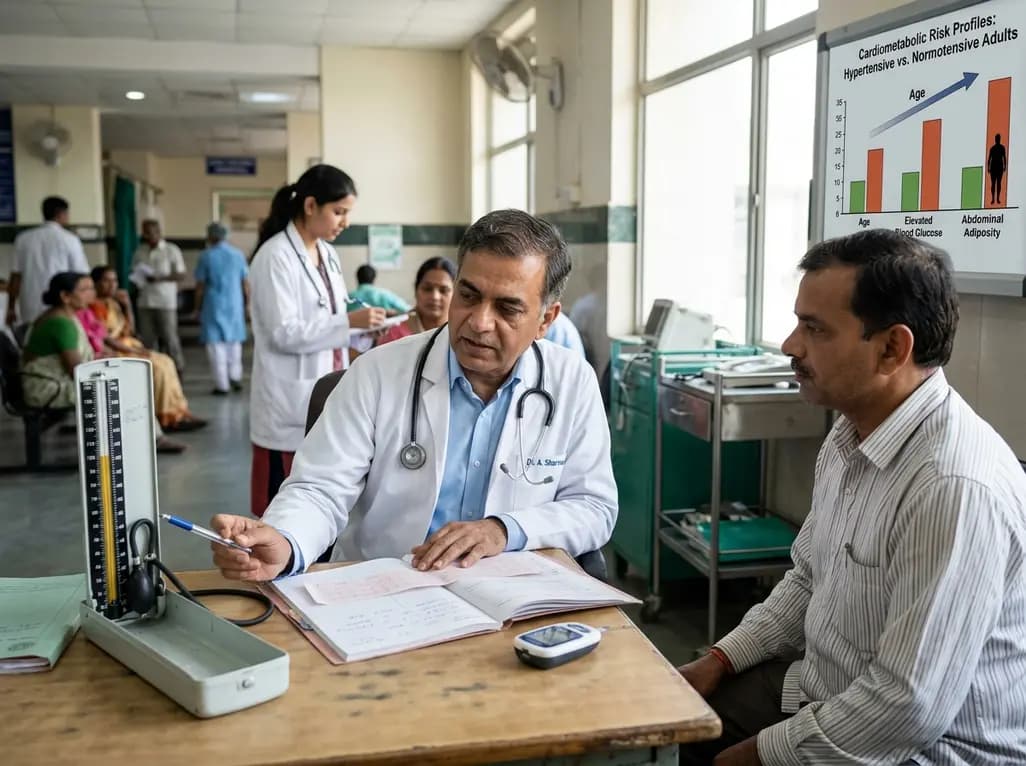
A comparative analysis shows that older age, elevated blood glucose, and abdominal adiposity are primary drivers of hypertension. Comprehensive evaluation of cardiometabolic risk profiles enables clinicians to detect overlapping metabolic dysfunctions early and optimize targeted prevention strategies.
Today
