.webp&w=384&q=75)

Loading, please wait...
Loading, please wait...
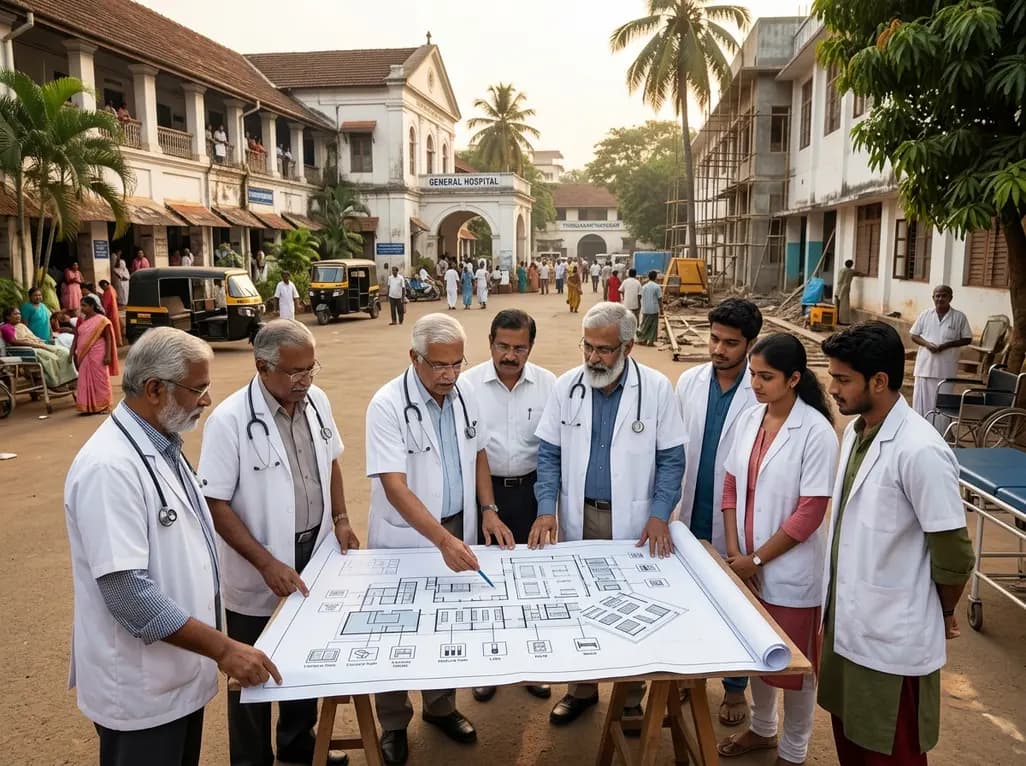
Kerala has officially requested approval from the Union government to establish a second medical college in Thiruvananthapuram. This initiative aims to address the growing demand for healthcare services and medical education in the state capital. Health Minister K. Muraleedharan urged the Union health ministry to expedite clearances, hoping to initiate MBBS admissions in the current academic year. By doing so, the state plans to utilize existing local facilities to quickly expand public healthcare resources. Consequently, this strategic move will benefit both medical aspirants and patients across the capital region. Furthermore, this policy aligns with Kerala's long-term vision of making healthcare accessible and affordable to all citizens.
To execute this ambitious plan, the state government identified the historic Thiruvananthapuram General Hospital for development. This well-established healthcare institution already possesses much of the necessary clinical infrastructure and clinical staff. Therefore, upgrading this hospital into a full-fledged academic center represents a cost-effective and highly practical solution. The state intends to create an annual intake of 100 MBBS students, which will significantly bolster the regional medical workforce. However, executing this upgrade successfully requires substantial financial backing from the central government. Consequently, Minister Muraleedharan has requested the immediate release of ₹150 crore in central assistance. This funding will help upgrade academic blocks, establish laboratories, and purchase advanced medical equipment. Furthermore, local administrators believe this project will greatly reduce the patient load on the capital's existing medical college. By distributing the patient burden, the healthcare system can deliver more efficient and compassionate care. Thus, local authorities view establishing the second medical college as a vital step toward reforming the state capital's public medical infrastructure. Historically, the capital city has struggled with severe overcrowding in public wards.
Thiruvananthapuram General Hospital has served the local community for several decades with distinction. To transform it into a teaching hospital, the state must upgrade several departments to meet national regulatory standards. Consequently, the government has planned extensive structural modifications, including new academic blocks and lecture halls. Additionally, they must expand diagnostic facilities and establish advanced laboratory spaces for students. This upgrade will not only enhance academic capabilities but also improve clinical services for patients. For instance, the cardiology, emergency medicine, and intensive care departments will receive significant technology updates. Therefore, local citizens will gain access to specialized treatments that were previously unavailable at this facility. Furthermore, the transition to a medical college will attract highly qualified teaching faculty and specialist doctors. This influx of expertise will raise the overall standard of care in the district. To accelerate this transition, the state health department has formed a dedicated committee. This committee will oversee the project and ensure compliance with the National Medical Commission regulations. Ultimately, this modernization project represents a massive leap forward. Moreover, the upgraded facilities will help bridge the healthcare gap between rural and urban populations in Kerala.
The proposed second medical college aligns with larger national health strategies to expand medical seats. During the review meeting, Union Health Minister J. P. Nadda highlighted the central government's commitment to improving healthcare. Specifically, the Union government has earmarked ₹15,000 crore to create 10,000 additional medical seats across India. Consequently, the Centre assured Kerala that its proposal for Thiruvananthapuram would receive positive consideration under this national scheme. In addition to this project, Kerala seeks substantial central assistance under the Pradhan Mantri Swasthya Suraksha Yojana. This program aims to correct regional imbalances in affordable tertiary healthcare services. The state government has submitted proposals for super-specialty blocks at medical colleges in Idukki, Manjeri, and Wayanad. Similarly, they plan to build super-specialty hospitals at Haripad and Kalpetta. These projects require steady financial flows from the central government to ensure timely completion. Therefore, the state has urged the Centre to release the allocated funds without delay. By securing these resources, Kerala can rapidly upgrade its secondary and tertiary healthcare facilities. Furthermore, these investments will help reduce out-of-pocket medical expenses for economically disadvantaged families. Thus, the financial support from the central government remains absolutely critical for the state's welfare programs.
Apart from local medical colleges, Kerala renewed its long-standing demand for an All India Institute of Medical Sciences. Minister Muraleedharan informed the Centre that the state has already identified ten potential sites for the institute. Therefore, he urged the Union government to complete the necessary feasibility studies immediately. Securing an AIIMS would provide Kerala with a premier institution for medical education, research, and patient care. Consequently, the state is eager to finalize the location and secure formal approval as soon as possible. In response, Union Minister J. P. Nadda acknowledged that Kerala's demand for an AIIMS is completely legitimate. He assured that the remaining administrative formalities would be completed within a time-bound framework. This assurance has brought hope to health advocates who have campaigned for this project for years. An AIIMS in Kerala will serve as a hub for advanced medical research and tertiary clinical care. Additionally, it will attract top-tier medical talent and research grants from across the globe. By establishing this institution, the state will significantly enhance its capacity to handle complex medical cases. Moreover, the institution will offer highly specialized treatments to patients who currently have to travel to other states.
Beyond the capital city, the state government is pursuing a comprehensive upgrade of healthcare infrastructure across all districts. Specifically, the state plans to establish new government medical colleges in Wayanad, Idukki, and Kasaragod. These northern and hilly districts historically suffered from a lack of advanced healthcare options. Therefore, building these colleges will ensure that residents do not have to travel long distances for treatment. Furthermore, the government aims to establish specialized trauma care centers and burns units in every district. This decentralized approach will save countless lives during emergencies and critical incidents. Additionally, the plan includes establishing Centers of Excellence in genetics, neurosciences, and cardiac sciences. These centers will focus on advanced research and cutting-edge treatments. To support these clinical facilities, the state will also strengthen its emergency medicine services. This includes the recruitment and training of professional emergency medical technicians. Consequently, emergency response times and pre-hospital care quality will improve significantly across the state. Thus, the current expansion represents a holistic approach to public health rather than an isolated development. Moreover, these systematic improvements will build a robust framework capable of managing future public health crises. Ultimately, these measures will position Kerala as a national leader in accessible and quality healthcare.
Q1: Why is Kerala proposing a second medical college in Thiruvananthapuram?
The state aims to address severe overcrowding in existing tertiary care facilities and expand regional medical education opportunities. By upgrading Thiruvananthapuram General Hospital, the government can leverage existing clinical infrastructure to quickly accommodate 100 MBBS students annually. This expansion will significantly improve patient care, distribute the heavy clinical workload, and provide affordable, high-quality medical education to aspiring students in the capital district.
Q2: How does the Union government plan to support the expansion of medical seats in India?
The Union government has earmarked a massive budget of ₹15,000 crore to create 10,000 additional medical seats across the country. This national initiative focuses on upgrading existing district hospitals and state-run institutions into fully functional medical colleges. Consequently, Union Health Minister J. P. Nadda assured that Kerala's proposal to establish a new medical college in the capital would receive priority consideration under this nationwide scheme.
Q3: What other major healthcare infrastructure projects is Kerala currently planning under PMSSY?
Under the Pradhan Mantri Swasthya Suraksha Yojana, Kerala is planning several high-impact projects to improve tertiary care. These include establishing super-specialty blocks at medical colleges in Idukki, Manjeri, and Wayanad, alongside new super-specialty hospitals in Haripad and Kalpetta. Furthermore, the state intends to set up dedicated trauma care centers, burns units in every district, and specialized Centers of Excellence focusing on genetics, neurosciences, and cardiac sciences.
Disclaimer: This content is for informational and educational purposes only. It does not constitute medical advice or replace professional judgment. Refer to the latest local and national guidelines for clinical practice.
References

Read summarized clinical updates, watch expert medical content, and earn CME certifications right from your smartphone.
Open your smartphone camera to scan and install.





Kerala has urged the Union government to approve a second government medical college in Thiruvananthapuram. By upgrading the General Hospital, the state plans to introduce 100 new MBBS seats and secure critical funding to elevate healthcare infrastructure, addressing regional overcrowding.
3 months ago

As monsoon seasons elevate arboviral disease threats, Tamil Nadu has initiated an ICMR-monitored evaluation of the tetravalent dengue vaccine in Tenkasi district. Clinicians emphasize clinical monitoring, public prevention, and high-quality early pediatric care to reduce disease morbidity across endemic regions.
Today

A comparative cohort study evaluates vNOTES vs TLH hysterectomy for benign conditions, demonstrating shorter operative duration, faster return to daily activities, and equivalent female sexual function scores without increased dyspareunia.
Today

Review how tailored exercise programs benefit frail older patients with heart failure. Explore pathophysiological mechanisms, individualized training prescriptions, and strategies to overcome adherence barriers in clinical practice.
Today

This comparative study evaluates posterior labral tears with and without glenohumeral instability, highlighting distinct demographic patterns, MRI underestimation in stable shoulders, and successful arthroscopic repair outcomes.
Today

A clinical study demonstrates that early intervention with tocilizumab, either as monotherapy or bridged with corticosteroids, achieves significant proptosis reduction and resolves active inflammation in treatment-naive thyroid eye disease.
Today
