

Loading, please wait...
Loading, please wait...

The clinical approach to Crohn's disease medical management has transformed dramatically over the past decade. Chronic intestinal inflammation often causes progressive, irreversible structural bowel damage when clinicians delay effective intervention. Therefore, gastroenterologists must establish clear, ambitious therapeutic targets early in the disease trajectory. Contemporary international practice guidelines urge clinicians to pursue deep objective endpoints rather than relying merely on symptomatic control. Consequently, the Korean Association for the Study of Intestinal Diseases developed the updated 2026 clinical practice guidelines using the rigorous GRADE-ADOLOPMENT methodology. These evidence-based recommendations equip practicing physicians with clear strategies to navigate complex modern treatment pathways successfully.
Historically, clinicians utilized an accelerated step-up approach that reserved advanced therapies for refractory disease stages. However, recent evidence demonstrates that delayed biologic initiation often allows irreversible strictures and internal fistulas to develop. Modern guidelines therefore advocate early risk stratification to identify patients requiring rapid therapeutic escalation. Specifically, clinicians should assess clinical predictors of aggressive disease, such as extensive anatomical involvement, deep endoscopic ulcerations, and young age at onset. In addition, routine monitoring must prioritize objective inflammatory biomarkers over subjective symptom scores alone. Serial fecal calprotectin assays and cross-sectional imaging provide reliable markers of mucosal and transmural inflammation. When physicians align treatment adjustments with objective biomarkers, patients achieve significantly higher rates of long-term endoscopic remission. Furthermore, achieving mucosal healing markedly reduces hospitalization rates and emergency surgical resections. Consequently, current practice standards establish endoscopic healing and corticosteroid-free remission as non-negotiable primary endpoints. By adopting these proactive strategies, physicians can change the natural history of Crohn's disease and preserve long-term intestinal function. Ultimately, this proactive treat-to-target strategy protects against cumulative intestinal damage and sustains clinical wellbeing.
The proliferation of targeted biologics provides clinicians with unprecedented flexibility to tailor therapies for individual patient phenotypes. Tumor necrosis factor antagonists, including infliximab and adalimumab, remain pivotal frontline options for moderate-to-severe Crohn's disease. Moreover, anti-TNF agents demonstrate unmatched efficacy in preventing structural damage and promoting rapid clinical responses. However, clinicians must also evaluate newer mechanisms of action when selecting initial or secondary therapy. Anti-integrin therapies, such as vedolizumab, provide gut-selective immunosuppression with an exceptional safety profile, especially for elderly patients. In contrast, interleukin-12/23 and selective interleukin-23 inhibitors offer robust systemic efficacy coupled with convenient dosing schedules. For instance, agents targeting the p19 subunit of interleukin-23 achieve substantial rates of endoscopic improvement in both bio-naive and bio-experienced cohorts. Therefore, gastroenterologists should balance comparative efficacy, safety, infection risks, and patient convenience during therapeutic decision-making. When physicians select the correct mechanism initially, they substantially reduce subsequent secondary failure and drug discontinuation. In addition, personalized positioning allows clinicians to match specific comorbidities with the most favorable pharmacological mechanism.
In addition to injectable biologics, oral small molecules represent a major breakthrough in inflammatory bowel disease care. Janus kinase inhibitors and sphingosine-1-phosphate receptor modulators provide viable oral alternatives for adult patients with active disease. Furthermore, these small molecules do not induce anti-drug antibodies, which eliminates immunogenicity concerns common to biologic proteins. Consequently, clinicians observe stable pharmacokinetics and reliable drug exposure throughout maintenance phases. Clinical trials confirm that selective JAK inhibitors induce rapid clinical response and promote mucosal healing even in anti-TNF-refractory individuals. However, physicians must evaluate patient-specific cardiovascular, thromboembolic, and infectious risk factors prior to initiating JAK inhibitor therapy. In particular, clinicians should screen patients for prior venous thromboembolism, severe dyslipidemia, and latent viral infections such as herpes zoster. In addition, proactive vaccination protocols enhance patient safety before starting systemic immunosuppressive small molecules. Thus, oral small molecules provide a powerful, flexible addition to the therapeutic armamentarium when clinicians respect essential safety guidelines. Finally, their oral administration offers significant convenience for patients who dislike frequent subcutaneous or intravenous administrations.
Biosimilar formulations of established biologics have expanded worldwide access to advanced inflammatory bowel disease therapies. Multiple robust clinical trials confirm that biosimilars display equivalent efficacy, safety, and immunogenicity profiles compared to originator biologics. Therefore, clinical guidelines strongly support initiating therapy with biosimilars or switching stable patients from reference products. Furthermore, non-medical switching under clinician supervision yields substantial healthcare savings without compromising disease control. Meanwhile, the strategic use of combination therapy remains a vital consideration in clinical practice. Combining an anti-TNF agent with an immunomodulator, such as azathioprine or methotrexate, significantly reduces neutralizing anti-drug antibody formation. Consequently, combination therapy maintains superior drug trough levels and prolongs therapeutic durability. However, prolonged combination therapy increases opportunistic infection risks and malignancy concerns over time. Therefore, clinicians must routinely utilize therapeutic drug monitoring to decide whether continuing or de-escalating combination therapy is appropriate. In particular, measuring drug concentrations and antidrug antibody titers provides actionable data to guide rational dose optimization.
Perianal fistulizing Crohn's disease represents an aggressive phenotype that demands aggressive, multidisciplinary intervention. Specifically, successful treatment requires close collaboration between gastroenterologists and colorectal surgeons. Before initiating immunosuppressive biologics, surgeons must perform an examination under anesthesia to place non-cutting setons and drain pelvic abscesses. Subsequently, anti-TNF therapy serves as the medical cornerstone for inducing and maintaining fistula closure. In addition, therapeutic drug monitoring plays an essential role because fistulizing disease typically requires higher serum anti-TNF concentrations than purely luminal inflammation. Meanwhile, clinicians frequently face difficult decisions regarding treatment de-escalation once patients achieve sustained remission. If a patient maintains deep clinical and endoscopic healing for over one year, clinicians may cautiously consider step-down strategies. However, complete biologic withdrawal carries a high risk of disease relapse. Therefore, physicians must maintain stringent biomarker surveillance and schedule regular endoscopic examinations whenever they pursue drug de-escalation. Ultimately, shared decision-making ensures that patients understand the delicate balance between treatment toxicity and relapse risk.
Modern clinical guidelines prioritize deep remission over simple symptomatic improvement. Consequently, clinicians focus on achieving corticosteroid-free clinical remission alongside complete endoscopic mucosal healing. In addition, treating physicians monitor objective biomarkers, such as fecal calprotectin and serum C-reactive protein, to track intestinal inflammation. By targeting transmural healing and mucosal integrity early, gastroenterologists can prevent irreversible bowel damage, lower stricture rates, and substantially decrease the need for future emergency bowel resections.
Clinicians can safely switch patients from originator biologics to approved biosimilars when treating Crohn's disease. Extensive clinical trials demonstrate that approved biosimilars maintain identical clinical efficacy, safety, and pharmacokinetics. Furthermore, switching does not increase immunogenicity or trigger antidrug antibody production. However, physicians should practice transparent shared decision-making with patients before initiating the switch. In addition, healthcare providers must maintain routine biomarker monitoring post-switch to ensure continuous disease control and sustained therapeutic drug levels.
Physicians should only consider treatment de-escalation in highly selected patients who achieve sustained clinical, biochemical, and endoscopic remission for at least one year. While withdrawing immunomodulators from combination anti-TNF therapy is relatively common, discontinuing biologic monotherapy carries a high relapse rate. Consequently, clinicians must discuss potential risks thoroughly with each patient. Furthermore, if de-escalation occurs, physicians must schedule close clinical follow-up, serial calprotectin measurements, and early endoscopic evaluation to detect subclinical disease recurrence promptly.
Disclaimer: This content is for informational and educational purposes only... Refer to the latest local and national guidelines for clinical practice.
References

Read summarized clinical updates, watch expert medical content, and earn CME certifications right from your smartphone.
Open your smartphone camera to scan and install.





The 2026 KASID guidelines outline evidence-based recommendations for Crohn's disease medical management. Covering advanced biologics, small molecules, biosimilars, and individualized therapeutic strategies, the update helps clinicians optimize long-term remission and mucosal healing in adult patients.
Today

A KGMU study reveals over half of women with breast abnormalities fail to undergo diagnostic confirmation, leading to advanced-stage detection. Discover the socio-cultural barriers, clinical risks of incomplete resection, and community-level solutions needed to bridge the critical screening-to-diagnosis gap in India.
Today
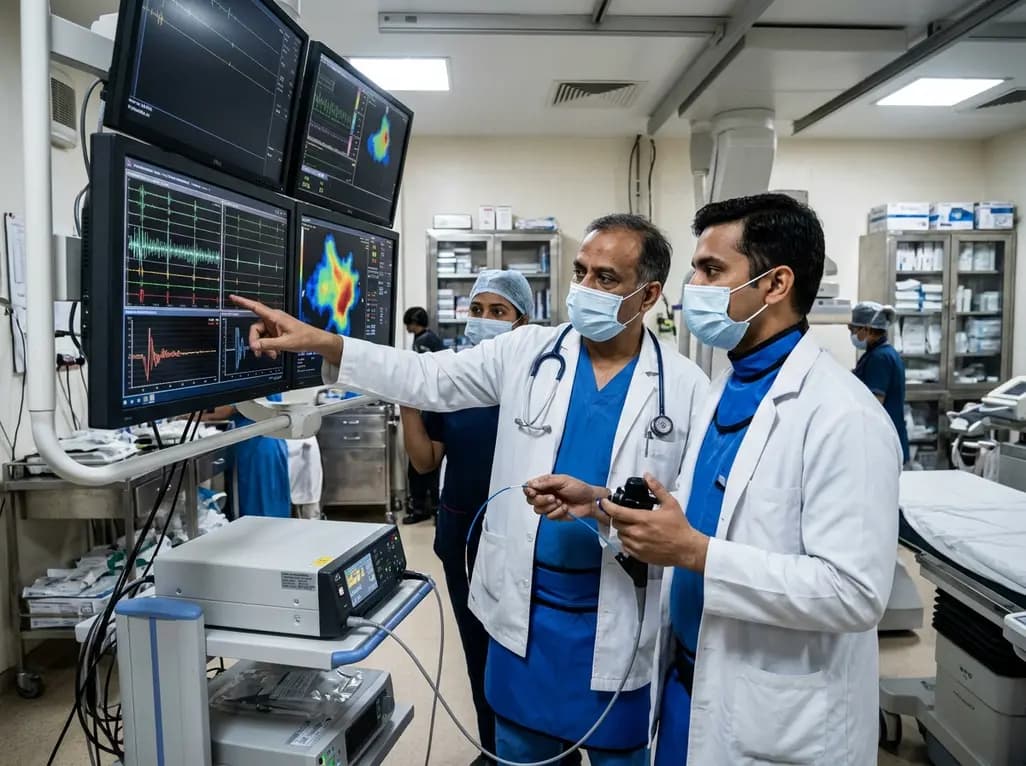
A comparative non-contact study reveals that high-power radiofrequency delivery with the QDOT MICRO catheter induces an artifactual contact force rise. Electrophysiologists must understand this power-dependent thermal and electrical phenomenon to avoid inadvertent catheter withdrawal and ineffective ablation.
Today

A novel proof-of-concept study presents a six-degree-of-freedom articulated manikin neck equipped with linear potentiometers. The system provides real-time kinematic motion feedback during cervical immobilisation, delivering sub-degree tracking accuracy to improve pre-hospital trauma training and patient safety.
Today

Caffeoylquinic acids, such as chlorogenic acid, offer broad antioxidant, antidiabetic, and anti-inflammatory properties. Advanced plant cell and organ culture methods now enable scalable, sustainable, and pure production of these high-value therapeutic metabolites for pharmaceutical and clinical applications.
Today
