.webp&w=384&q=75)

Loading, please wait...
Loading, please wait...

The Karnataka government recently introduced a groundbreaking student mobile addiction policy to address rising concerns over digital technology use among adolescents. This initiative, developed with the National Institute of Mental Health and Neurological Sciences (NIMHANS), emphasizes mental health and cyber safety. Consequently, the framework aims to foster emotional resilience and responsible digital behavior through school-based interventions. Notably, nearly one in four adolescents in the state shows signs of problematic internet use.
The draft policy focuses on a preventive approach involving early identification and management strategies. Specifically, it proposes the integration of digital wellness into the existing life skills and ICT curricula. Schools must now establish Digital Wellness Committees to oversee awareness initiatives and manage incidents. Furthermore, the policy mandates that institutions formulate their own digital use guidelines. These guidelines should include screen-time norms capped at one hour per day for recreational purposes.
Teachers will undergo specialized Training of Trainers (ToT) under a \"digital detox\" framework. This training equips them to understand technology addiction through the 5C model: Craving, Control, Compulsion, Coping, and Consequences. Moreover, educators will learn to identify early warning signs of digital distress in students. Consequently, they can refer those in need to support services like Tele-MANAS. In addition, the policy stresses the importance of promoting offline activities like physical exercise and hobbies.
The policy recognizes parents as vital stakeholders in curbing technology addiction. Therefore, the framework encourages them to enforce screen-time rules and create device-free zones at home. Additionally, schools will provide regular guidance sessions to help parents model responsible digital behavior. However, the government will provide overall resources and oversight to ensure consistent implementation across all districts. Finally, the expected outcome is a significant reduction in technology-related mental health issues among the younger generation.
Q1: What is the 5C model mentioned in the policy?
The 5C model stands for Craving, Control, Compulsion, Coping, and Consequences, which helps educators identify the depth of technology addiction in students.
Q2: What are the screen time limits proposed for students?
The draft policy recommends capping recreational screen time at one hour per day for students to ensure a healthy balance with offline activities.
Q3: How can students access mental health support under this policy?
Students exhibiting digital distress can be referred by trained teachers to counseling services or the national tele-mental health helpline, Tele-MANAS.
Disclaimer: This content is for informational and educational purposes only. It does not constitute medical advice or replace professional judgment. Refer to the latest local and national guidelines for clinical practice.
References

Read summarized clinical updates, watch expert medical content, and earn CME certifications right from your smartphone.
Open your smartphone camera to scan and install.





Karnataka's draft policy tackles student mobile addiction with screen time caps, teacher training, and NIMHANS-led digital wellness strategies for schools....
6 months ago

The TREM-AB open-label pilot study evaluated a wearable passive nonlinear vibration absorber for essential tremor. The Nonlinear Energy Sink bracelet reduced clinical Fahn-Tolosa-Marin tremor scores by 32.1% and electrophysiological tremor power by 49.2% with no adverse effects reported.
Today

A population-based study of 20,928 children reveals that small vulnerable newborns face sex-divergent mental capital outcomes at ages 6-7: term SGA girls show higher behavioral difficulties and lower resilience, while preterm non-SGA boys experience increased behavioral problems.
Today
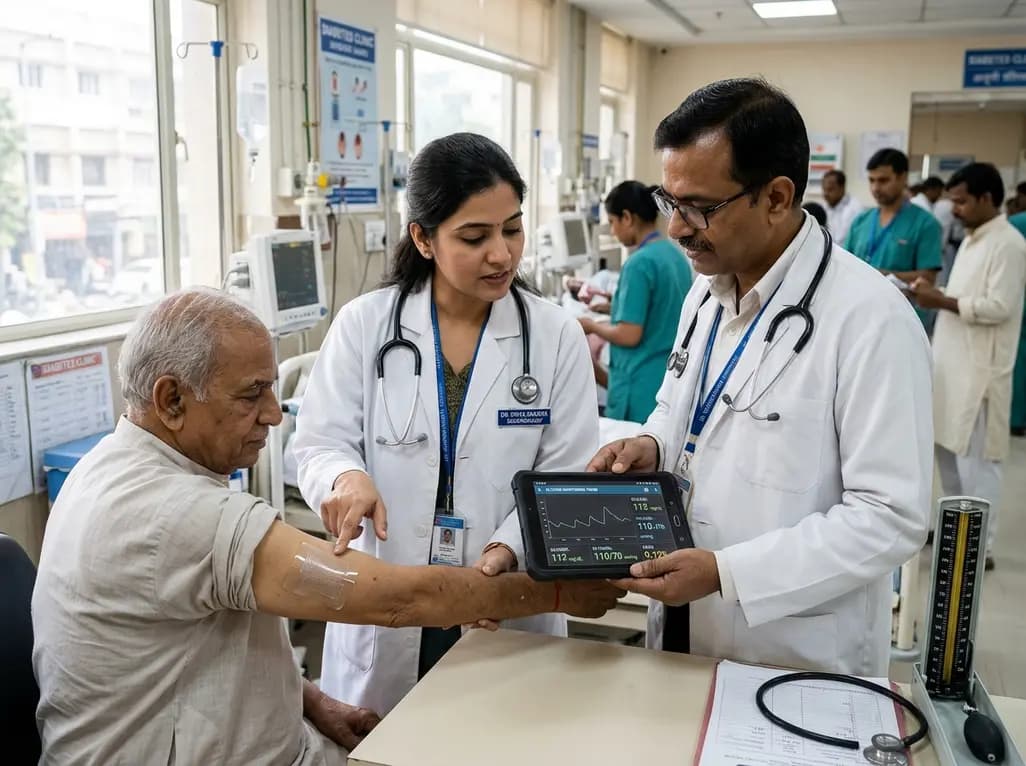
A breakthrough ultrathin multimodal sensor decouples physical hemodynamic monitoring from disposable electrochemical calibration, achieving long-term wearable glucose prediction with 81.36% accuracy and a 9.12% MARD. This offers a robust, drift-free solution for outpatient metabolic surveillance.
Today
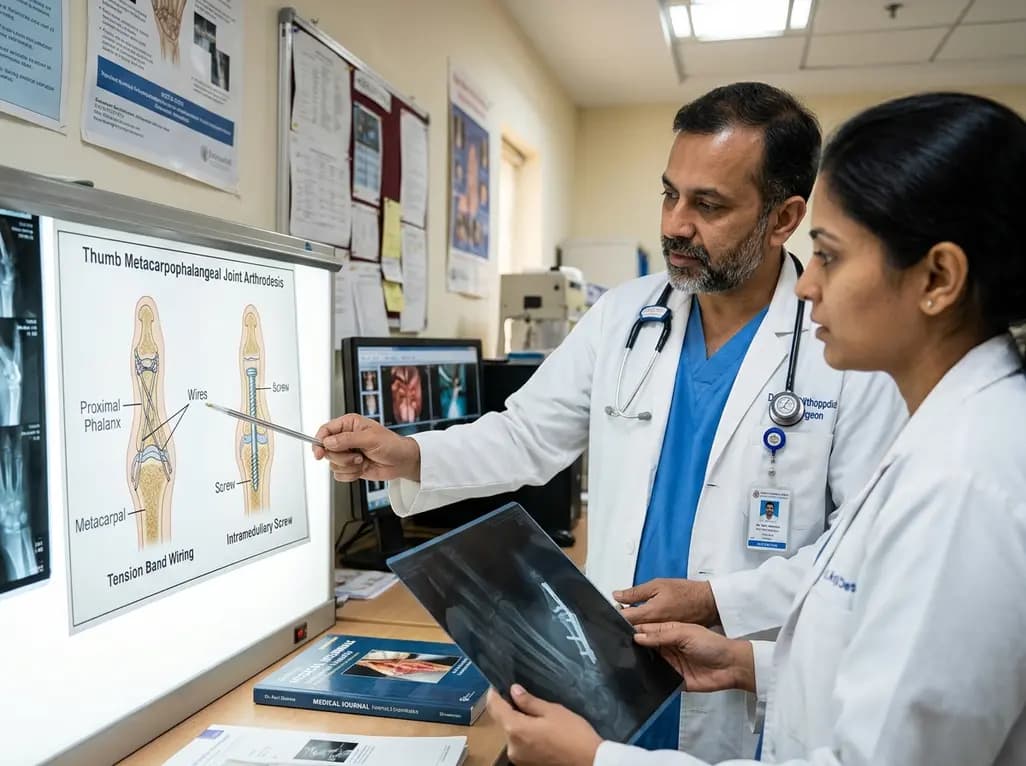
A comparative review of tension band wiring and intramedullary screw fixation in thumb metacarpophalangeal arthrodesis, evaluating union rates, hardware complications, and clinical outcomes.
Today

Following regulatory scrutiny from FSSAI regarding promotional representations and lean muscle preservation claims, Dr. Reddy's Laboratories and Nestlé Health Science are currently reviewing the branding and marketing strategy for their joint nutritional supplement Celevida GLP+.
Today
