.webp&w=384&q=75)

Loading, please wait...
Loading, please wait...

JoAnne Stubbe's biochemistry research has fundamentally transformed our understanding of life's molecular building blocks. As an MIT Professor Emerita, her journey reflects a deep-seated passion for discovery and an unwavering curiosity. For decades, she investigated the complex mechanisms behind enzymes that repair and replicate DNA. Her work specifically highlighted how free radicals drive critical biological reactions.
The medical world owes much to Stubbe’s dedication. For instance, her elucidation of ribonucleotide reductase (RNR) mechanisms directly enabled the development of lifesaving drugs. Consequently, medications like gemcitabine and hydroxyurea are now standard treatments for various malignancies. In India, hydroxyurea remains a vital therapy for sickle cell anemia management. Furthermore, her team's insights into bleomycin clarified how this antibiotic functions as a potent cancer-fighting agent.
Stubbe’s path was not always easy, but she persisted with radical determination. She became the first woman to receive tenure in MIT’s Chemistry Department. Moreover, she mentored generations of scientists who continue to push the boundaries of chemical biology. Although she has retired from active teaching, her influence persists through her ongoing contributions to scientific literature. Therefore, her story illustrates that persistence often leads to the most significant scientific breakthroughs.
Her most notable contribution is the discovery of how ribonucleotide reductases (RNRs) function. This fundamental understanding led to the development of key anticancer drugs like gemcitabine.
She pioneered the use of mechanism-based inhibitors. By understanding exactly how enzymes work at a chemical level, researchers can design more effective and targeted therapies for diseases like cancer.
Disclaimer: This content is for informational and educational purposes only. It does not constitute professional medical advice, diagnosis, or treatment. Always seek the advice of your physician or other qualified health provider with any questions you may have regarding a medical condition. Refer to the latest local and national guidelines for clinical practice.
References
1. O'Reilly M et al. JoAnne Stubbe's Radical Path: A Story of Passion, Curiosity, and Persistence. Annu Rev Biochem. 2026 Apr 02. doi: 10.1146/annurev-biochem-040320-103623. PMID: 41926175.
2. Greene BL et al. Ribonucleotide Reductases: Structure, Chemistry, and Metabolism Suggest New Therapeutic Targets. Annu Rev Biochem. 2020 Jun 20;89:45-75. doi: 10.1146/annurev-biochem-013118-111843. PMID: 32569524.
3. MIT News. MIT biochemist JoAnne Stubbe wins National Medal of Science. MIT News Office. 2009 Sep 17.

Read summarized clinical updates, watch expert medical content, and earn CME certifications right from your smartphone.
Open your smartphone camera to scan and install.





A look into the career of MIT Professor JoAnne Stubbe, whose work on ribonucleotide reductases paved the way for modern oncology treatments....
6 months ago
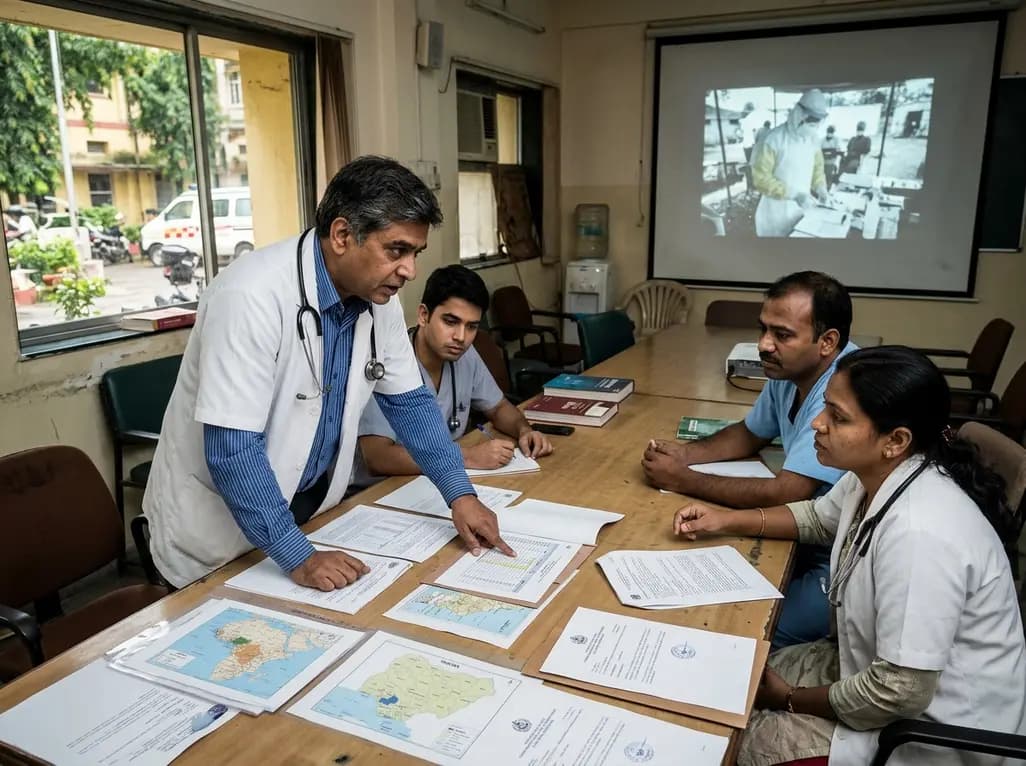
Following Nigeria's first recorded Ebola case linked to regional travel, the Africa CDC has convened an emergency ministerial summit. This alert underscores critical clinical priorities for healthcare professionals, including differentiating early viral infection from malaria, implementing barrier nursing, and triage.
Today

Leucine Rich Bio has introduced South Asia's first comprehensive vaginal microbiome test, BugSpeaks. By profiling microbial dysbiosis, pathogens, and antimicrobial resistance, this next-generation diagnostic platform provides clinicians with deeper insights into recurrent infections, fertility, and reproductive health.
Today

Review how tailored exercise programs benefit frail older patients with heart failure. Explore pathophysiological mechanisms, individualized training prescriptions, and strategies to overcome adherence barriers in clinical practice.
Today

This comparative study evaluates posterior labral tears with and without glenohumeral instability, highlighting distinct demographic patterns, MRI underestimation in stable shoulders, and successful arthroscopic repair outcomes.
Today

A clinical study demonstrates that early intervention with tocilizumab, either as monotherapy or bridged with corticosteroids, achieves significant proptosis reduction and resolves active inflammation in treatment-naive thyroid eye disease.
Today
