.webp&w=384&q=75)

Loading, please wait...
Loading, please wait...

Predicting the recovery of patients with Idiopathic Sudden Sensorineural Hearing Loss (ISSNHL) remains a significant clinical challenge for otolaryngologists. However, recent evidence suggests that the initial pure tone audiogram serves as a reliable prognostic tool. Understanding the ISSNHL audiogram configuration prognosis allows clinicians to risk-stratify patients more accurately from their first visit.
A retrospective cohort study involving 487 patients recently evaluated four primary audiogram configurations: ascending, descending, flat, and total-deaf. Researchers observed that the configuration of the initial test independently predicts whether a patient will achieve complete recovery. Specifically, patients with an ascending pattern demonstrated a 50% recovery rate, while those with a flat pattern showed a 25.2% recovery rate. These patterns confer a significantly better outlook compared to more severe configurations.
In contrast to the more favorable patterns, descending and total-deaf configurations were associated with much poorer outcomes. Patients with a descending audiogram had a recovery rate of only 9.8%, while those categorized as total-deaf achieved 0% complete recovery. Furthermore, the analysis confirmed that older age and a higher initial Pure Tone Average (PTA) act as negative predictors. Consequently, these factors must be integrated into modern clinical risk stratification to guide patient counseling.
Therefore, integrating audiogram shapes into predictive models helps healthcare providers offer more personalized treatment plans. By identifying high-risk patterns early, clinicians can better manage patient expectations and explore more aggressive therapeutic interventions when necessary.
According to the latest research, the ascending audiogram configuration offers the best prognosis, with nearly half of all patients achieving complete recovery after treatment.
A total-deaf configuration is a strong negative predictor for hearing restoration. In the studied cohort, no patients with this initial pattern achieved complete recovery.
Besides the audiogram shape, factors such as advanced age and higher initial hearing loss levels (Pure Tone Average) also independently predict worse clinical outcomes.
Disclaimer: This content is for informational and educational purposes only and does not constitute medical advice or a professional relationship between the reader and the author or publisher. Always seek the advice of a qualified healthcare provider for any medical condition or treatment. Refer to the latest local and national guidelines for clinical practice.
References
Guo L et al. Audiogram Configuration Predicts Treatment Response in Sudden Sensorineural Hearing Loss. Otolaryngol Head Neck Surg. 2026 Jun 17. doi: 10.1002/ohn.70314. PMID: 42307984.
Cvorovic L et al. Prognostic factors in idiopathic sudden sensorineural hearing loss. ORL J Otorhinolaryngol Relat Spec. 2008;70(4):230-5.
Stachler RJ et al. Clinical Practice Guideline: Sudden Hearing Loss (Update). Otolaryngol Head Neck Surg. 2019;161(1_suppl):S1-S45.

Read summarized clinical updates, watch expert medical content, and earn CME certifications right from your smartphone.
Open your smartphone camera to scan and install.





New research identifies the initial audiogram configuration as an independent prognostic marker for Idiopathic Sudden Sensorineural Hearing Loss (ISSNHL). Patients with ascending and flat patterns show significantly higher recovery rates compared to those with descending or total-deaf configurations.
4 months ago

Following regulatory scrutiny from FSSAI regarding promotional representations and lean muscle preservation claims, Dr. Reddy's Laboratories and Nestlé Health Science are currently reviewing the branding and marketing strategy for their joint nutritional supplement Celevida GLP+.
Today

Demanding exhaustive hormonal profiling can inadvertently discourage clinical studies involving females. Methodological standards must align with the specific scientific question to expand, not restrict, equitable evidence for women.
Today
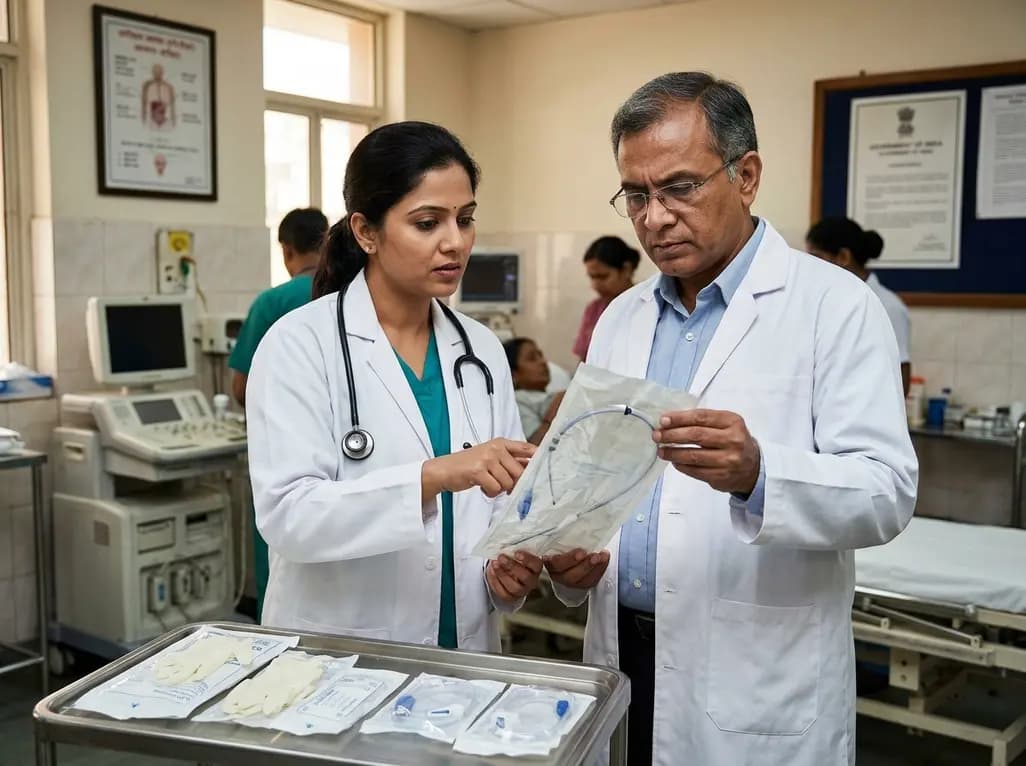
The Directorate General of Health Services directs Indian states to halt the hazardous reuse and reprocessing of single-use medical devices. Discover regulatory implications under the Drugs and Cosmetics Act, critical infection risks, legal liabilities, and operational changes required across clinical specialties.
Today
A novel calcium polyphosphate coacervate enables injectable bone implants with in situ hierarchical porosity via phase separation and gas foaming, significantly enhancing cell proliferation, energy metabolism, and osteogenic differentiation for minimally invasive bone defect repair.
Today

India is advancing preventive healthcare by integrating genomics, artificial intelligence, and quantum technologies. With the SANGAM programme sequencing one million Indian genomes, clinicians can unlock personalized therapies, detect cardiometabolic risks early, and curb the burden of diabetes and heart disease.
Today
