

Loading, please wait...
Loading, please wait...
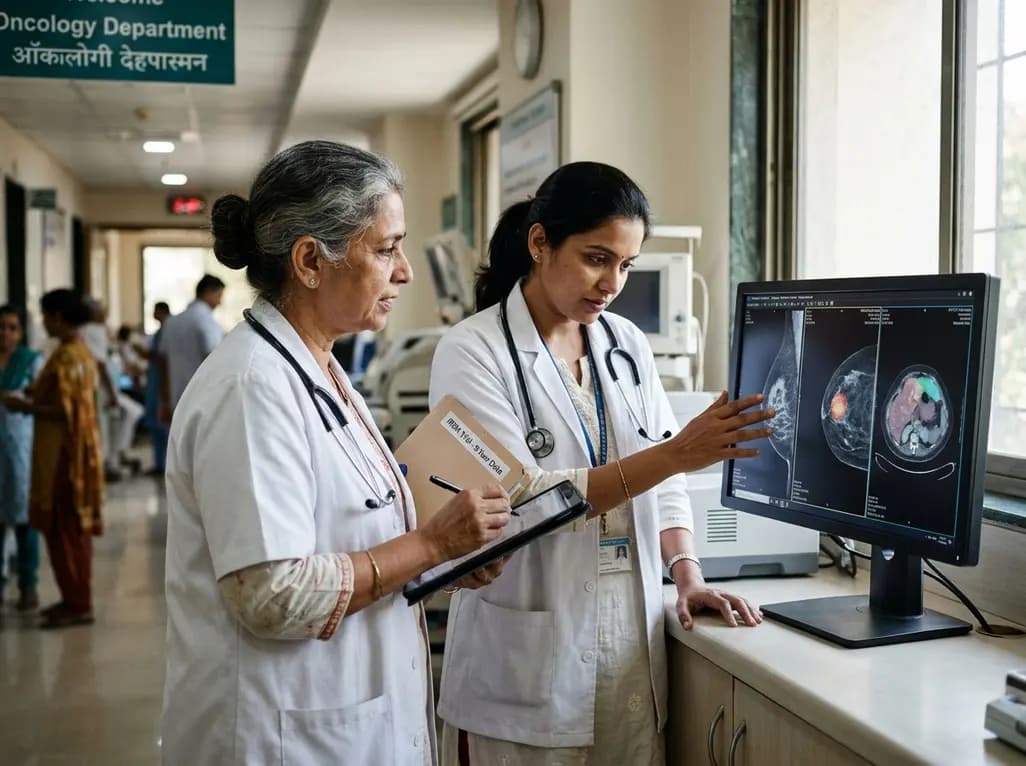
Managing early-stage breast cancer requires balancing effective oncologic control with minimizing treatment-related toxicity. For decades, whole-breast irradiation remained the undisputed standard adjuvant therapy following breast-conserving surgery. However, modern radiation oncology increasingly emphasizes treatment de-escalation for carefully selected patients. Consequently, the multicenter phase III IRMA trial investigated whether accelerated partial-breast irradiation provides comparable local control to whole-breast irradiation in low-risk invasive breast carcinoma. The 5-year findings deliver vital clinical insights into local tumor recurrence risks, cosmetic outcomes, and treatment tolerance.
The IRMA trial enrolled 3,309 women across 35 centers between 2007 and 2019 to evaluate postoperative radiation strategies. Eligible patients were at least 49 years old with resected invasive breast cancer. In addition, candidates required clear microscopic resection margins of at least 2 mm, maximum tumor diameters of 3 cm, and pathologically confirmed pN0 or pN1 nodal status. Investigators randomly allocated participants in a 1:1 ratio to receive either conventional whole-breast irradiation or accelerated partial-breast irradiation.
The partial-breast regimen delivered 38.5 Gy in 10 fractions administered twice daily over 5 treatment days. In contrast, the control arm received whole-breast irradiation according to institutional standards, typically ranging between 40 Gy and 50.4 Gy with or without an operative bed boost. Neither the investigators nor the patients were masked to the assigned treatment arm. The primary trial endpoint was the cumulative rate of ipsilateral breast tumor recurrence. Furthermore, researchers designed the study with 90% statistical power to detect noninferiority, assuming a 5-year baseline local recurrence rate of 4% in the control cohort with an upper margin hazard ratio of 1.5.
After a median follow-up of 97.5 months, the trial investigators analyzed 3,225 evaluable patients. The 5-year cumulative incidence of ipsilateral breast tumor recurrence reached 1.0% in the accelerated partial-breast irradiation cohort and 0.8% in the whole-breast irradiation cohort. Therefore, both treatment groups achieved remarkably low absolute rates of local disease relapse.
The primary statistical analysis yielded an estimated hazard ratio of 1.18 for partial-breast versus whole-breast treatment. However, the 90% confidence interval spanned from 0.63 to 2.20. Because the upper limit of the confidence interval exceeded the predefined threshold of 1.5, the trial did not establish formal statistical noninferiority. Nevertheless, the absolute difference between both treatment groups was merely 0.2% at 5 years. This negligible absolute risk difference suggests that both approaches provide outstanding local tumor control in clinical reality. Low-risk biology, adequate negative margins, and modern systemic adjuvant endocrine therapy jointly contribute to these exceptionally low recurrence numbers. Thus, clinicians must interpret statistical noninferiority within the realistic context of actual absolute oncologic risk.
Although oncologic disease control remained excellent across both arms, clinicians must carefully weigh treatment-related morbidity and cosmetic outcomes. Previous analyses from the IRMA trial demonstrated noticeable differences in late adverse effects between the two delivery techniques. Specifically, patients receiving the accelerated twice-daily partial-breast regimen experienced higher rates of late subcutaneous tissue fibrosis and moderate soft-tissue toxicity compared to whole-breast treatment.
Furthermore, the cumulative 5-year incidence of grade 3 or higher soft-tissue toxicity was 2.8% in the partial-breast arm versus 1.0% in the whole-breast arm. Late bone toxicity, though uncommon, occurred exclusively in the partial-breast group. Consequently, patient-reported adverse cosmesis was slightly higher following partial irradiation at both 3 years and 5 years. These physical changes likely stem from delivering large fraction sizes twice daily with 3D conformal external beams. In contrast, trials utilizing once-daily regimens or intensity-modulated techniques have reported superior cosmetic preservation. Therefore, radiation oncologists must consider specific technical parameters, total treated volumes, and fractionation intervals when planning localized radiation fields.
The results of the IRMA trial align with several landmark international studies that examined partial-breast irradiation in early breast cancer. For example, the Canadian RAPID trial also evaluated external-beam radiation given twice daily and similarly observed increased late subcutaneous fibrosis. Conversely, the Italian APBI-IMRT Florence trial delivered 30 Gy in 5 once-daily fractions and demonstrated outstanding cosmetic preservation alongside identical local recurrence rates. Similarly, the UK IMPORT LOW trial validated partial-breast approaches using standard daily fractionation with excellent tissue tolerance.
These comparative trials demonstrate that clinical outcomes depend heavily on the delivery technique and fractionation schedule rather than the anatomical target alone. Twice-daily external-beam treatments frequently produce accumulated sublethal tissue damage in healthy normal breast parenchyma. On the other hand, once-daily accelerated partial-breast irradiation or interstitial multi-catheter brachytherapy minimizes severe late reactions. Thus, the global oncologic consensus supports partial irradiation as an oncologically robust alternative, provided radiation oncologists select appropriate schedules. Clinicians should therefore favor once-daily fractionation protocols to ensure optimal long-term aesthetic outcomes.
In India, breast cancer is the most frequently diagnosed malignancy among women, with an increasing proportion presenting at early, operable stages. Adopting accelerated partial-breast irradiation offers substantial socioeconomic advantages by condensing treatment courses from several weeks to just one week. Consequently, this condensed schedule markedly reduces travel expenses, financial hardship, and treatment defaults for patients traveling from rural districts to tertiary cancer centers.
However, oncologists in India must maintain strict patient selection criteria before recommending abbreviated radiotherapy protocols. Ideal candidates include postmenopausal women aged 50 years or older with unifocal, hormone receptor-positive, HER2-negative tumors measuring under 3 cm. Additionally, surgical pathology must confirm clear margins of at least 2 mm and node-negative disease. Radiation oncology departments should preferably adopt modern intensity-modulated radiotherapy delivered once daily to avoid the soft-tissue complications observed in twice-daily schedules. Furthermore, multidisciplinary tumor boards must discuss individual anatomical factors, breast-to-tumor volume ratios, and patient preferences. By adhering to these evidence-based principles, Indian healthcare centers can deliver cost-effective, high-quality cancer care without compromising patient safety or disease control.
The IRMA trial failed to confirm formal noninferiority because the upper confidence limit of the hazard ratio crossed the prespecified margin of 1.5. However, this statistical outcome occurred primarily because the overall event rate was extraordinarily low in both arms. With a 5-year local recurrence rate of only 1.0% for partial-breast and 0.8% for whole-breast irradiation, the absolute difference was just 0.2%, confirming outstanding local tumor control in clinical practice.
Eligible candidates for partial-breast irradiation include women aged 50 years or older who have undergone breast-conserving surgery with negative surgical margins. Furthermore, tumors should be invasive ductal carcinomas measuring 3 cm or smaller, hormone receptor-positive, HER2-negative, and pathologically node-negative. Patients with extensive intraductal components, multicentric disease, or known BRCA mutations are generally unsuitable. Therefore, thorough multidisciplinary evaluation remains crucial to identify individuals who will safely benefit from this de-escalated treatment strategy.
The twice-daily fractionation protocol in the IRMA trial delivered 3.85 Gy per fraction with a minimal inter-fraction interval of roughly six hours. Consequently, normal breast stromal tissue had insufficient time to repair sublethal cellular damage between treatments. This accumulated radiation strain frequently leads to localized subcutaneous fibrosis, fat necrosis, and adverse cosmesis. Therefore, modern clinical guidelines strongly recommend once-daily fractionation regimens or high-precision intensity-modulated techniques to significantly reduce late normal tissue complications.
Disclaimer: This content is for informational and educational purposes only... Refer to the latest local and national guidelines for clinical practice.
References

Read summarized clinical updates, watch expert medical content, and earn CME certifications right from your smartphone.
Open your smartphone camera to scan and install.





The phase III IRMA trial compared accelerated partial-breast irradiation with whole-breast irradiation in low-risk invasive breast cancer. Five-year results demonstrate remarkably low recurrence rates in both groups, supporting tailored de-escalation strategies for eligible patients undergoing breast-conserving therapy.
Today

The FocUS-R study highlights the role of structural factors in stress management effectiveness. Findings reveal that while psychological flexibility supports coping, socioeconomic barriers significantly diminish its protective benefits, highlighting the need for equity-focused clinical and public health approaches.
Today
A recent community-partnered study highlights critical gaps in newborn screening follow-up in high-infant-mortality areas. Discover actionable strategies for clinicians to improve antenatal education, train community healthcare workers, and optimize timely interventions for metabolic and congenital disorders.
Today
A multicenter longitudinal study of the CHARLS and HRS cohorts demonstrates that elevated cumulative pulse pressure and high-stable trajectories significantly increase incident sarcopenia risk in older adults, particularly in those with heart disease, linking arterial stiffness directly to progressive muscle loss.
Today

A 491-patient cohort study in Sudan reveals critical insights into war trauma reconstructive surgery, analyzing injury patterns, soft-tissue procedures, and a 25.5% complication rate in resource-limited conflict zones.
Today
A descriptive qualitative study reveals that dietary and exercise relapses in mHealth apps stem from stress, cultural misalignment, and emotional disengagement. Clinicians must champion flexible, relapse-responsive digital therapeutics that foster gentle reentry and sustained glycemic control.
Today
