

Loading, please wait...
Loading, please wait...

Chronic psychological distress presents a profound public health challenge across outpatient medical settings worldwide. In everyday clinical encounters, physicians frequently counsel patients on lifestyle interventions, relaxation strategies, and behavioral adaptations. However, real-world data demonstrate that overall stress management effectiveness frequently falls short of expectations established in controlled clinical trials. Emerging evidence suggests that unaddressed socioeconomic disparities and environmental stressors impose severe boundaries on individual coping mechanisms. Consequently, population-level tools that longitudinally capture psychological strain and adaptive capacity remain scarce. The landmark FocUS-R pilot study addresses this knowledge gap by deploying repeated digital surveillance to measure stress dynamics in real time. Ultimately, this research underscores how structural determinants shape human resilience and clinical recovery.
Traditional epidemiologic surveys often capture human stress through static, cross-sectional questionnaires. In contrast, the FocUS-R project established an innovative, longitudinal surveillance platform that tracks stress dynamically over extended periods. Researchers enrolled community-dwelling adults across Australia to examine real-world coping mechanisms. Initially, participants completed comprehensive baseline evaluations. These initial evaluations documented demographic variables, baseline perceived stress via the Perceived Stress Scale, psychological flexibility, and physical health markers. Furthermore, investigators tracked baseline social support networks to understand each individual's foundational resources.
Following baseline assessments, participants completed brief fortnightly digital check-ins for up to twelve months. These repeated surveys utilized Visual Analogue Scales ranging from zero to ten. Consequently, subjects rapidly graded their momentary distress and perceived coping success. In addition, the platform gathered real-time symptom checklists and qualitative descriptions of active life challenges. As a result, the pilot accrued nearly twelve hundred longitudinal check-ins. Researchers demonstrated that repeated Visual Analogue Scale evaluations possess strong convergent validity with established psychometric inventories. Therefore, this streamlined surveillance methodology delivers high participant adherence while capturing nuanced shifts in psychological well-being.
A primary objective of modern public health surveillance is identifying health disparities across diverse demographic groups. In the FocUS-R pilot cohort, participant recruitment skewed toward higher socioeconomic brackets. However, statistical analysis revealed sharp, undeniable gradients across income categories. Specifically, lower-income participants consistently reported significantly higher daily stress ratings. In addition, these economically vulnerable individuals reported noticeably reduced stress management effectiveness across their fortnightly check-ins. Consequently, their cumulative burden of distress remained elevated throughout the surveillance timeline.
Moreover, economically disadvantaged individuals registered significantly fewer successful coping days compared to affluent counterparts. These disparities persisted despite equivalent exposure to conventional behavioral advice. In clinical terms, economic strain generates persistent systemic friction that undermines self-regulatory practices. For instance, chronic financial volatility depletes cognitive bandwidth and interrupts sleep architectures. Furthermore, low-income patients often encounter unyielding external demands that simple relaxation techniques cannot resolve. Therefore, measuring stress management effectiveness requires clinicians to account for socioeconomic realities rather than assuming universal applicability of behavioral prescriptions. Without acknowledging material resources, clinical recommendations may inadvertently heighten patient guilt and therapeutic non-compliance.
Psychological flexibility denotes the capacity to adapt to shifting situational demands, balance life priorities, and maintain behavioral integrity during distress. Traditionally, cognitive behavioral therapists view psychological flexibility as a foundational pillar of mental resilience. In the overall FocUS-R cohort, higher psychological flexibility strongly correlated with superior stress management effectiveness. Consequently, individuals with robust adaptive traits navigated standard life complications with greater emotional equilibrium.
However, nuanced subgroup analyses unveiled a critical clinical paradox. Specifically, the positive association between psychological flexibility and successful stress mitigation weakened substantially among lower-income participants. Thus, internal coping agility lost much of its protective potency when individuals faced severe structural constraints. When basic material stability, secure housing, or food sovereignty are absent, mindset shifts cannot eliminate physiological arousal. Furthermore, ongoing environmental adversity constantly reactivates the neuroendocrine hypothalamic-pituitary-adrenal axis. Consequently, internal behavioral flexibility alone cannot overcome pervasive systemic barriers. These findings clearly indicate that while adaptive mental skills are broadly distributed, their real-world clinical expression remains profoundly constrained by material circumstances.
These surveillance findings offer profound practical implications for primary care doctors, internists, and psychiatrists. In clinical consultations, physicians routinely instruct patients to meditate, exercise, and employ mindfulness techniques to manage stress. However, prescribing lifestyle modifications without assessing financial and structural adversity can alienate vulnerable patients. Furthermore, when patients fail to achieve symptomatic relief through mindfulness, they may internalize that failure as a personal defect. Therefore, practitioners must reframe stress management effectiveness within the broader framework of social determinants of health.
In addition, physicians must actively integrate brief structural screening tools into routine clinical workflow. For example, asking straightforward questions regarding housing stability, caregiving duties, and financial distress provides indispensable context for symptoms. When structural barriers predominate, clinicians should connect patients with community social workers, patient assistance programs, and local support resources. Moreover, physicians should validate that acute distress often represents an expected, rational reaction to overwhelming environmental friction. Consequently, combining compassionate systemic validation with pragmatic medical management fosters greater patient rapport and therapeutic trust.
Longitudinal digital surveillance platforms like FocUS-R provide scalable paradigms for future public health monitoring. Historically, clinical medicine has evaluated therapeutic outcomes using episodic clinic visits. However, digital check-ins allow health systems to identify rising distress trends before decompensation occurs. By capturing micro-fluctuations in psychological tension, digital surveillance tools uncover actionable equity signals across heterogeneous populations. Furthermore, these data streams empower healthcare administrators to deploy targeted community interventions where need is greatest.
Additionally, population-level health initiatives must shift away from purely individualistic behavioral narratives. Public health authorities frequently urge citizens to enhance personal resilience while ignoring foundational economic drivers. In contrast, integrating social policy with clinical interventions creates environments where behavioral coping skills can actually flourish. For instance, workplace protections, affordable childcare, and accessible community mental health centers directly bolster individual coping capacity. Ultimately, optimizing stress management effectiveness across society requires harmonizing behavioral interventions with aggressive structural reforms. Clinicians and policymakers must collaborate closely to ensure that therapeutic tools serve all socioeconomic strata equitably.
The FocUS-R study reveals that environmental and economic constraints significantly reduce stress management effectiveness. Although psychological flexibility generally supports emotional regulation, severe financial instability dampens this benefit. Consequently, lower-income individuals experience higher chronic stress and fewer successful coping episodes. These empirical findings demonstrate that individual behavioral interventions cannot overcome persistent structural hardship without direct material support and equitable systemic resources.
Psychological flexibility allows individuals to adjust thoughts and emotional reactions during acute adversity. However, severe economic insecurity creates unrelenting physical and environmental stressors, such as food scarcity and predatory debt. These unrelenting pressures constantly trigger the neuroendocrine stress cascade. Therefore, internal psychological flexibility cannot neutralize tangible material deficits. Without resolving foundational environmental pressures, mindset interventions yield limited real-world therapeutic efficacy.
Clinicians can effectively monitor stress management effectiveness by incorporating brief Visual Analogue Scales into regular patient check-ins. Rather than relying solely on infrequent clinical visits, clinicians can utilize remote patient platforms to track distress levels and symptom flares. Furthermore, evaluating social determinants alongside coping scores helps doctors identify when structural barriers obstruct patient adherence and therapeutic recovery.
Disclaimer: This content is for informational and educational purposes only and should not be considered medical advice. Always consult a qualified healthcare professional regarding any medical condition or treatment. Refer to the latest local and national guidelines for clinical practice.
References

Read summarized clinical updates, watch expert medical content, and earn CME certifications right from your smartphone.
Open your smartphone camera to scan and install.





The FocUS-R study highlights the role of structural factors in stress management effectiveness. Findings reveal that while psychological flexibility supports coping, socioeconomic barriers significantly diminish its protective benefits, highlighting the need for equity-focused clinical and public health approaches.
Today

A recent community-partnered study highlights critical gaps in newborn screening follow-up in high-infant-mortality areas. Discover actionable strategies for clinicians to improve antenatal education, train community healthcare workers, and optimize timely interventions for metabolic and congenital disorders.
Today
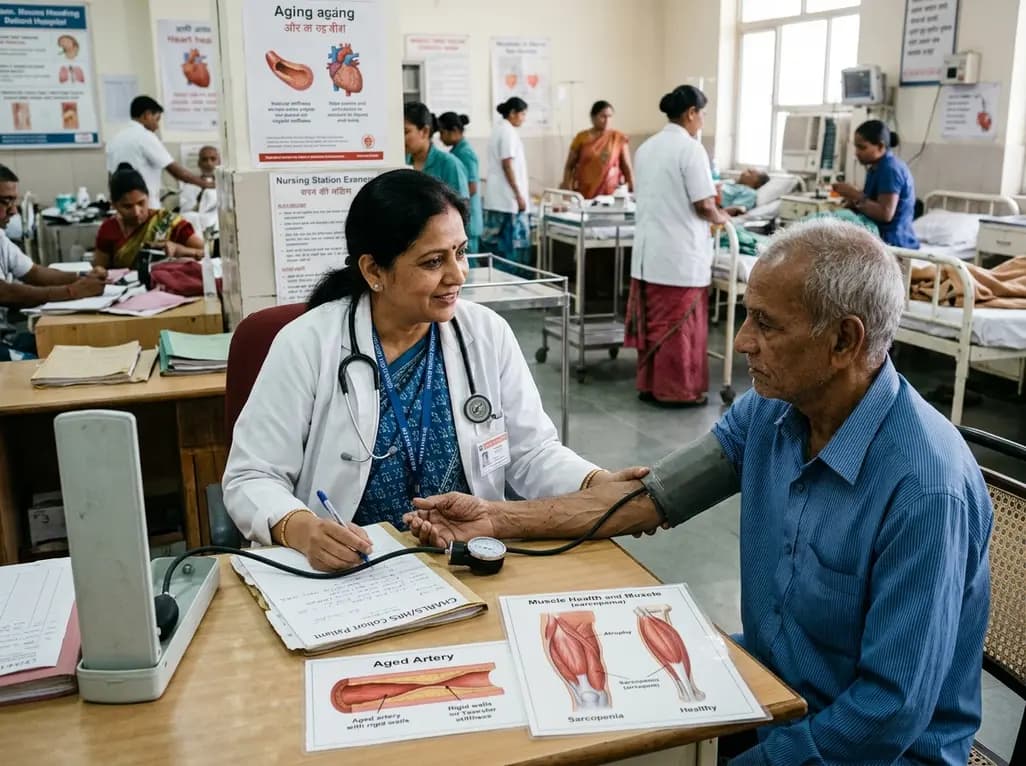
A multicenter longitudinal study of the CHARLS and HRS cohorts demonstrates that elevated cumulative pulse pressure and high-stable trajectories significantly increase incident sarcopenia risk in older adults, particularly in those with heart disease, linking arterial stiffness directly to progressive muscle loss.
Today

A 491-patient cohort study in Sudan reveals critical insights into war trauma reconstructive surgery, analyzing injury patterns, soft-tissue procedures, and a 25.5% complication rate in resource-limited conflict zones.
Today
A descriptive qualitative study reveals that dietary and exercise relapses in mHealth apps stem from stress, cultural misalignment, and emotional disengagement. Clinicians must champion flexible, relapse-responsive digital therapeutics that foster gentle reentry and sustained glycemic control.
Today
