.webp&w=384&q=75)

Loading, please wait...
Loading, please wait...

Healthcare professionals encounter victims of domestic abuse across emergency departments, primary care clinics, and obstetrics wards daily. Consequently, establishing robust intimate partner violence support pathways remains an urgent global health priority. A landmark qualitative sociological study published in Violence Against Women evaluated multi-sectoral institutional responses within Morocco [1.1]. However, the findings reveal universal structural challenges that directly mirror clinical barriers encountered worldwide, offering valuable lessons for healthcare systems.
The qualitative evaluation explored institutional mechanisms across police, legal, and healthcare services in the Fes-Meknes region [1.1]. Specifically, researchers conducted in-depth interviews with 44 female survivors and 41 multi-sectoral professionals [1.1]. Through inductive thematic analysis, the investigators identified severe systemic gaps that compromised victim assistance [1.1]. Although formal legal frameworks theoretically protect women, implementation remains deeply fractured across administrative jurisdictions [1.1]. Furthermore, victims repeatedly encounter disconnected bureaucracies that fail to communicate critical case details. When women seek medical care for acute physical trauma, clinicians frequently focus exclusively on somatic injuries while overlooking underlying psychosocial hazards. Consequently, survivors must navigate police stations, forensic facilities, and social services entirely on their own. This procedural isolation amplifies psychological exhaustion and discourages help-seeking behaviors. In addition, bureaucratic delays often postpone protective interventions, leaving vulnerable women exposed to ongoing danger. Responders in the study acknowledged that institutional silos generate profound frustration for both survivors and frontline professionals. Therefore, healthcare systems must actively bridge institutional divides by formalizing inter-agency communication protocols and collaborative referral networks.
Victims who present to healthcare facilities frequently face substantial procedural hurdles that restrict timely intervention. For example, obtaining medico-legal injury certificates often requires excessive paperwork, direct financial costs, and rigid administrative authorization. As a result, low-income women face severe disparities when trying to access essential forensic documentation. Moreover, crowded clinical environments and limited examination spaces compromise patient privacy during routine consultations. Without assured confidentiality, survivors understandably hesitate to disclose domestic abuse to attending physicians or nursing staff. Additionally, healthcare facilities often lack standardized screening protocols to identify covert signs of psychological, financial, or sexual abuse. Consequently, many affected women receive routine symptomatic treatment without any intervention regarding ongoing domestic violence. When institutional mechanisms treat domestic violence merely as episodic physical injuries, the deeper cycle of coercion persists unabated. Furthermore, frontline medical staff report feeling overwhelmed by excessive clinical workloads, leaving little time for psychosocial evaluations. Clinicians must recognize these structural hurdles to ensure clinical environments remain accessible and protective for every presenting survivor.
Emotional distress represents one of the most debilitating yet frequently neglected consequences of chronic domestic abuse. The study highlighted that public institutional support focuses heavily on legal adjudication and physical wound management, largely ignoring mental trauma [1.1]. However, survivors consistently describe severe anxiety, depression, insomnia, and post-traumatic stress following repeated domestic abuse. Unfortunately, public healthcare facilities demonstrate a critical shortage of embedded mental health specialists and trauma-informed counselors. In addition, frontline providers often lack specialized training in psychological first aid or crisis counseling. Therefore, healthcare staff may unintentionally invalidate a survivor's distress through dismissive language or unsympathetic clinical interactions. This institutional indifference intensifies feelings of shame, guilt, and helplessness among vulnerable patients. Moreover, without ongoing psychiatric follow-up, victims experience heightened vulnerability to chronic psychiatric morbidity and repeated physical harm. Healthcare facilities must therefore integrate mental health screenings directly into emergency and outpatient services. Ultimately, providing sustained emotional support is just as vital as managing acute orthopedic or soft-tissue injuries.
Systemic follow-up mechanisms remain critically deficient across institutional care pathways, creating significant dropouts among vulnerable patients [1.1]. Specifically, after completing initial medical evaluations or filing formal police complaints, survivors rarely receive structured outreach or safety reassessments [1.1]. Because healthcare facilities lack electronic tracking or dedicated case navigators, patients easily disappear from the healthcare monitoring network. Furthermore, social workers and clinical teams struggle to maintain consistent contact with victims due to shifting addresses, lack of personal telephone access, or spousal surveillance. As a consequence, many women return directly to violent households without functional safety plans or legal protection orders. Over time, repeated institutional abandonment erodes patient trust in legal and public health authorities. In contrast, longitudinal care coordination dramatically improves survivor safety, treatment adherence, and mental health stability. To prevent dropouts, healthcare institutions must implement robust case management systems that link hospital care with community-based social resources. Consequently, establishing continuous monitoring guarantees that survivors receive persistent protection and therapeutic continuity well after hospital discharge.
To overcome widespread fragmentation, healthcare leaders must adopt comprehensive, victim-centered models of care. For instance, the World Health Organization emphasizes the LIVES framework—Listen, Inquire, Validate, Enhance safety, and Support—as the primary clinical standard for domestic violence response. When clinicians adopt trauma-informed care, they actively shift the clinical narrative from judgment to patient empowerment and healing. In addition, multi-agency models such as One-Stop Crisis Centres consolidate medical care, forensic examination, legal aid, and psychological counseling beneath a single hospital roof. This integrated strategy prevents secondary victimisation by eliminating repetitive questioning across different institutional offices. Moreover, continuous professional training programs must educate doctors, residents, and nursing teams on identifying non-accidental trauma, strangulation injuries, and reproductive coercion. Clinicians must also understand domestic violence legislation to properly document injuries for legal proceedings. Ultimately, establishing coordinated clinical pathways transforms healthcare facilities into reliable sanctuaries where survivors receive dignified medical care, psychological restoration, and sustained legal advocacy.
Clinicians should screen for abuse using open, non-judgmental questions within private examination settings. Moreover, practitioners must ensure confidentiality before discussing sensitive domestic circumstances. Healthcare staff should look for clinical indicators such as inconsistent injury patterns, frequent emergency visits, or chronic unexplained pain. Therefore, validated screening tools and empathetic communication enable patients to disclose trauma safely. Consequently, early clinical recognition facilitates immediate medical care and vital institutional referrals.
First-line clinical management prioritizes acute physical trauma stabilization, meticulous injury documentation, and immediate psychological support. Furthermore, physicians must provide emergency contraception, post-exposure prophylaxis for infections, and forensic examination when indicated. Healthcare teams should also assess urgent danger, coordinate safety planning, and offer emergency shelter referrals. In addition, healthcare workers should connect survivors with dedicated psychiatric counseling and legal aid services. Therefore, comprehensive immediate assistance prevents secondary victimisation and ensures holistic patient recovery.
Fragmented public systems frequently force vulnerable survivors to recount distressing trauma across disconnected legal, medical, and law enforcement agencies. Consequently, institutional delays often lead to emotional burnout and patient disengagement. Integrated multi-sectoral networks establish streamlined communication channels and shared standard protocols between hospitals, police units, and social welfare departments. Furthermore, unified inter-agency coordination reduces administrative burdens, guarantees continuous mental health monitoring, and enhances legal protection mechanisms for vulnerable women facing severe domestic abuse.
Disclaimer: This content is for informational and educational purposes only. It is not intended as medical or legal advice. Always consult qualified healthcare professionals for diagnosis and treatment decisions. Refer to the latest local and national guidelines for clinical practice.
References

Read summarized clinical updates, watch expert medical content, and earn CME certifications right from your smartphone.
Open your smartphone camera to scan and install.





A recent qualitative study evaluates institutional gaps across health, police, and justice sectors in supporting survivors of intimate partner violence. Healthcare providers must bridge procedural fragmentation with empathetic, trauma-informed care and cross-sector coordination to safeguard vulnerable patients.
Today

Preclinical research reveals that the hydrophilic extract of the inner bran fraction of rice attenuates skeletal muscle proteolysis in protein-deficient rats, restoring glutathione and polyamine metabolites while downregulating Atrogin-1 and FoxO1 expression.
Today
A review of the Cone procedure for severe right atrioventricular valve insufficiency in atypical Ebstein anomaly following partial AVSD repair, emphasizing operative technique and ventricular recovery.
Today
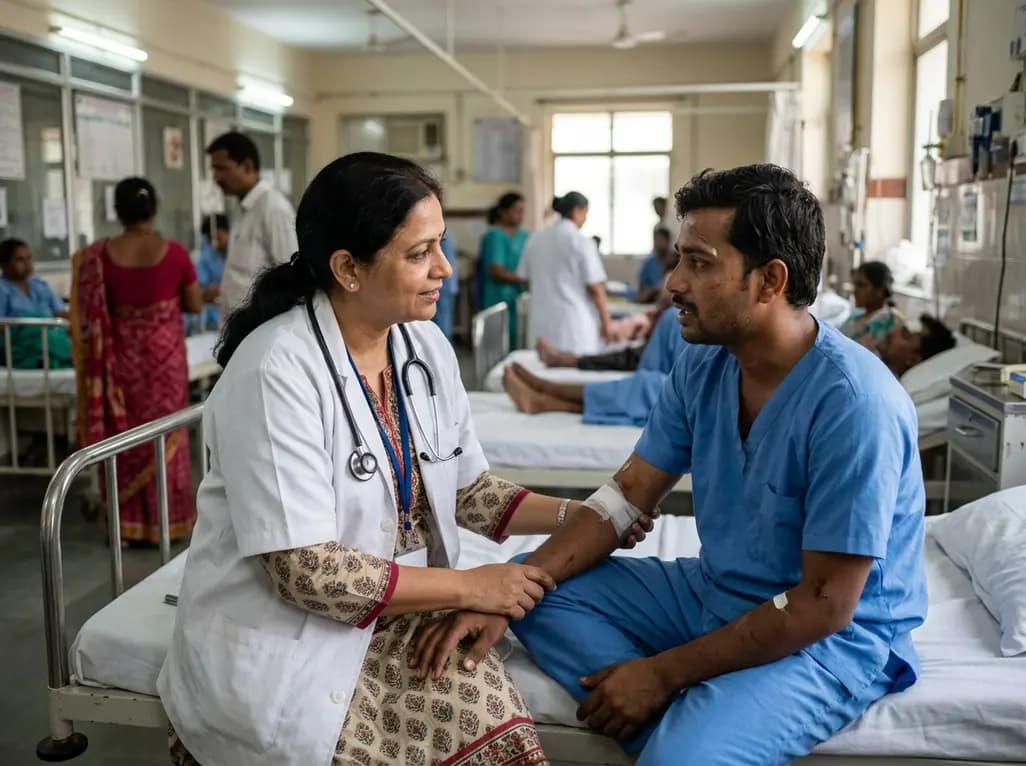
A Level I trauma center study shows a brief bedside mental health intervention boosts 30-day follow-up screening adherence by 84% in nonviolent injury patients. However, outcomes for violence survivors reveal critical care gaps, underscoring the urgent need for specialized community violence intervention programs.
Today
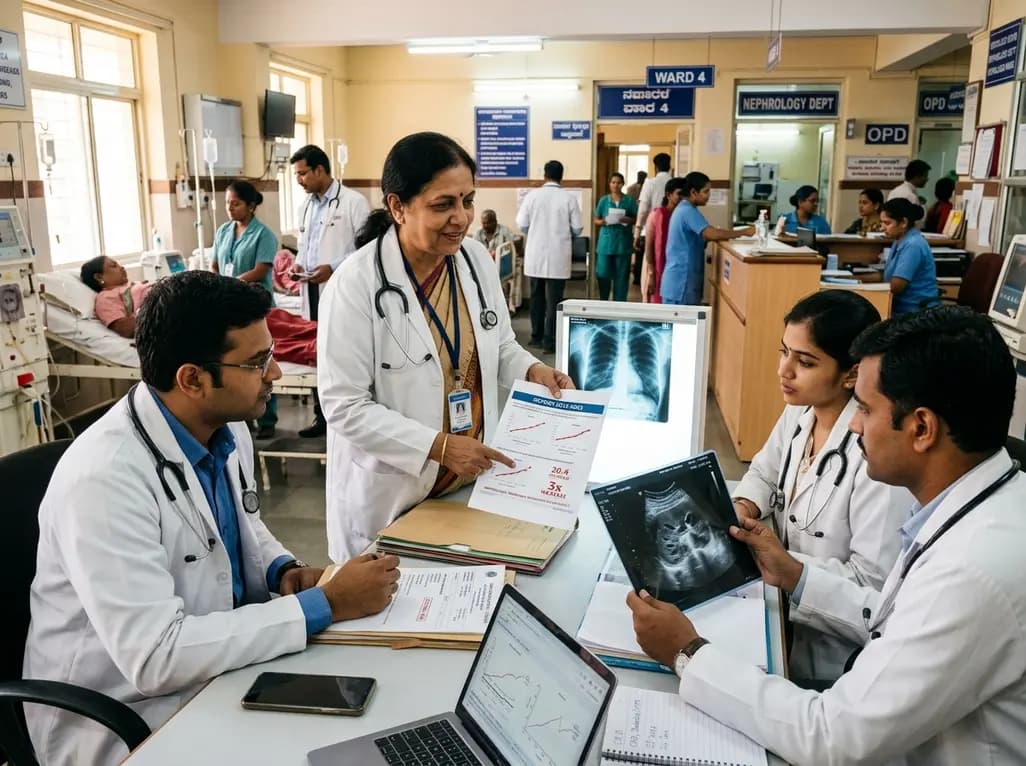
Recent data from Karnataka reveals a threefold surge in genitourinary and renal deaths over ten years. Driven by uncontrolled diabetes, hypertension, and emerging lifestyle hazards, this epidemiological shift highlights an urgent need for proactive screening and multidisciplinary nephrology management in primary care.
Today
