.webp&w=384&q=75)

Loading, please wait...
Loading, please wait...
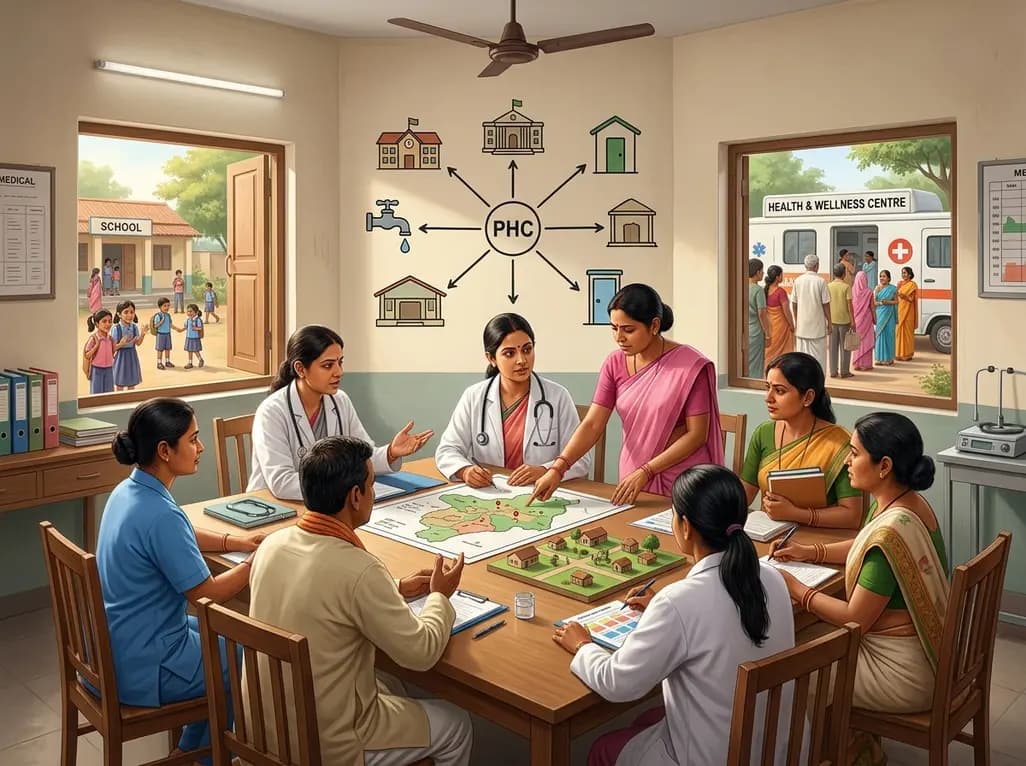
Intersectoral coordination in healthcare remains a vital strategy for improving health equity and system efficiency. A recent qualitative study published in Gaceta Sanitaria analyzed two established Spanish programs: the Mihsalud program in Valencia and the Barcelona Action Plan on Drugs and Addictions (PADAB). Specifically, researchers investigated how primary care integrates with other health and non-health sectors to achieve better outcomes. The results provide transferable lessons for primary care and public health professionals who seek to build more resilient health systems. Additionally, the findings emphasize that collaborative governance is no longer optional but essential for sustainable health interventions.
The analysis identified shared governance and community participation as the primary pillars of success. Professionals highlighted that effective partnerships between primary care and local associations foster long-term sustainability. For instance, the Mihsalud program utilizes community health agents to bridge the gap between vulnerable populations and clinical services. Furthermore, existing regulatory frameworks and high professional expertise provide a solid foundation for these interinstitutional partnerships. Notably, these strengths facilitate the seamless integration of public health goals into daily healthcare delivery. Consequently, patients receive more comprehensive care that addresses social determinants of health alongside clinical needs.
Despite these successes, professionals identified several persistent weaknesses that hinder progress. Organizational fragmentation and a lack of interoperability in information systems remain significant hurdles. For example, when data does not flow freely between sectors, care continuity suffers. Therefore, the study suggests that structural reforms must focus on improving digital integration and reducing administrative bureaucracy. Moreover, the SWOT analysis recommended strengthening interdisciplinary training to align different professional cultures. Finally, consolidating stable funding models will ensure that these collaborative frameworks survive political and economic shifts.
It involves the collaborative effort between the health sector and other sectors, such as social services, education, and local government, to address health issues holistically. This approach ensures that medical care and social support work together to improve community well-being.
Interoperability allows different information systems to communicate and share data securely. Without it, primary care doctors and public health officials cannot access the complete picture of a patient's health or social needs, leading to fragmented and less effective care.
Active community participation ensures that health programs align with the actual needs and cultural contexts of the population. By involving citizens and local leaders, health systems can build trust, improve access for vulnerable groups, and increase the sustainability of public health initiatives.
Disclaimer: This content is for informational and educational purposes only. It does not constitute medical advice or establish a doctor-patient relationship. Refer to the latest local and national guidelines for clinical practice.
References
Herrera Artiles MF et al. [Not Available]. Gac Sanit. 2026 Jun 04. doi: undefined. PMID: 42241781.
World Health Organization. Integrating public health and primary care at the core of the PHC approach. 2022.
Barcelona Public Health Agency. Barcelona Action Plan on Drugs and Addictions (PADAB) 2025-2028 Executive Summary. 2024.
"
Read summarized clinical updates, watch expert medical content, and earn CME certifications right from your smartphone.
Open your smartphone camera to scan and install.





The Mihsalud and PADAB programs reveal how intersectoral coordination and shared governance can strengthen primary care and improve community health outcome...
4 months ago

An elderly man with partially repaired Tetralogy of Fallot presented with STEMI caused by coronary embolism rather than atherosclerosis. Successful treatment with sustained mechanical aspiration thrombectomy underscores the vital need for high clinical vigilance in adult congenital heart disease.
Today

Demanding exhaustive hormonal profiling can inadvertently discourage clinical studies involving females. Methodological standards must align with the specific scientific question to expand, not restrict, equitable evidence for women.
Today

A recent study demonstrates that spinal oxygen sensors do not require mitochondrial electron transport to trigger sympathetic excitation during acute hypoxia, revealing new insights into how mitochondrial oxidative stress modulates autonomic tone in cardiovascular and neurological diseases.
Today

A comparative review of tension band wiring and intramedullary screw fixation in thumb metacarpophalangeal arthrodesis, evaluating union rates, hardware complications, and clinical outcomes.
Today

Following regulatory scrutiny from FSSAI regarding promotional representations and lean muscle preservation claims, Dr. Reddy's Laboratories and Nestlé Health Science are currently reviewing the branding and marketing strategy for their joint nutritional supplement Celevida GLP+.
Today
