.webp&w=384&q=75)

Loading, please wait...
Loading, please wait...

India currently faces a significant health burden from female reproductive cancers. Consequently, Apollo Athenaa launched an Integrated Gynae-Oncology Ecosystem to bridge existing gaps in specialized care. This initiative seeks to streamline treatment by integrating advanced diagnostics and robotic surgery into a single framework. Patients can now access comprehensive care without navigating multiple institutions.
According to GLOBOCAN 2022 estimates, female genital cancers are leading causes of mortality in the country. Furthermore, ICMR data indicates that India records over 1.71 lakh new cases of genital cancers annually. This substantial burden highlights the urgent need for a coordinated clinical approach. Therefore, the new ecosystem focuses on early detection, precision diagnostics, and fertility-preserving treatments. Moreover, it provides post-treatment rehabilitation and continuous support for patients during their recovery journey.
Healthcare experts increasingly adopt robotic and minimally invasive surgical techniques in oncology. These approaches help reduce surgical complications while supporting faster patient recovery. Robotic systems also maintain high precision during complex procedures. Additionally, bringing multidisciplinary expertise into one framework improves clinical consistency. Specialists Rupinder Sekhon and Amita Naithani joined the team to lead these advanced surgical initiatives. Thus, the center strengthens its capacity to deliver high-quality oncological outcomes.
Q1: What services does the integrated gynae-oncology ecosystem include?
The ecosystem provides a full spectrum of care, including early screening, precision diagnostics, robotic-assisted surgery, fertility-preserving treatments, and post-treatment rehabilitation support.
Q2: How does robotic surgery benefit patients with gynecological cancers?
Robotic surgery offers several advantages such as reduced surgical complications, shorter hospital stays, and faster recovery times while ensuring extreme precision during complex oncological procedures.
Disclaimer: This content is for informational and educational purposes only. It does not constitute medical advice or replace professional judgment. Refer to the latest local and national guidelines for clinical practice.
References

Read summarized clinical updates, watch expert medical content, and earn CME certifications right from your smartphone.
Open your smartphone camera to scan and install.





Apollo Athenaa launches India's first integrated gynae-oncology and robotic surgery ecosystem to streamline cancer care and improve outcomes for Indian wome...
5 months ago

Review how tailored exercise programs benefit frail older patients with heart failure. Explore pathophysiological mechanisms, individualized training prescriptions, and strategies to overcome adherence barriers in clinical practice.
Today

Leucine Rich Bio has introduced South Asia's first comprehensive vaginal microbiome test, BugSpeaks. By profiling microbial dysbiosis, pathogens, and antimicrobial resistance, this next-generation diagnostic platform provides clinicians with deeper insights into recurrent infections, fertility, and reproductive health.
Today
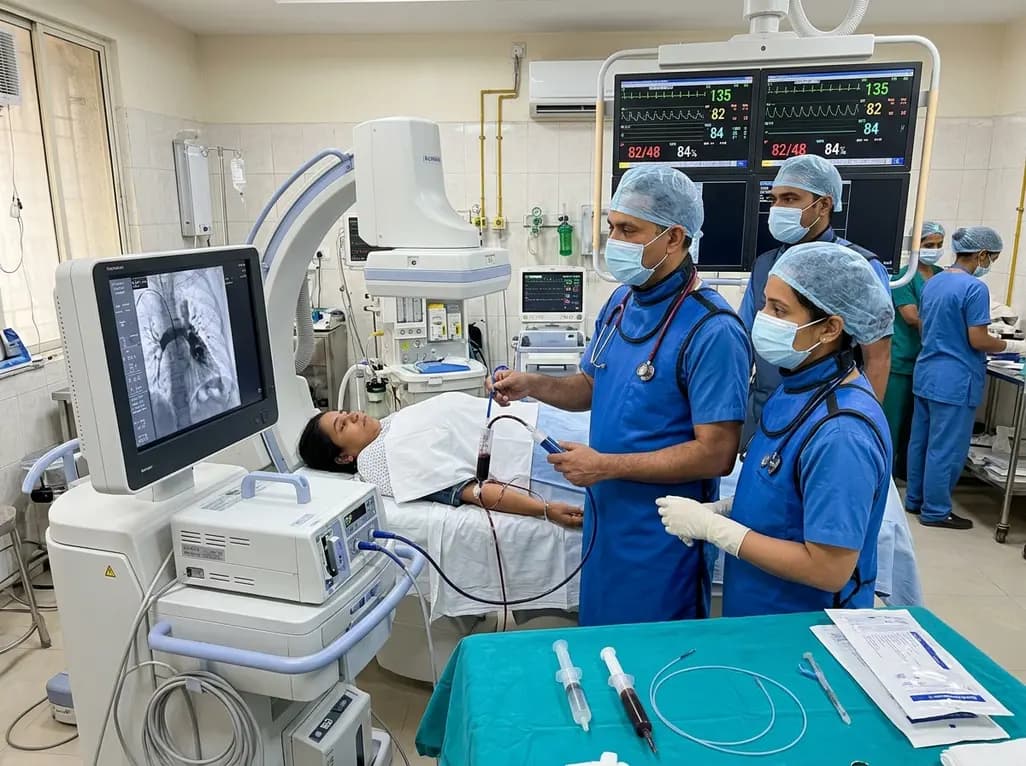
In high-risk pulmonary embolism complicated by severe anemia and active uterine bleeding, systemic thrombolysis is contraindicated. Large-bore aspiration thrombectomy provides rapid hemodynamic rescue without fibrinolysis, supported by inferior vena cava filter placement and multidisciplinary critical care.
Today

This comparative study evaluates posterior labral tears with and without glenohumeral instability, highlighting distinct demographic patterns, MRI underestimation in stable shoulders, and successful arthroscopic repair outcomes.
Today

A clinical study demonstrates that early intervention with tocilizumab, either as monotherapy or bridged with corticosteroids, achieves significant proptosis reduction and resolves active inflammation in treatment-naive thyroid eye disease.
Today
