.webp&w=384&q=75)

Loading, please wait...
Loading, please wait...

Because managing dual disorders is complex, integrated dual disorder treatment is necessary so that patients recover. Specifically, it treats mental health as well as substance use and addiction. Consequently, specialists provide care because they work together and stay in one site and setting. Furthermore, recent survey data reveals variability although most programs offer support and help and care. In addition, clinics provide housing and jobs. Likewise, they help with school but often miss tobacco and cannabis. Therefore, broadening care is vital so that results improve and stay stable. Similarly, coordination is difficult since views differ and clash. For instance, friction occurs while a lack of tools hinders progress and growth.
Implementing integrated dual disorder treatment needs unity because friction exists and grows. Moreover, tools are scarce although support is key and vital. In conclusion, support is vital yet continuity is often low and weak. Thus, systems improve if they monitor results and data carefully. Additionally, addressing cannabis helps while unified protocols assist and guide teams. Because patients are high-risk, therefore we act so we save lives and hearts. Finally, training helps because it builds skills and hope. Likewise, funding is needed so that more clinics exist and thrive. Also, research is required so we learn more and grow. But we must start now because time is short and fleeting and precious. So, let us begin and succeed together because we can.
This approach improves patient engagement and mental health outcomes by treating co-occurring disorders simultaneously rather than in isolation. It also provides comprehensive social support, including housing and employment assistance.
Standardized tools allow healthcare providers to track recovery progress and identify gaps in care. Furthermore, they help justify funding for specialized programs and ensure consistency across different treatment settings.
Disclaimer: This content is for informational and educational purposes only. It does not constitute professional medical advice, diagnosis, or treatment. Always seek the advice of your physician or other qualified healthcare provider with any questions you may have regarding a medical condition. Refer to the latest local and national guidelines for clinical practice.
References
1. Fonseca F et al. Integrated treatment approaches for co-occurring mental health and substance use disorders: findings from a survey of European healthcare providers. Ir J Psychol Med. 2026 Mar 23. doi: 10.1017/ipm.2026.10174. PMID: 41866325.
2. MDPI. Navigating the Complex Intersection of Substance Use and Psychiatric Disorders: A Comprehensive Review. J. Clin. Med. 2024. doi: 10.3390/jcm13041012.
3. Psychiatry Online. Ongoing Challenges to Integrating Care in Settings That Serve Patients With Serious Mental Illness and Substance Use Disorder. Psych. Res. Clin. Pract. 2025. doi: 10.1176/appi.prcp.20230024.

Read summarized clinical updates, watch expert medical content, and earn CME certifications right from your smartphone.
Open your smartphone camera to scan and install.





A survey of 14 European providers explores the implementation, outcomes, and barriers of integrated treatment for co-occurring mental health and substance u...
7 months ago
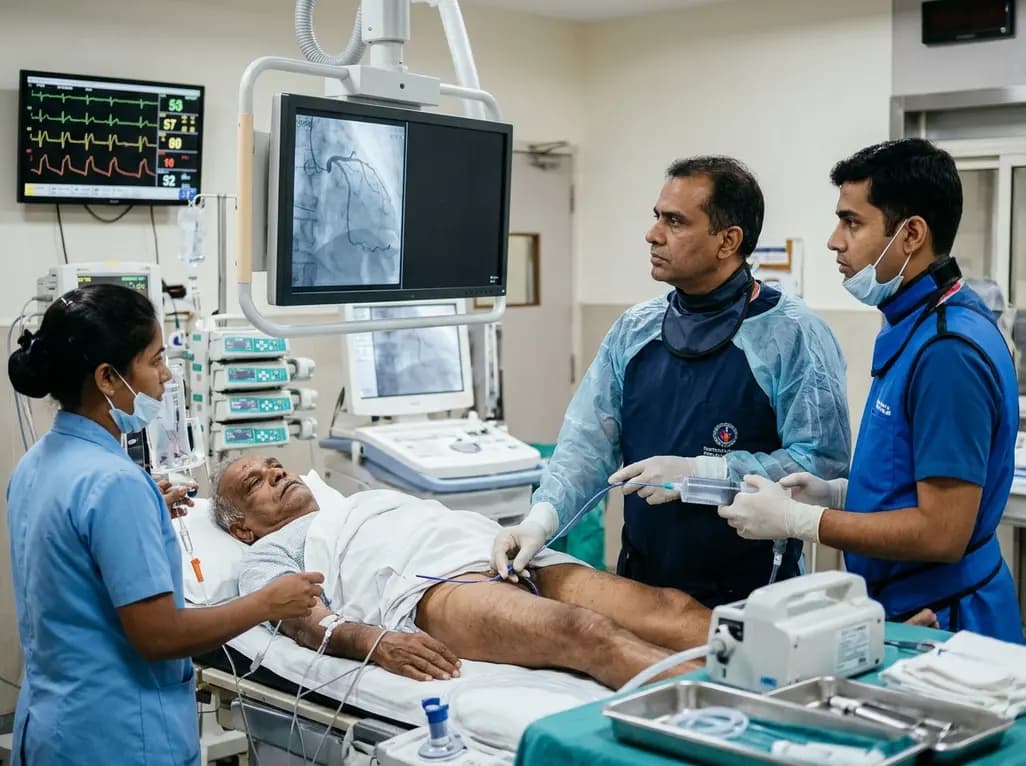
An elderly man with partially repaired Tetralogy of Fallot presented with STEMI caused by coronary embolism rather than atherosclerosis. Successful treatment with sustained mechanical aspiration thrombectomy underscores the vital need for high clinical vigilance in adult congenital heart disease.
Today

Demanding exhaustive hormonal profiling can inadvertently discourage clinical studies involving females. Methodological standards must align with the specific scientific question to expand, not restrict, equitable evidence for women.
Today

A recent study demonstrates that spinal oxygen sensors do not require mitochondrial electron transport to trigger sympathetic excitation during acute hypoxia, revealing new insights into how mitochondrial oxidative stress modulates autonomic tone in cardiovascular and neurological diseases.
Today

A comparative review of tension band wiring and intramedullary screw fixation in thumb metacarpophalangeal arthrodesis, evaluating union rates, hardware complications, and clinical outcomes.
Today

Following regulatory scrutiny from FSSAI regarding promotional representations and lean muscle preservation claims, Dr. Reddy's Laboratories and Nestlé Health Science are currently reviewing the branding and marketing strategy for their joint nutritional supplement Celevida GLP+.
Today
