.webp&w=384&q=75)

Loading, please wait...
Loading, please wait...
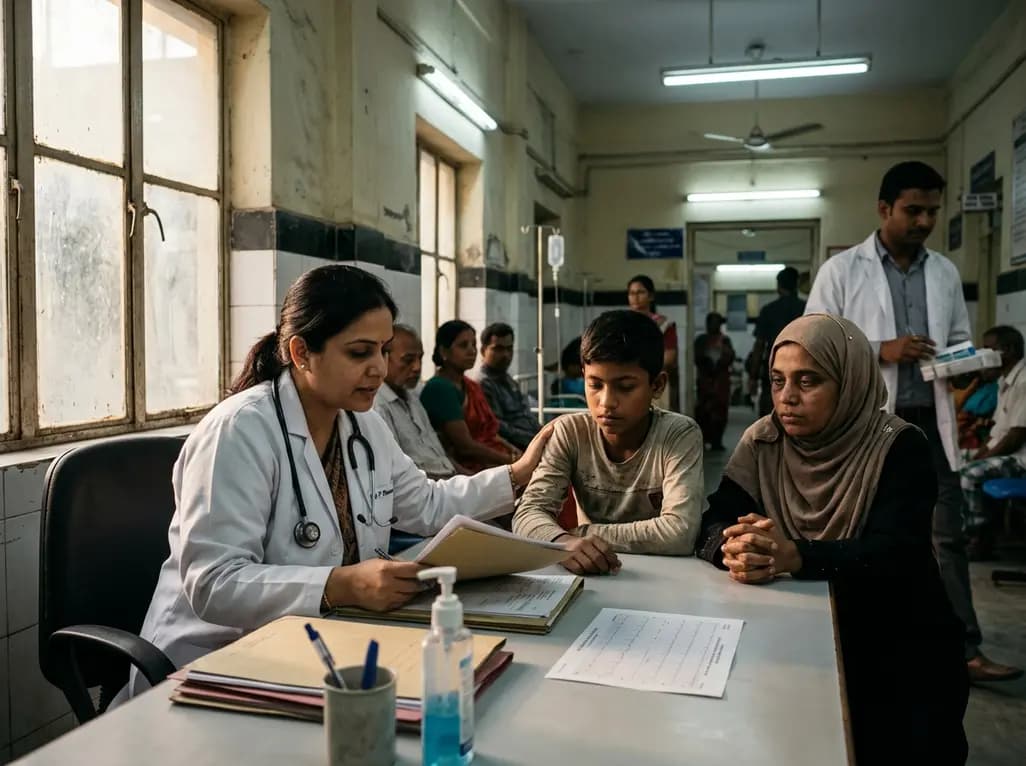
Global conflict, forced displacement, and social instability exact a devastating toll on human psychological and physical health. While healthcare systems routinely screen for post-traumatic stress disorder and major depression, clinicians frequently overlook underlying sleep disturbances. A landmark systematic review and meta-analysis of sixty-six studies involving over forty-two thousand individuals sheds urgent light on this issue. The comprehensive study reveals that insomnia in refugees represents an pervasive, debilitating public health crisis across diverse global settings. Consequently, medical professionals must identify nocturnal disruptions early to preserve overall metabolic, cardiovascular, and cognitive health in forcibly displaced individuals.
Forced migration exposes individuals to catastrophic losses, physical perils, and chronic existential uncertainty. Consequently, sleep architecture deteriorates rapidly under such prolonged physiological strain. The meta-analysis by Carpinelli and colleagues synthesizes data across sixty-six distinct observational cohorts encompassing forty-two thousand nine hundred fifty-six participants. Their findings indicate that sleep adversities afflict approximately 43.2% of displaced adult refugees. Similarly, pediatric cohorts demonstrate an alarming pooled adversity prevalence of 36.4%. In contrast, baseline insomnia rates in stable general populations hover near ten to twelve percent globally. Therefore, displaced individuals experience a threefold to fourfold higher probability of enduring fragmented rest. Moreover, post-migration stressors persistently exacerbate these conditions even after individuals reach safe host territories. Overcrowded reception shelters, unfamiliar ambient environments, and persistent legal precarity prevent normal nocturnal restorative cycles. Furthermore, untreated sleep pathology severely impairs daily social functioning and community resettlement. Clinicians must recognize that sleep dysfunction is not merely a transient reaction to environmental upheaval. Instead, it frequently consolidates into a chronic, self-perpetuating condition requiring structured diagnostic protocols. Recognizing the sheer magnitude of this epidemiological burden is the vital first step toward improving refugee care.
Standardized clinical metrics offer rigorous insights into the severity of nocturnal impairments among displaced people. The meta-analysis analyzed continuous scoring trends using two globally validated instruments: the Insomnia Severity Index and the Pittsburgh Sleep Quality Index. Notably, the pooled mean score on the Insomnia Severity Index reached 13.76, with a confidence interval between 10.39 and 17.13. This mean score places the typical displaced patient at the highest boundary of subthreshold insomnia, dangerously close to moderate clinical disease. In parallel, analysis of the Pittsburgh Sleep Quality Index revealed a pooled mean score of 8.59. Because any score exceeding 5 on this scale defines clinically meaningful poor sleep, these results confirm severe disturbances. Patients regularly report prolonged sleep latency, frequent nocturnal awakenings, and unrefreshing rest. Furthermore, quantitative analyses highlight severe sleep fragmentation. Although statistical heterogeneity existed across pooled investigations, the overarching clinical message remains unambiguous. Forcibly displaced populations live in states of sustained nocturnal crisis. Consequently, general practitioners cannot dismiss subjective fatigue as simple stress. Clinicians must utilize validated diagnostic instruments to detect clinical deficits early.
Sleep disturbances affect demographic subgroups differently, creating complex diagnostic pictures across various life stages. Specifically, the meta-analysis found that 36.4% of refugee children suffer from prominent sleep adversities. Young displaced people often present with persistent bedtime resistance, nocturnal enuresis, night terrors, and severe separation anxiety. Because developing brains require uninterrupted slow-wave sleep for neural maturation, chronic sleep loss threatens cognitive development and academic performance. Meanwhile, unaccompanied minors face even greater psychiatric hazards due to the total absence of parental protection. In adults, who exhibit an adversity rate of 43.2%, sleep complaints frequently manifest alongside severe somatic symptoms. Patients often consult physicians regarding tension headaches, chronic musculoskeletal pain, unexplained gastrointestinal distress, and debilitating lethargy. Moreover, cultural factors significantly shape symptom reporting. Many displaced individuals avoid psychiatric terminology due to widespread social stigma surrounding mental illness. Instead, they present to primary healthcare centers with localized bodily aches or general exhaustion. Therefore, family physicians must recognize that unexplained physical symptoms often mask severe nocturnal pathology. Systematic screening allows physicians to uncover covert suffering before severe psychological decompensation occurs.
The high prevalence of sleep pathology among refugees stems from intricate neurobiological mechanisms. Traumatic exposures trigger sustained hyperactivation of the hypothalamic-pituitary-adrenal axis and sympathetic nervous system. Consequently, elevated nocturnal catecholamines and hypercortisolemia disrupt normal sleep-wake cycles. Patients remain in states of heightened hyperarousal, scanning their surroundings for danger even in secure quarters. As a result, individuals endure marked sleep-onset latency and terrifying trauma-related nightmares. Secondary findings from the meta-analysis underline nightmares as one of the most prominent, distressing symptoms in this cohort. Nightmares disrupt rapid eye movement sleep, which is essential for normal emotional processing and fear extinction. When sleep becomes fractured, the brain cannot consolidate emotional memories adaptively. Therefore, nocturnal disruptions exacerbate daytime post-traumatic stress disorder, panic attacks, and severe major depressive episodes. Furthermore, clinical trials demonstrate that sleep disturbances often persist even after daytime psychological symptoms respond to therapy. This persistent insomnia maintains vulnerability to psychiatric relapse and chronic cognitive exhaustion. Clinicians must view sleep disturbance not merely as a secondary symptom, but as an independent transdiagnostic driver of psychopathology. Breaking this vicious cycle demands focused, dual-targeted clinical management.
Despite its profound clinical impact, sleep health receives scarce attention during routine intake evaluations for displaced persons. Primary care clinics frequently prioritize communicable diseases and acute nutritional needs. While these issues demand urgent attention, unaddressed insomnia impairs long-term recovery and treatment adherence. Therefore, clinical protocols must integrate brief screening tools such as the Insomnia Severity Index into routine primary care consultations. In addition, healthcare teams must implement culturally adapted non-pharmacological interventions. Cognitive Behavioral Therapy for Insomnia remains the first-line gold standard, but therapists must modify stimulus control techniques for shared shelter living. Furthermore, imagery rehearsal therapy demonstrates robust success in mitigating trauma-related nightmares and nocturnal panic. Regarding pharmacotherapy, clinicians should exercise extreme caution with habit-forming sedatives like benzodiazepines. Instead, physicians prioritize non-addictive medications alongside environmental modifications, including noise reduction and basic sleep hygiene education. Ultimately, establishing safe sleeping environments and accessible psychiatric support helps restore vital restorative rest. Healthcare providers can thereby mitigate the long-term mental and physical harms of forced displacement.
Meta-analytic data demonstrate that sleep disturbances afflict 43.2% of displaced adults and 36.4% of refugee children globally. These figures dramatically exceed the typical 10% to 12% baseline prevalence observed across general populations. Displaced individuals regularly suffer from prolonged sleep latency, frequent nocturnal awakenings, night terrors, and persistent daytime exhaustion.
Clinicians should utilize validated, translated instruments including the Insomnia Severity Index and the Pittsburgh Sleep Quality Index during initial evaluations. Because displaced individuals often express psychological distress through somatic complaints like headaches or fatigue, structured screening tools help practitioners accurately identify underlying insomnia, calculate severity, and formulate targeted clinical care plans.
Culturally adapted Cognitive Behavioral Therapy for Insomnia serves as first-line therapy, frequently paired with imagery rehearsal therapy to mitigate traumatic nightmares. Physicians should avoid long-term benzodiazepine prescriptions due to dependence and tolerance risks. Instead, clinicians prioritize non-pharmacological behavioral modifications alongside environmental safety interventions and cautious off-label medical therapy under specialist supervision.
Disclaimer: This content is for informational and educational purposes only. It is not intended as medical advice, diagnosis, or treatment. Always consult qualified healthcare professionals for clinical guidance and individualized care. Refer to the latest local and national guidelines for clinical practice.
References

Read summarized clinical updates, watch expert medical content, and earn CME certifications right from your smartphone.
Open your smartphone camera to scan and install.





A systematic review of 66 studies reveals that over 43% of adult refugees and 36% of children endure debilitating sleep disturbances. Discover the neurobiology of displacement-induced insomnia, diagnostic thresholds for ISI and PSQI, and practical culturally adapted clinical interventions.
last month

A breakthrough study evaluated H5N1 transmission efficiency across mammalian isolates. Researchers discovered that human-derived D1.1 harboring the PB2 D701N mutation spread efficiently in ferrets, unlike strains carrying PB2 E627K. This finding highlights critical genetic markers for zoonotic surveillance.
Today

A comparative cohort study evaluates vNOTES vs TLH hysterectomy for benign conditions, demonstrating shorter operative duration, faster return to daily activities, and equivalent female sexual function scores without increased dyspareunia.
Today

Review how tailored exercise programs benefit frail older patients with heart failure. Explore pathophysiological mechanisms, individualized training prescriptions, and strategies to overcome adherence barriers in clinical practice.
Yesterday

This comparative study evaluates posterior labral tears with and without glenohumeral instability, highlighting distinct demographic patterns, MRI underestimation in stable shoulders, and successful arthroscopic repair outcomes.
Yesterday

A clinical study demonstrates that early intervention with tocilizumab, either as monotherapy or bridged with corticosteroids, achieves significant proptosis reduction and resolves active inflammation in treatment-naive thyroid eye disease.
Today
