.webp&w=384&q=75)

Loading, please wait...
Loading, please wait...

Successful dental implants rely on strong osseointegration. However, high insertion torque often damages conventional bioactive coatings. To address this, researchers developed an injectable nanofiber gel to enhance stability and bone formation. Clinicians apply this self-assembling peptide interface directly into the osteotomy site before implant placement.
In a recent rabbit model study, researchers compared the injectable nanofiber gel to standard sand-blasted, large-grit, acid-etched (SLA) surfaces. Consequently, the results showed that the peptide interface reached 58.7% bone-to-implant contact (BIC) after five weeks. This surpassed the 50.5% BIC achieved by SLA-treated implants. Furthermore, the gel demonstrated osteoinductive, adhesive, and antimicrobial properties. Therefore, it provides a multifunctional environment for bone growth.
Biomechanical testing confirmed these findings. Implants using the nanofiber gel required significantly higher reverse torque for removal. This indicates a stronger mechanical bond between the implant and the bone. Specifically, the gel fills the gap at the bone-implant interface, which accelerates the healing process. As a result, this technology could significantly reduce early implant failures in clinical practice.
The use of self-assembling peptides marks a significant advance in regenerative medicine. Unlike rigid coatings, this flexible gel adapts to the surgical site. This prevents the delamination and debris generation common with traditional materials. Additionally, the antimicrobial nature of the gel may help prevent peri-implant infections. While human trials are the next step, these preclinical results are highly promising for the future of implantology.
The gel acts as an osteoinductive and adhesive interface. It promotes faster bone formation and creates a stronger mechanical bond at the implant site.
Traditional coatings can delaminate or create debris during high-torque insertion. This injectable gel is applied into the site, avoiding these mechanical issues while providing antimicrobial protection.
The study found that implants with the nanofiber interface achieved 58.7% bone-to-implant contact after five weeks, significantly higher than the 50.5% seen with standard SLA surfaces.
Disclaimer: This content is for informational and educational purposes only. It is not intended to be a substitute for professional medical advice, diagnosis, or treatment. Always seek the advice of your physician or other qualified health provider with any questions you may have regarding a medical condition. Refer to the latest local and national guidelines for clinical practice.
References
1. Yaylacı S et al. Injectable Nanofiber Gel Enhances Osseointegration in a Rabbit Model. J Dent Res. 2026 Mar 28. doi: 10.1177/00220345261425649. PMID: 41902600.
2. Buketić N et al. Multifunctional peptide nanofiber coatings enhance bone regeneration on xenograft materials. PMC. 2025.
3. Romanos GE. The use of bioactive proteins and peptides to promote osseointegration and success of dental implants: a narrative review. Front Oral Maxillofac Med. 2024.

Read summarized clinical updates, watch expert medical content, and earn CME certifications right from your smartphone.
Open your smartphone camera to scan and install.





A novel injectable peptide nanofiber gel improves dental implant osseointegration and mechanical stability compared to standard surfaces in animal models....
6 months ago

Review how tailored exercise programs benefit frail older patients with heart failure. Explore pathophysiological mechanisms, individualized training prescriptions, and strategies to overcome adherence barriers in clinical practice.
Today

Leucine Rich Bio has introduced South Asia's first comprehensive vaginal microbiome test, BugSpeaks. By profiling microbial dysbiosis, pathogens, and antimicrobial resistance, this next-generation diagnostic platform provides clinicians with deeper insights into recurrent infections, fertility, and reproductive health.
Today
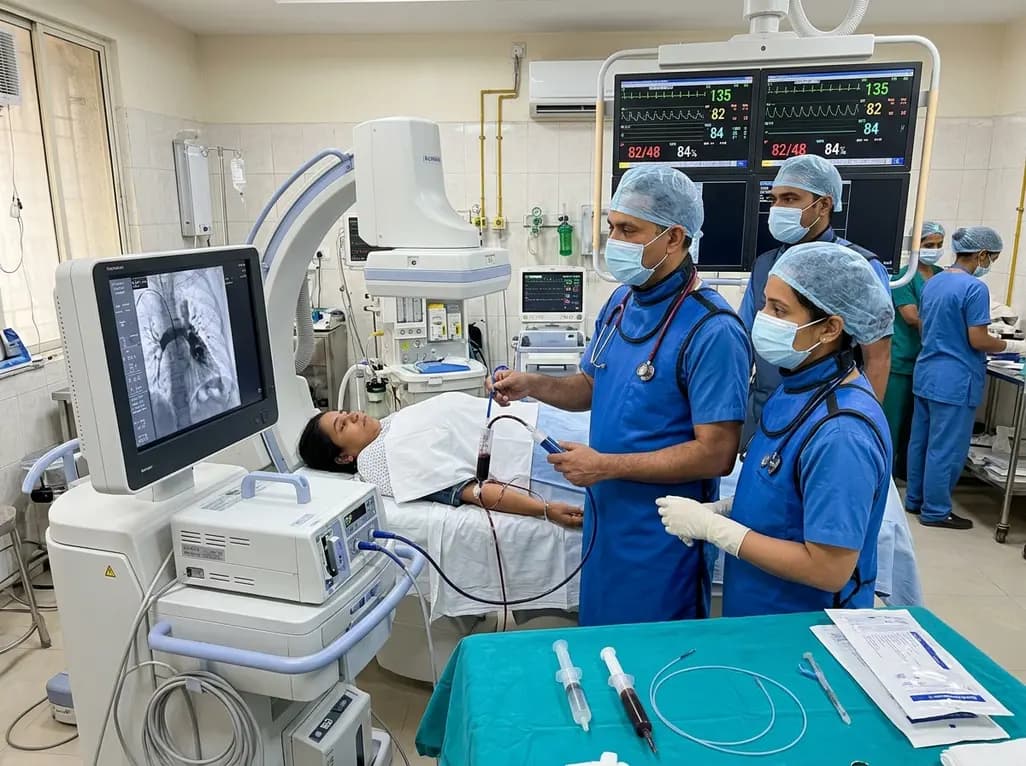
In high-risk pulmonary embolism complicated by severe anemia and active uterine bleeding, systemic thrombolysis is contraindicated. Large-bore aspiration thrombectomy provides rapid hemodynamic rescue without fibrinolysis, supported by inferior vena cava filter placement and multidisciplinary critical care.
Today

This comparative study evaluates posterior labral tears with and without glenohumeral instability, highlighting distinct demographic patterns, MRI underestimation in stable shoulders, and successful arthroscopic repair outcomes.
Today

A clinical study demonstrates that early intervention with tocilizumab, either as monotherapy or bridged with corticosteroids, achieves significant proptosis reduction and resolves active inflammation in treatment-naive thyroid eye disease.
Today
