.webp&w=384&q=75)

Loading, please wait...
Loading, please wait...

The role of the informal healthcare provider referral network is often overlooked in traditional health policy discussions. However, in many rapidly urbanizing regions of the Global South, these providers represent the first line of defense for millions. Informal healthcare providers (IHPs), which include patent medicine vendors, traditional healers, and community practitioners, offer accessibility that formal clinics often lack. A recent study by Arize et al. investigated the dynamics of patient referral and data reporting within this sector in Southeast Nigeria. Specifically, the researchers focused on eight urban informal settlements across Enugu and Anambra states. Their findings provide a window into the complex motivations that drive these providers to interact with the formal medical system. While these practitioners operate outside official regulatory frameworks, their influence on public health outcomes is undeniable. Consequently, understanding how they manage complicated cases and share patient information is vital for health system strengthening. This analysis explores the nuances of these interactions and their implications for broader healthcare coordination in mixed health systems like those found in Nigeria and India.
One of the most striking findings of the study was the significant role of altruism as a driver for the informal healthcare provider referral process. Most IHPs reported that their primary motivation for linking with the formal sector was a genuine desire to save lives. They recognize when a patient's condition exceeds their capacity or resources. Therefore, they refer complicated cases to hospitals to ensure better clinical outcomes. This sense of social responsibility serves as a powerful bridge between the informal and formal sectors. Moreover, IHPs often view these referrals as a way to maintain their reputation within the community. If a patient recovers after a successful referral, the provider's status as a trusted advisor is reinforced. Conversely, a failure to refer a deteriorating patient could lead to community backlash. This intrinsic motivation provides a unique opportunity for policymakers. Instead of viewing IHPs solely as competitors, formal health systems can leverage this altruistic drive. By creating structured pathways, they can ensure that referrals are not just ad hoc but part of a systematic approach to patient safety.
While referral activities occur with some frequency, the recording and sharing of patient data remain significantly underdeveloped. The study revealed that systematic data reporting is uncommon among the majority of IHPs in Enugu and Anambra. Several factors contribute to this lack of documentation. First, many providers lack formal training in health informatics or medical record-keeping. Consequently, they view documentation as a secondary concern compared to immediate patient care. Second, there is a pervasive fear that sharing detailed data might attract unwanted regulatory scrutiny or taxation. This lack of trust often prevents a transparent exchange of information with government health agencies. Furthermore, the existing links between formal and informal providers are frequently unsystematic. Without standardized forms or digital reporting tools, any shared information remains verbal or fragmented. This data gap makes it difficult for health authorities to track disease outbreaks or monitor the total volume of care delivered in urban settlements. Addressing these barriers requires a shift from punitive regulation to supportive supervision and capacity building.
The environment of urban informal settlements, or slums, significantly shapes the practices of healthcare providers. In states like Enugu and Anambra, high population density and limited infrastructure create unique health challenges. Formal health facilities are often distant, overcrowded, or prohibitively expensive for local residents. Therefore, the community relies heavily on IHPs who are physically and socially accessible. These providers often offer flexible payment plans, which encourages patients to seek care early. However, the qualitative findings suggest that the lack of formal integration leads to missed opportunities for continuity of care. When an IHP refers a patient without a formal document, the receiving physician at the hospital often starts the diagnostic process from scratch. This lack of coordination leads to diagnostic delays and increased costs for the patient. Strengthening the collaboration within these settlements is not just a matter of policy but a necessity for survival. Integrating these informal actors into the broader urban health framework can help mitigate the disparities in service delivery that characterize modern urban landscapes.
The findings from Nigeria resonate deeply with the healthcare landscape in India. Like Nigeria, India has a massive informal sector, often referred to as Rural Medical Practitioners (RMPs) or unregistered chemists. These individuals provide a significant portion of primary care in both rural and urban areas. Historically, the Indian Medical Association and regulatory bodies have maintained a strict boundary between formal and informal practice. However, the Nigerian study suggests that absolute exclusion might not be the most effective strategy for public health. Specifically, the altruistic motivations of informal providers could be harnessed in India to improve maternal health and infectious disease surveillance. For example, training RMPs to recognize early signs of sepsis or tuberculosis and providing them with formal referral channels could save countless lives. Moreover, adopting low-cost mobile reporting tools, as suggested in Nigerian reform discussions, could help capture vital health data from the millions of patients who never visit a formal clinic. Learning from the Nigerian experience allows Indian health planners to consider more pragmatic, community-centered approaches to universal health coverage.
Building a sustainable referral and data-sharing system requires a multi-faceted strategy. First, policymakers must establish clear, non-punitive protocols for the informal healthcare provider referral process. This includes the development of simplified referral forms that IHPs can easily use. Second, the formal health system should acknowledge the role of these providers by providing feedback on referred cases. Such professional recognition can build trust and encourage more consistent collaboration. Third, digital technology offers a transformative path forward. Implementing SMS-based reporting or mobile apps linked to national databases can simplify data entry for busy providers. Additionally, continuous professional development and training sessions for IHPs can improve their clinical judgment and documentation skills. Ultimately, the goal is to create a seamless health system where the informal sector acts as an effective entry point rather than a disconnected silo. By aligning the altruistic motivations of IHPs with the strategic goals of the national health system, countries can move closer to achieving high-quality, coordinated care for all citizens, regardless of their socioeconomic status.
According to research in Nigeria, altruism is the leading motivator for these providers. They generally want to ensure the survival and well-being of their patients when cases become too complicated for their current resources. Additionally, successful referrals help build and maintain their reputation as reliable healthcare advisors within their local communities, which is essential for their continued social and economic standing in urban informal settlements.
Improving data reporting requires building trust and providing practical tools. Formal systems should implement non-punitive, supportive supervision models that encourage IHPs to share information without fear of legal or financial repercussions. Providing simple, user-friendly digital tools like mobile apps can streamline the recording process. Furthermore, offering feedback and professional recognition can incentivize informal providers to participate more actively in national health information systems and disease surveillance programs.
Integration is crucial because informal providers are often the primary point of care for vulnerable populations in urban slums. Ignoring this sector leads to fragmented care, delayed referrals, and significant gaps in public health data. By formalizing links and establishing systematic referral pathways, health authorities can ensure better continuity of care, improve patient safety, and gain a more accurate understanding of the total disease burden within the community, ultimately leading to more effective health policies.
Disclaimer: This content is for informational and educational purposes only. It does not constitute medical advice or a professional endorsement of any informal provider practices. Refer to the latest local and national guidelines for clinical practice.
References
Arize I et al. Occurrence and motivations for referral and data reporting among informal healthcare providers in urban informal settlements in Southeast Nigeria. Int Health. 2026 Jul 15. doi: undefined. PMID: 42454464.
Obi C et al. Referral experiences of healthcare consumers: results from a cross-sectional study in urban slums in southeast Nigeria. Front Public Health. 2025;13:1561158. doi: 10.3389/fpubh.2025.1561158.
Mbachu CO et al. Assessing knowledge of hypertension and diabetes mellitus among informal healthcare providers in urban slums in Southeastern Nigeria. Discov Public Health. 2024;21:21. doi: 10.1186/s12982-024-00143-8.

Read summarized clinical updates, watch expert medical content, and earn CME certifications right from your smartphone.
Open your smartphone camera to scan and install.





This study explores why informal healthcare providers in Nigerian urban settlements refer patients and the barriers they face in sharing data. Findings suggest altruism is a key motivator, yet systematic links with formal health sectors remain weak, offering critical lessons for global health integration.
3 months ago
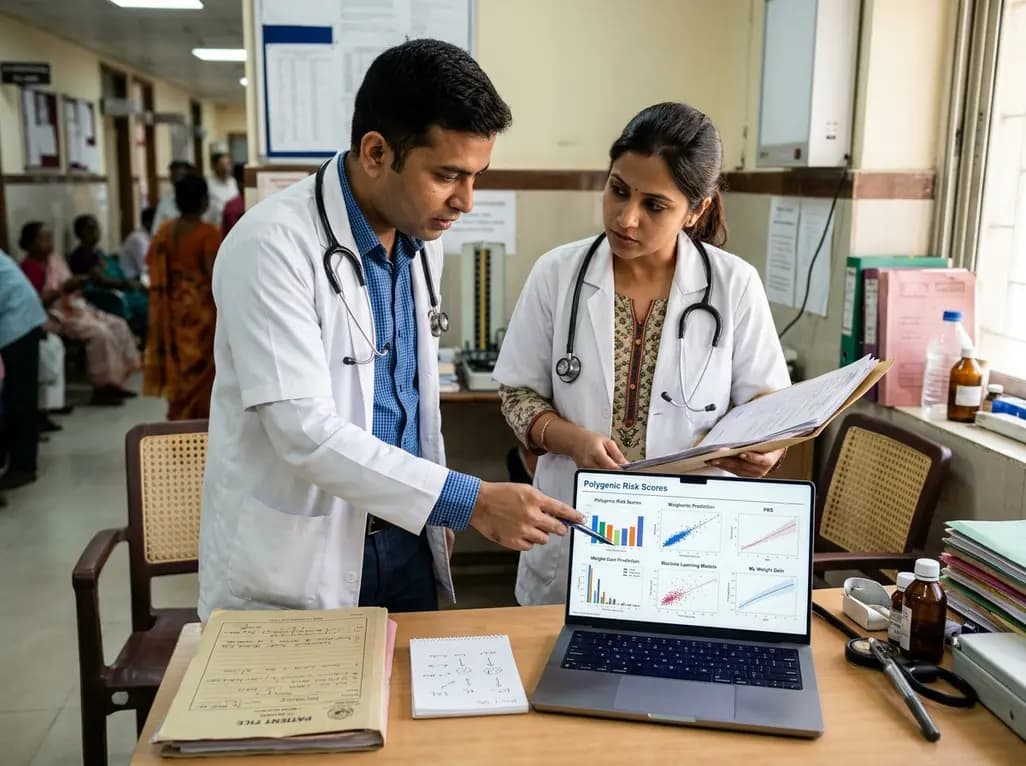
An observational study from the NIH All of Us Research Program reveals that adding a multi-ancestry polygenic risk score to machine learning models provides only modest improvements in predicting adult weight gain, underscoring the enduring significance of routine clinical and lifestyle factors.
Today

A study in JAMIA Open shows lightweight open-source reasoning LLMs achieve up to 95% sensitivity and accelerate evidence synthesis screening by nearly twentyfold, presenting a cost-effective, scalable AI solution for biomedical research and systematic reviews.
Today
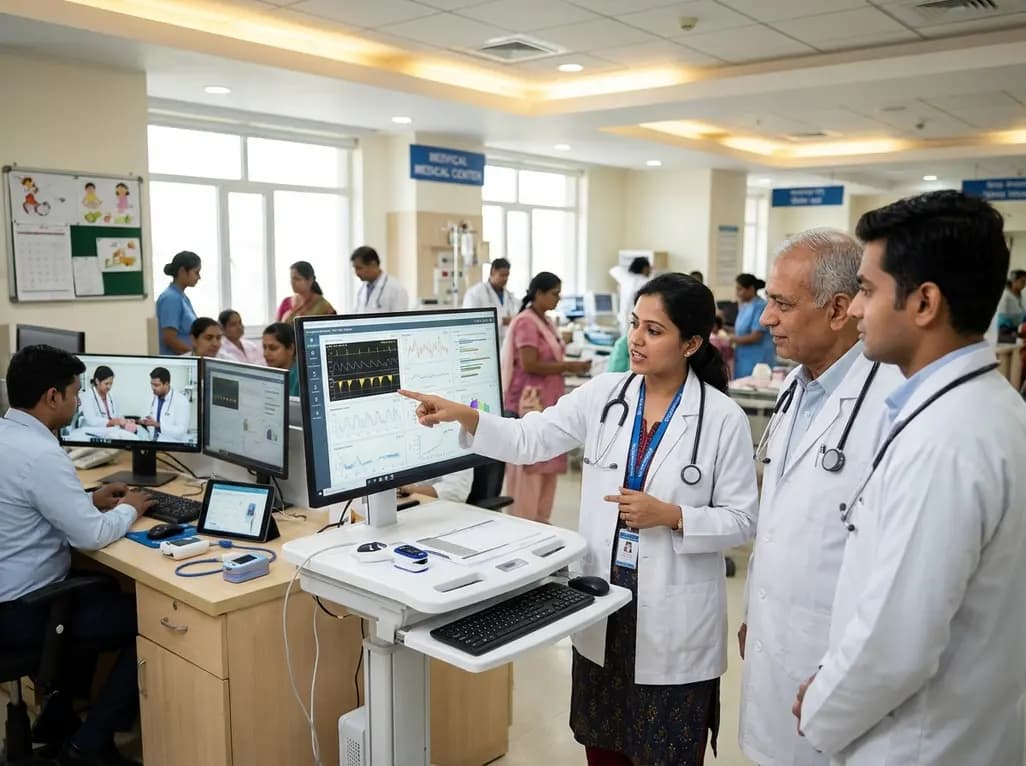
A landmark study details how an enterprise pediatric remote patient management model expanded from a single cardiology pilot to 16 diverse specialty programs by combining centralized digital operations with specialty clinical leadership.
Today

A comparative review of tension band wiring and intramedullary screw fixation in thumb metacarpophalangeal arthrodesis, evaluating union rates, hardware complications, and clinical outcomes.
Yesterday
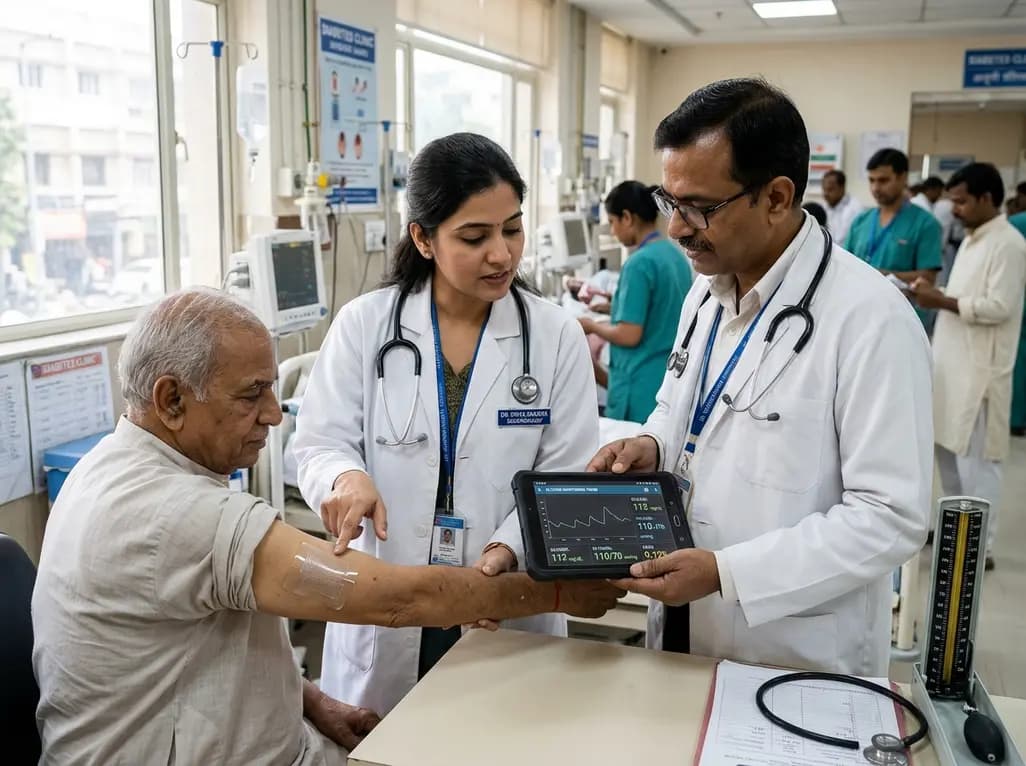
A breakthrough ultrathin multimodal sensor decouples physical hemodynamic monitoring from disposable electrochemical calibration, achieving long-term wearable glucose prediction with 81.36% accuracy and a 9.12% MARD. This offers a robust, drift-free solution for outpatient metabolic surveillance.
Yesterday
