.webp&w=384&q=75)

Loading, please wait...
Loading, please wait...

Cluster headache is recognized as one of the most agonizing pain conditions in clinical neurology, characterized by excruciating, strictly unilateral trigeminal autonomic cephalalgias. Although researchers have traditionally viewed cluster headache as a neurovascular disorder involving hypothalamic activation and trigeminovascular reflex pathways, growing evidence highlights a pivotal contribution from systemic and neurogenic inflammation. Investigating cluster headache biomarkers has therefore become essential for understanding underlying pathophysiological processes, distinguishing episodic and chronic phenotypes, and discovering novel targeted therapeutic pathways. A landmark prospective case-control investigation utilizing the Danish Cluster Headache Biobank analyzed 45 cytokines across adult participants in various disease states, comparing them against closely matched healthy controls. The comprehensive analysis encompassed individuals suffering from chronic cluster headache, patients experiencing an episodic bout, individuals in episodic remission, and headache-free counterparts. By evaluating systemic circulating immune profiles, the researchers successfully demonstrated that distinct inflammatory signatures accompany different clinical phases of the disorder. These critical findings provide strong biochemical validation that immune dysregulation is fundamentally intertwined with trigeminal nociceptive pathways, challenging purely neurovascular paradigms and opening fresh clinical opportunities for objective disease monitoring.
To characterize the inflammatory landscape accurately, researchers implemented a rigorous prospective case-control design evaluating adult patients diagnosed strictly according to the International Classification of Headache Disorders third edition criteria. Investigators analyzed plasma samples from 412 total participants, comprising 99 individuals with chronic cluster headache, 108 patients with episodic cluster headache in an active bout, 105 patients with episodic cluster headache in remission, and 100 age- and sex-matched control subjects. Multiplex immunoassay platforms quantified 45 individual inflammatory cytokines, chemokines, and growth factors with high analytical sensitivity. Furthermore, the investigators collected detailed clinical data regarding attack frequency, circadian rhythmicity, disease duration, and ongoing acute or preventive pharmacotherapies to control for confounding variables. By categorizing patients according to rigorous phenotypical definitions, the research team minimized biological noise often associated with heterogeneous pain cohorts. Consequently, this robust methodological framework allowed for precise comparisons across distinct disease states. It provided an unprecedented view of circulating immune mediators during both active trigeminal autonomic attacks and quiescent intervals, offering a reliable biochemical map of neuroinflammation.
The quantitative evaluation revealed striking differences in inflammatory cytokine profiles when comparing active disease periods against quiescent states and healthy controls. Patients presenting with episodic cluster headache during an active bout exhibited significant alterations in 13 separate cytokines compared with healthy controls. In contrast, patients in clinical remission demonstrated significant changes in only three cytokines, indicating that peripheral immune activation partially normalizes once the cluster bout terminates. Interestingly, chronic cluster headache cases demonstrated persistent dysregulation, displaying significant alterations in 10 cytokines relative to matched controls. These divergent molecular patterns show that active bout periods provoke extensive systemic cytokine cascades, which likely mirror ongoing trigeminovascular activation and sterile neurogenic inflammation. Furthermore, the partial normalization during remission suggests that certain inflammatory mediators act as dynamic indicators of disease activity rather than permanent baseline abnormalities. Conversely, the persistent inflammatory alterations seen in chronic sufferers underline continuous, unremitting neuroimmune activation that fails to engage typical remission mechanisms, thereby shedding light on the molecular transition toward chronification.
Among the 45 immune mediators analyzed, Oncostatin M emerged as an exceptional biomarker, demonstrating statistically significant elevation across all three clinical disease states compared with controls. Because Oncostatin M belongs to the interleukin-6 family of cytokines and actively modulates neuroinflammatory responses, glial cell signaling, and vascular permeability, its consistent elevation points toward a fundamental, continuous pathophysiological mechanism in cluster headache biology. In addition, logistic regression models adjusting for potential confounding factors revealed that Interleukin-1 Beta was significantly associated with chronic cluster headache rather than episodic disease in bout. Interleukin-1 Beta is a potent pro-inflammatory cytokine renowned for driving central sensitization, microglial priming, and persistent pain signaling within the trigeminal cervical complex. Therefore, the pronounced association of Interleukin-1 Beta with the chronic subtype strongly implicates sustained inflammasome activation and central neuroinflammatory cascades in preventing spontaneous clinical remissions. These findings illuminate specific molecular drivers that differentiate transient episodic bouts from debilitating chronic persistence, establishing actionable pathways for precision intervention.
Identifying discrete inflammatory signatures in cluster headache provides clinicians with vital biological insights that could transform future diagnostic and therapeutic strategies. Currently, diagnosis relies entirely upon subjective symptom reporting, leading to substantial diagnostic delays and frequent misdiagnoses. By establishing validated panels of cluster headache biomarkers, neurologists and headache specialists can advance toward objective biochemical diagnostic assays and reliable monitoring tools for therapeutic efficacy. Moreover, the discovery of elevated Oncostatin M and Interleukin-1 Beta opens compelling opportunities for drug repurposing and novel biologic development. Targeted monoclonal antibodies or small-molecule cytokine inhibitors could potentially interrupt persistent neuroinflammation, especially in treatment-refractory chronic patients who fail standard verapamil, lithium, or topiramate regimens. Additionally, monitoring cytokine fluctuations may enable early detection of impending bout transitions, allowing proactive adjustments in bridging therapies such as corticosteroids or greater occipital nerve blocks. Ultimately, integrating cytokine profiling into clinical research bridges the gap between molecular immunology and trigeminal pain management, driving personalized headache medicine forward.
Although routine commercial cytokine testing is not yet integrated into standard outpatient workflows, these findings offer immediate clinical insights for managing primary headache disorders. Clinicians should recognize that cluster headache is not merely a transient pain phenomenon, but a complex condition accompanied by systemic biological inflammation. Consequently, therapeutic adherence and timely aggressive intervention during early bout phases remain critical to mitigate cumulative neuroinflammatory burden. Furthermore, understanding the distinct biochemical phenotypes between episodic and chronic forms reinforces the necessity of early aggressive preventive treatment to avoid chronification. As neuroimmunology advances, clinicians must stay updated on emerging clinical trials assessing targeted anti-inflammatory and anticytokine therapies for intractable cranial neuralgias. Collaborative multidisciplinary care involving neurologists, pain specialists, and primary care physicians ensures that patients receive evidence-based acute abortive treatments like high-flow oxygen alongside robust preventive strategies, ultimately improving long-term outcomes and functional quality of life for these severely affected individuals.
Recent investigations identified several altered cytokines across disease stages, notably Oncostatin M, which is elevated in both active and quiescent phases, and Interleukin-1 Beta, which significantly correlates with chronic cluster headache. These biomarkers reflect distinct states of systemic neuroinflammation and immune dysregulation.
Episodic cluster headache during an active bout involves alterations in 13 cytokines that largely normalize during remission. Conversely, chronic cluster headache shows continuous dysregulation in 10 cytokines, notably Interleukin-1 Beta, reflecting persistent central sensitization and an inability to enter spontaneous remission.
Cytokine profiling is currently an investigative tool rather than a standard diagnostic test in routine clinical practice. While clinical criteria remain the primary diagnostic method, identifying specific inflammatory biomarkers provides a foundation for future objective diagnostic panels and targeted immune-modulating therapeutic strategies.
Disclaimer: This content is for informational and educational purposes only. It is not intended to be a substitute for professional medical advice, diagnosis, or treatment. Always seek the advice of your physician or other qualified health provider with any questions you may have regarding a medical condition. Never disregard professional medical advice or delay in seeking it because of something you have read here. The mentions of specific products or services do not constitute an endorsement. Clinicians should use their clinical judgment and verify details against standard medical references. Refer to the latest local and national guidelines for clinical practice.
References

Read summarized clinical updates, watch expert medical content, and earn CME certifications right from your smartphone.
Open your smartphone camera to scan and install.





A prospective case-control study from the Danish Cluster Headache Biobank reveals distinct alterations in circulating inflammatory cytokines across episodic and chronic cluster headache states, highlighting Oncostatin M and IL-1β as key markers of disease activity and phenotype differentiation.
4 weeks back
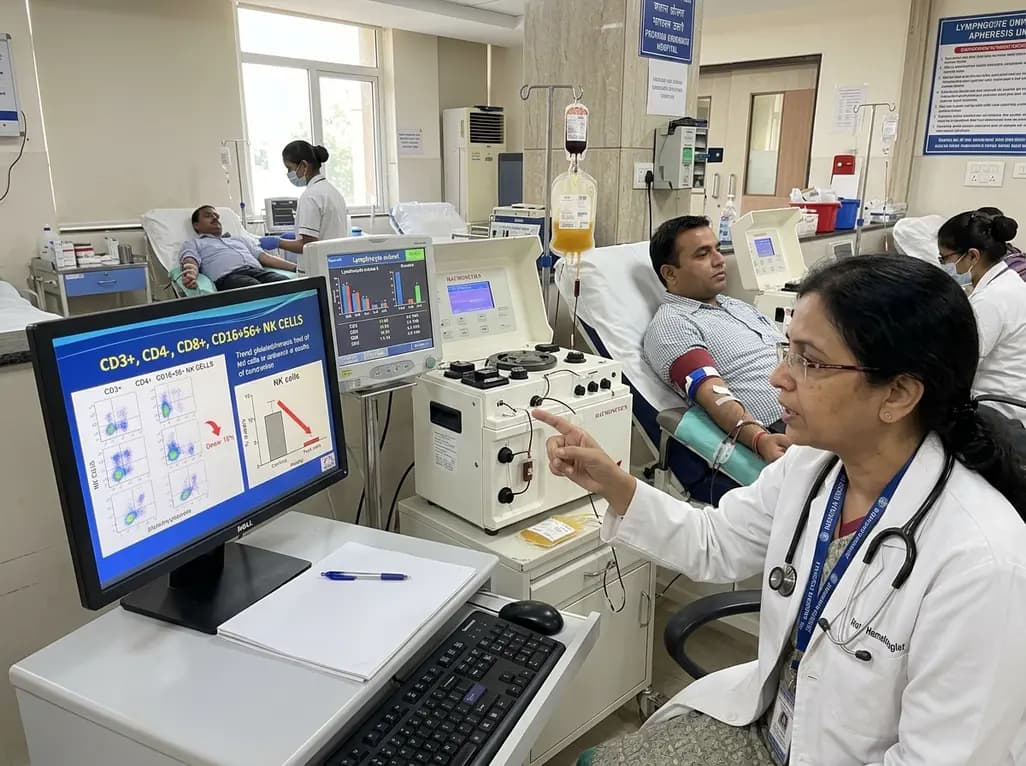
A landmark study assesses how frequent plateletpheresis alters peripheral immune profiles. Regular donors demonstrate notable reductions in circulating natural killer cells, emphasizing the critical need for routine lymphocyte subset surveillance in long-term blood donor safety programs.
Today

Fetal foramen ovale restriction typically emerges in the third trimester with right heart enlargement. Evidence demonstrates it does not independently mandate cesarean delivery, and over 93% of postnatal cardiac findings resolve spontaneously within one year, supporting conservative obstetric management.
Today

The latest WHO Global Health Estimates highlight India's life expectancy reaching 71 years alongside a healthy lifespan of 60.6 years. While longevity rebounds post-pandemic, non-communicable conditions now account for three-quarters of top mortalities, underscoring urgent clinical shifts in routine primary care.
Today

New biomechanical research reveals that foot-strike angle significantly influences knee energy absorption during cutting tasks in female soccer players. Understanding these kinematic patterns offers clinicians valuable pathways for targeted ACL injury prevention and athletic retraining.
Today

A comprehensive review analyzes periconceptional GLP-1 receptor agonist exposure, revealing reassuring data on congenital anomalies and adverse perinatal outcomes while emphasizing the need for cautious patient counseling.
Today
