.webp&w=384&q=75)

Loading, please wait...
Loading, please wait...

Modern pediatrics is increasingly leveraging artificial intelligence for neurodevelopmental screening. A recent study examined the efficacy of infant gaze classification models, specifically iCatcher+, when applied to diverse demographic groups. Researchers discovered that pretrained models often struggle with "domain shift," particularly when applied to infants from different geographic or age-related cohorts. This finding is crucial for clinicians in India who utilize AI-driven diagnostic tools for early developmental monitoring.
The research highlighted a substantial decline in accuracy when models trained on Western datasets were tested on Korean infants. This performance drop was primarily driven by developmental mismatch. Essentially, as the age distribution of the infants diverged from the training data, the model's reliability waned. Furthermore, while fine-tuning the model on local data improved its accuracy, it led to "catastrophic forgetting." This phenomenon occurs when a model loses its ability to perform well on the original dataset after learning new information.
For pediatricians and neurologists, this underscores a vital lesson: AI tools are not universally "plug-and-play." Consequently, practitioners must ensure that the digital tools they use are validated for their specific patient population. Therefore, achieving robust generalization in medical AI requires a closer alignment between the training environment and the actual clinical deployment context. In addition, developers must address the sensitivity of deep learning gaze classifiers to geographic and developmental shifts to maintain diagnostic integrity.
Domain shift occurs when an AI model is applied to data that differs from its training set, such as different patient ethnicities, ages, or scanning equipment, often resulting in significantly reduced accuracy.
Infant facial features and gaze patterns change rapidly during early development. If a model is trained on older infants, it may fail to accurately recognize the subtle cues of younger cohorts due to these developmental differences.
Fine-tuning can improve local performance for a specific group, but it often comes at the cost of "catastrophic forgetting," where the AI's original generalized knowledge is compromised.
Disclaimer: This content is for informational and educational purposes only. It does not constitute medical advice or a professional relationship. Always seek the advice of a qualified healthcare provider for any medical concerns. Refer to the latest local and national guidelines for clinical practice.
References
Madhavan R et al. Cross-domain evaluation and fine-tuned adaptation of iCatcher+ for Korean infant gaze data. Infant Behav Dev. 2026 May 20. doi: undefined. PMID: 42160791.
Falck-Ytter Y. Automated Infant Eye Tracking: A Systematic Historical Review. PMC. 2023. doi: 10.1111/desc.13381.
Pierce K et al. Preferential looking to geometric patterns: a digital-age early warning sign of autism. Arch Gen Psychiatry. 2011;68(1):101-109.

Read summarized clinical updates, watch expert medical content, and earn CME certifications right from your smartphone.
Open your smartphone camera to scan and install.





New research evaluates iCatcher+ gaze models in infants, revealing how domain shifts and age mismatches impact the accuracy of AI in pediatric diagnostics....
5 months ago
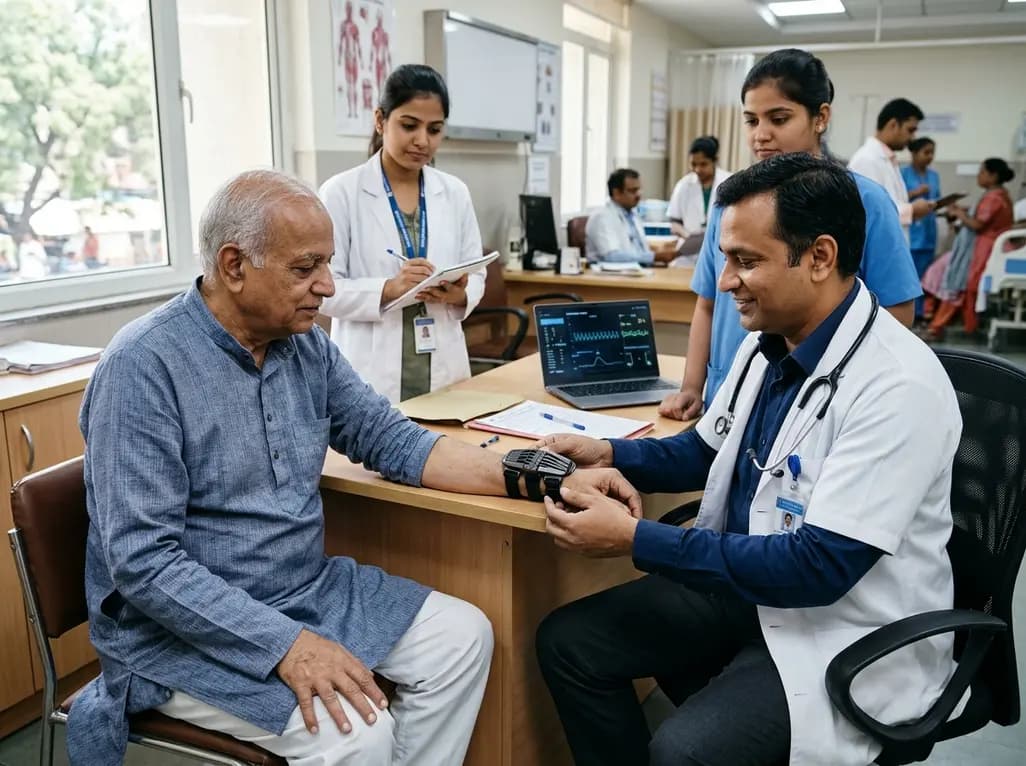
The TREM-AB open-label pilot study evaluated a wearable passive nonlinear vibration absorber for essential tremor. The Nonlinear Energy Sink bracelet reduced clinical Fahn-Tolosa-Marin tremor scores by 32.1% and electrophysiological tremor power by 49.2% with no adverse effects reported.
Today

A population-based study of 20,928 children reveals that small vulnerable newborns face sex-divergent mental capital outcomes at ages 6-7: term SGA girls show higher behavioral difficulties and lower resilience, while preterm non-SGA boys experience increased behavioral problems.
Today
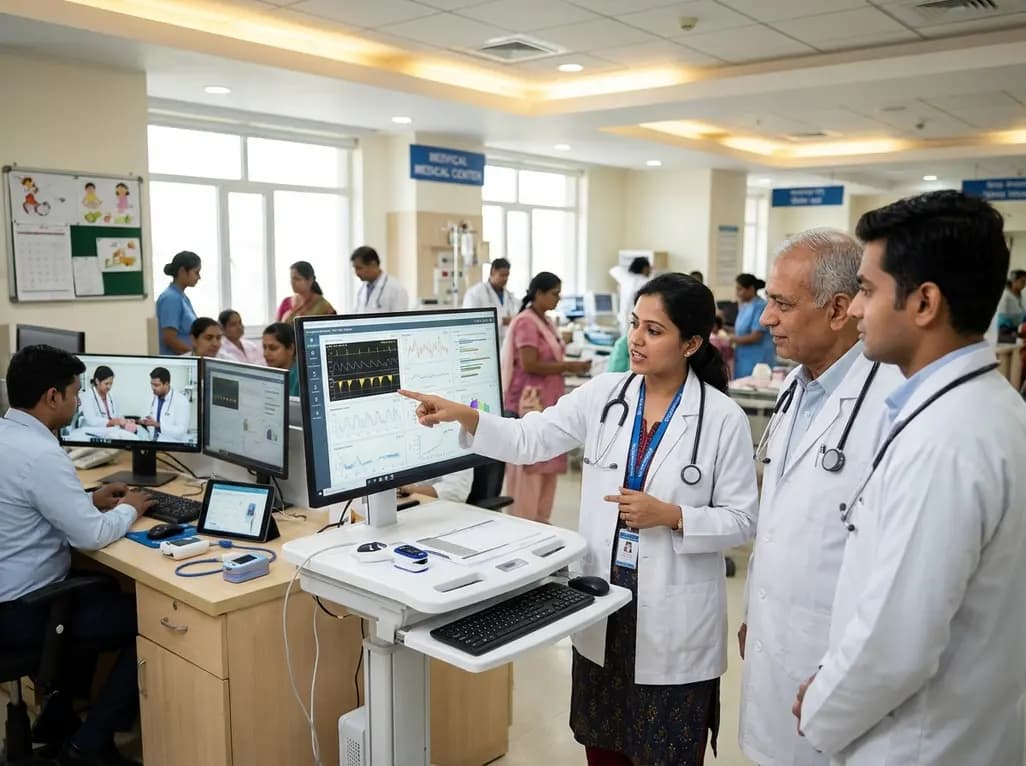
A landmark study details how an enterprise pediatric remote patient management model expanded from a single cardiology pilot to 16 diverse specialty programs by combining centralized digital operations with specialty clinical leadership.
Today
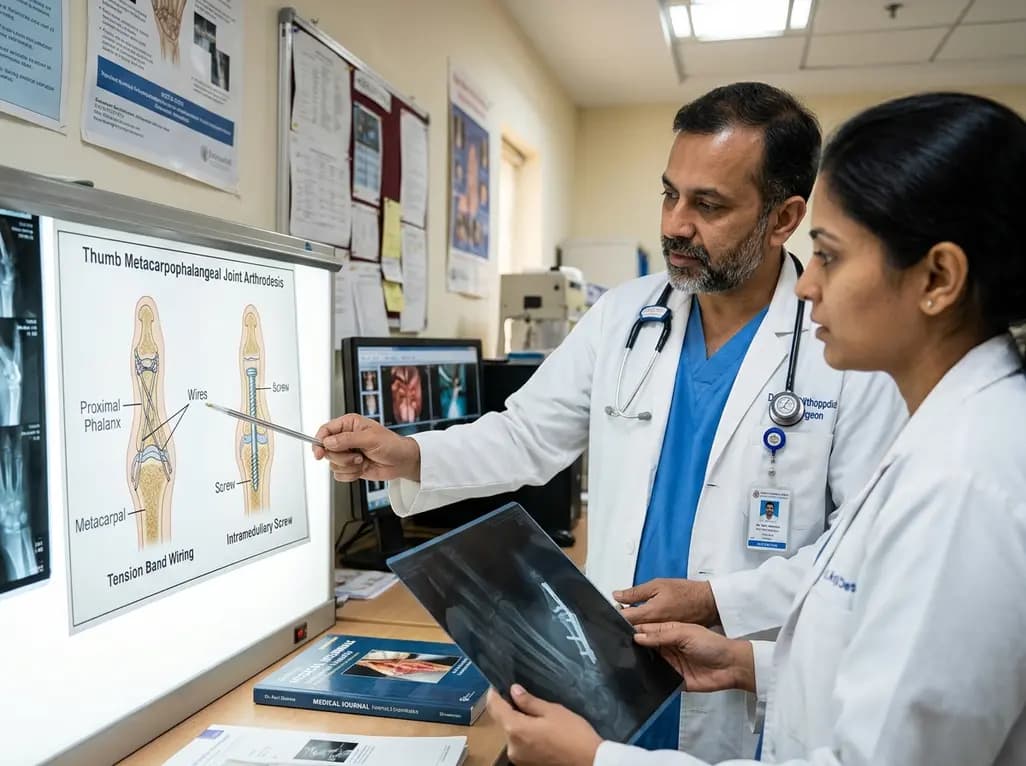
A comparative review of tension band wiring and intramedullary screw fixation in thumb metacarpophalangeal arthrodesis, evaluating union rates, hardware complications, and clinical outcomes.
Today
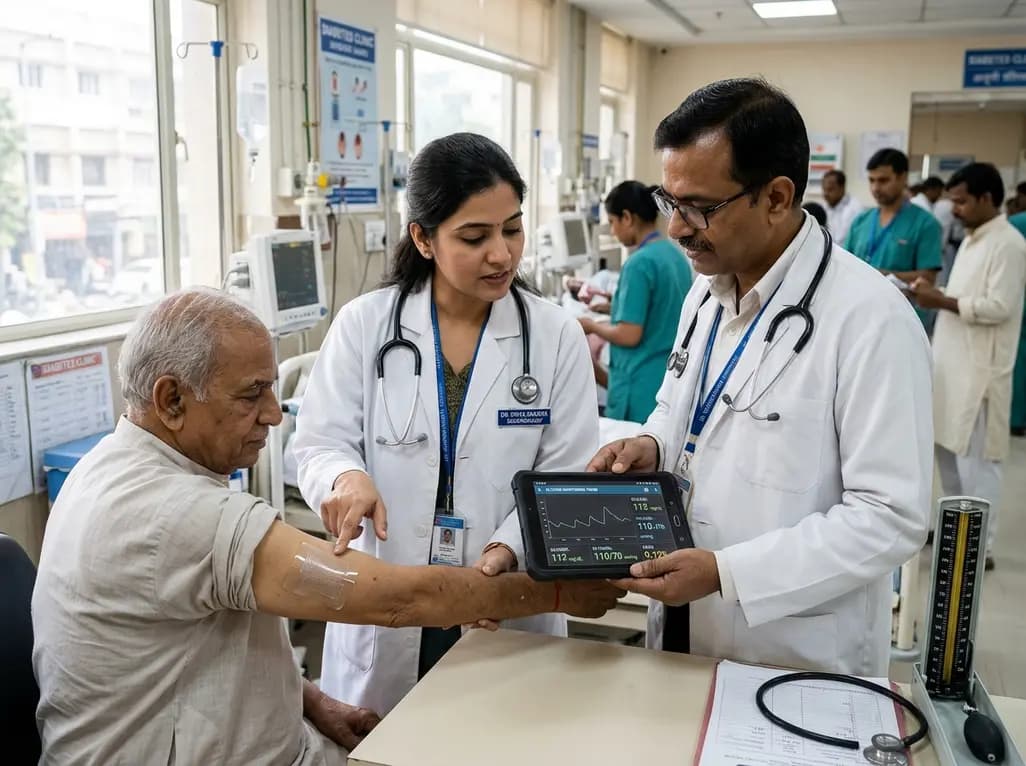
A breakthrough ultrathin multimodal sensor decouples physical hemodynamic monitoring from disposable electrochemical calibration, achieving long-term wearable glucose prediction with 81.36% accuracy and a 9.12% MARD. This offers a robust, drift-free solution for outpatient metabolic surveillance.
Today
