.webp&w=384&q=75)

Loading, please wait...
Loading, please wait...
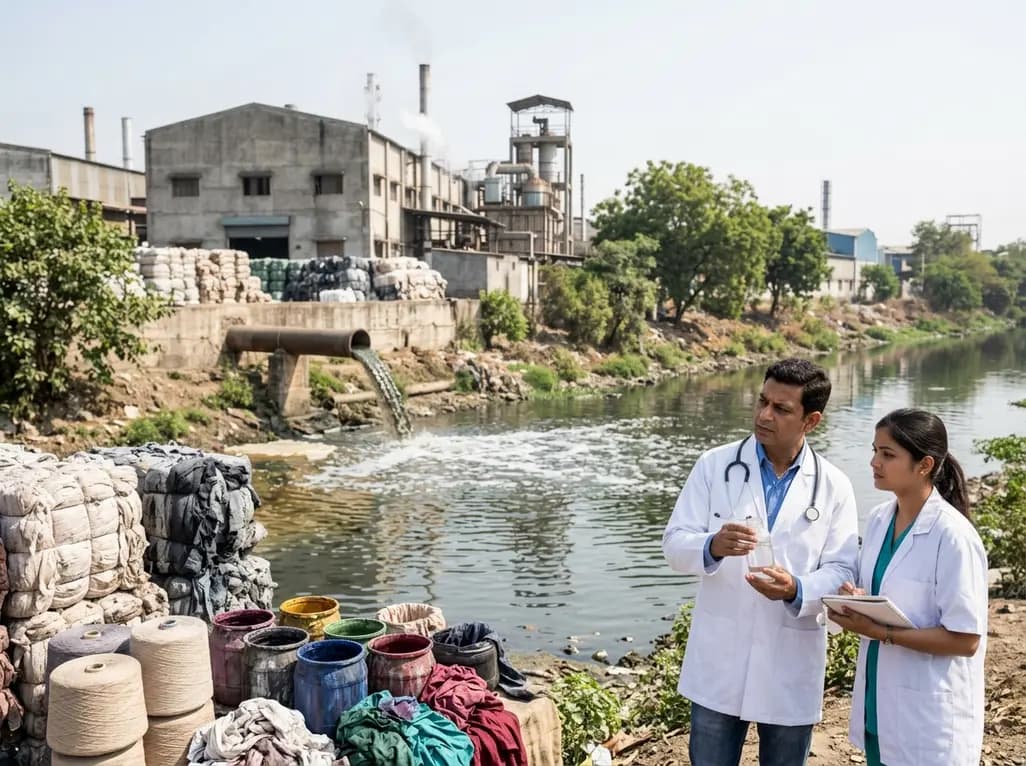
The global surge in the use of disinfectants and surfactants has brought Quaternary Ammonium Compounds (QACs) into the spotlight for environmental scientists and medical professionals alike. Traditionally, the presence of these biocides in aquatic environments was attributed to domestic sewage and livestock runoff. However, emerging research indicates that industrial QAC pollution risks are significantly higher in areas with concentrated manufacturing hubs. A recent study conducted in Japan sheds light on a different pattern of pollution, identifying the textile industry as a dominant source of these chemical agents. For healthcare providers in industrial nations like India, understanding these environmental factors is crucial. Biocides play a dual role as essential sanitizers and potential environmental hazards. Specifically, the persistent presence of QACs in streams near industrial zones creates hotspots for ecological disruption. Furthermore, these chemical residues may contribute to the selection of resistant microbial strains, complicating the clinical management of infectious diseases. By analyzing the sources and concentrations of these compounds, researchers aim to provide a new perspective on chemical management and public health protection.
To understand industrial QAC pollution risks, one must first identify the specific chemical agents involved. The study monitored fourteen different QACs, including benzalkonium chlorides with varying alkyl chain lengths (C8 to C18), dialkyldimethylammonium chlorides, and alkyltrimethylammonium chlorides. Additionally, specialized disinfectants such as benzethonium chloride and cetylpyridinium chloride were analyzed alongside common pharmaceuticals. The researchers discovered that concentrations of at least four QACs far exceeded the ranges typically reported in municipal sewage or treated effluents globally. This indicates that traditional wastewater treatment processes may be insufficient for neutralizing industrial-grade chemical runoff. In many cases, these compounds are used in the textile industry for finishing processes, dyeing, and as antimicrobial agents for fabrics. Consequently, the discharge from these facilities contains a concentrated chemical signature that differs from human metabolic byproducts found in domestic sewage. This industrial signature creates a unique environmental profile that requires targeted monitoring. Moreover, the stability of these concentrations throughout the year suggests a continuous discharge pattern rather than seasonal fluctuations. This consistency increases the long-term exposure risk for local ecosystems and human populations residing downstream from these manufacturing centers.
While the primary focus of the research was ecological, the clinical implications for human health are noteworthy for medical educators. Chronic exposure to QACs through contaminated water or secondary aerosolization can lead to various adverse health outcomes. Specifically, these compounds are known irritants that can exacerbate respiratory conditions such as occupational asthma and allergic rhinitis. In clinical practice, patients living near industrial zones may present with persistent dermatological issues, including contact dermatitis, which can be linked to sensitized skin responses to environmental surfactants. Furthermore, some studies suggest that chronic low-level exposure to certain biocides might interfere with endocrine functions or lipid metabolism. Therefore, physicians should maintain a high index of suspicion when treating patients with unexplained chronic inflammatory or respiratory symptoms in industrial corridors. Additionally, the potential for these compounds to enter the food chain via contaminated irrigation water or aquatic life remains a significant public health concern. Understanding the source of these chemicals allows for better environmental history taking during patient consultations. It also highlights the need for broader public health advocacy regarding industrial wastewater standards to prevent the accumulation of toxic substances in the local environment.
One of the most critical aspects of industrial QAC pollution risks is the potential to drive antimicrobial resistance (AMR). The co-occurrence of biocides and sub-lethal concentrations of antibiotics in waterways creates a selective pressure environment. Bacteria exposed to QAC residues often develop efflux pump mechanisms that can expel not only the biocides but also clinical antibiotics. This phenomenon, known as cross-resistance, is a major hurdle in treating common infections. For example, the presence of benzalkonium chloride in the environment has been linked to increased resistance in Pseudomonas aeruginosa and other opportunistic pathogens. In countries like India, where the textile industry is a cornerstone of the economy, the environmental management of these compounds is vital for preserving the efficacy of existing antibiotics. When industrial runoff bypasses adequate treatment, it effectively turns local streams into breeding grounds for multidrug-resistant organisms. Consequently, the medical community must view industrial chemical management as an extension of antibiotic stewardship. Reducing the environmental burden of biocides is a necessary step in the global strategy to combat the AMR crisis. This requires collaboration between environmental engineers, industrial policymakers, and healthcare leaders to ensure that manufacturing success does not come at the cost of public health security.
The ecological risk of QACs is often quantified using risk quotients, which compare measured environmental concentrations to predicted no-effect concentrations. In the Japanese study, several sites showed risk quotients exceeding the critical threshold of one, indicating a high probability of adverse effects on aquatic organisms. Such high levels of industrial QAC pollution risks suggest that local biodiversity, including fish and essential microbial communities, may be under significant stress. These findings are particularly relevant for watersheds that receive massive volumes of textile wastewater, sometimes exceeding 1000 cubic meters per day. Monitoring these hotspots requires sophisticated analytical techniques to differentiate between various QAC homologues. Traditional water quality parameters, such as biological oxygen demand, do not adequately capture the specific toxicity of these biocides. Similarly, the correlation between industrial emissions reports and measured stream concentrations underscores the importance of transparent industrial reporting. Without accurate data on chemical usage and discharge, environmental protection agencies cannot implement effective mitigation strategies. For healthcare professionals, these ecological risks serve as early warning signs for potential human health impacts. Protecting the delicate balance of the aquatic environment is often the first line of defense against the spread of environmentally-mediated diseases and the loss of essential ecosystem services.
Addressing the challenges posed by industrial QAC pollution risks requires a multi-faceted approach involving technology, regulation, and education. Current sewage treatment plants are often designed to handle organic matter from domestic sources and may fail to remove synthetic biocides effectively. Therefore, there is an urgent need for the adoption of advanced treatment technologies, such as advanced oxidation processes or specialized membrane filtration, in industrial zones. Furthermore, the textile industry must explore greener alternatives to traditional QACs, utilizing biodegradable or less toxic antimicrobial agents. Regulatory frameworks also need to be updated to include specific discharge limits for quaternary ammonium compounds. In India, where textile hubs like Tirupur and Surat are vital to the economy, implementing such standards could significantly reduce the environmental AMR burden. Additionally, medical educators should integrate environmental toxicology into the clinical curriculum to better prepare doctors for the health challenges of the 21st century. By fostering a deeper understanding of how industrial processes impact water quality and microbial evolution, the healthcare community can lead the way in advocating for a healthier, more sustainable environment.
Industrial QACs are often discharged in much higher concentrations and consist of specific chemical homologues used in manufacturing processes like textiles. Unlike domestic sources, which are typically diluted by larger volumes of municipal wastewater and human waste, industrial discharges create localized hotspots of high toxicity. These concentrated residues are more likely to exceed ecological safety thresholds and drive the development of antimicrobial resistance among environmental bacteria.
Yes, environmental exposure can indirectly contribute to antibiotic resistance in humans. When bacteria in waterways are exposed to sub-lethal levels of QACs, they often develop defense mechanisms, such as multi-drug efflux pumps. These mechanisms can provide cross-resistance to several classes of clinical antibiotics. If these resistant bacteria eventually infect humans through water contact or the food chain, the resulting infections may be much harder to treat with standard medications.
Chronic exposure to these compounds primarily manifests as respiratory and dermatological issues. Patients may experience symptoms consistent with occupational asthma, such as wheezing and shortness of breath, particularly if they live near industrial sites where chemicals may aerosolize. Additionally, skin contact with contaminated water can cause irritant or allergic contact dermatitis. Because these symptoms are often non-specific, a thorough environmental and occupational history is essential for accurate diagnosis and management.
Disclaimer: This content is for informational and educational purposes only. It is not intended to be a substitute for professional medical advice, diagnosis, or treatment. Always seek the advice of your physician or other qualified health provider with any questions you may have regarding a medical condition. Refer to the latest local and national guidelines for clinical practice.
References
Zaman S et al. Occurrence, source, and ecological risk of quaternary ammonium compounds in streams near industrial zones: a different pattern of pollution from other Japanese watersheds. J Environ Manage. 2026 Jul 19. doi: undefined. PMID: 42472509.
Arnold BW et al. Quaternary Ammonium Compounds: A Review of Uses, Health Effects, and Environmental Fate. Environmental Science & Technology. 2023.
Hegstad K et al. Does the use of biocides select for antibiotic resistance? Journal of Antimicrobial Chemotherapy. 2010;65(10):2074-2082.
"
Read summarized clinical updates, watch expert medical content, and earn CME certifications right from your smartphone.
Open your smartphone camera to scan and install.





New research highlights how the textile industry contributes to significant Quaternary Ammonium Compound (QAC) pollution in waterways, posing ecological risks and potentially driving antimicrobial resistance. This discovery shifts the focus from domestic sewage to industrial sources.
3 months ago

As monsoon seasons elevate arboviral disease threats, Tamil Nadu has initiated an ICMR-monitored evaluation of the tetravalent dengue vaccine in Tenkasi district. Clinicians emphasize clinical monitoring, public prevention, and high-quality early pediatric care to reduce disease morbidity across endemic regions.
Today

Leucine Rich Bio has introduced South Asia's first comprehensive vaginal microbiome test, BugSpeaks. By profiling microbial dysbiosis, pathogens, and antimicrobial resistance, this next-generation diagnostic platform provides clinicians with deeper insights into recurrent infections, fertility, and reproductive health.
Today

Review how tailored exercise programs benefit frail older patients with heart failure. Explore pathophysiological mechanisms, individualized training prescriptions, and strategies to overcome adherence barriers in clinical practice.
Today

This comparative study evaluates posterior labral tears with and without glenohumeral instability, highlighting distinct demographic patterns, MRI underestimation in stable shoulders, and successful arthroscopic repair outcomes.
Today

A clinical study demonstrates that early intervention with tocilizumab, either as monotherapy or bridged with corticosteroids, achieves significant proptosis reduction and resolves active inflammation in treatment-naive thyroid eye disease.
Today
