.webp&w=384&q=75)

Loading, please wait...
Loading, please wait...

One major breakthrough involves the development of ultra-thin hollow fiber membranes for haemodialysers. These membranes function as artificial kidneys by effectively filtering metabolic toxins from the patient's blood. Currently, India relies heavily on expensive imported filters for routine dialysis procedures. However, the indigenous versions cost between ₹150 and ₹200, compared to ₹700–₹1,000 for imported units. This drastic price reduction represents a 70% saving for patients and healthcare providers. Additionally, the researchers developed high-purity water systems essential for safe dialysis sessions. These systems utilize advanced reverse osmosis and nanofiltration technologies to remove contaminants. Furthermore, the new design improves energy efficiency and reduces water consumption during the process.
Therefore, private dialysis players in areas like Kamareddy and Marredpally have successfully implemented these technologies. The pilot results demonstrate consistent performance matching international quality and safety standards. Scientists are now transferring this technology to private manufacturers for large-scale production. Ultimately, this shift will decrease India's dependence on foreign medical devices significantly. Patients in remote areas will soon have better access to high-quality, affordable renal treatment.
Q1: How much do the indigenous dialysis filters cost compared to imports?
The indigenous filters cost between ₹150 and ₹200, whereas imported filters typically range from ₹700 to ₹1,000.
Q2: What are the two primary innovations developed by IICT scientists?
The innovations include ultra-thin hollow fiber membranes for haemodialysers and advanced reverse osmosis/nanofiltration systems for high-purity water.
Q3: How many patients have benefited from the pilot studies?
Approximately 20,000 patients have already benefited from these indigenous technologies during the pilot phases in regional health centers.
Disclaimer: This content is for informational and educational purposes only. It does not constitute medical advice or replace professional judgment. Refer to the latest local and national guidelines for clinical practice.
References

Read summarized clinical updates, watch expert medical content, and earn CME certifications right from your smartphone.
Open your smartphone camera to scan and install.





IICT scientists develop indigenous dialysis technology, including filters and water systems, reducing costs by 70% and benefiting over 20,000 Indian patient...
6 months ago

Review how tailored exercise programs benefit frail older patients with heart failure. Explore pathophysiological mechanisms, individualized training prescriptions, and strategies to overcome adherence barriers in clinical practice.
Today

Leucine Rich Bio has introduced South Asia's first comprehensive vaginal microbiome test, BugSpeaks. By profiling microbial dysbiosis, pathogens, and antimicrobial resistance, this next-generation diagnostic platform provides clinicians with deeper insights into recurrent infections, fertility, and reproductive health.
Today
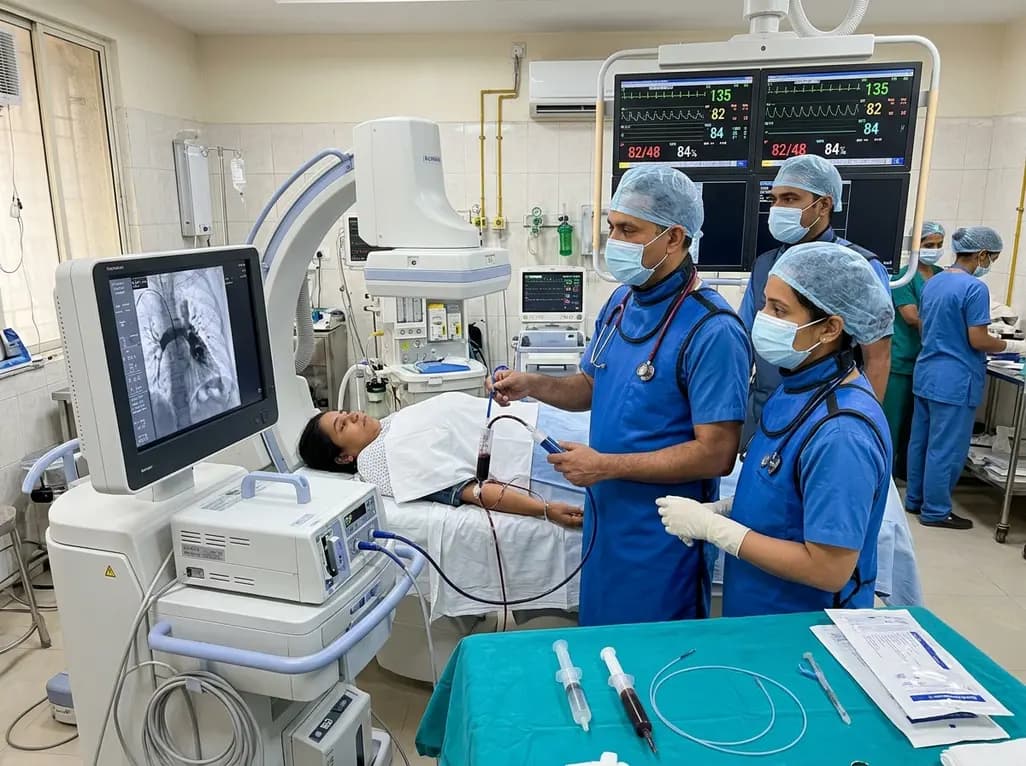
In high-risk pulmonary embolism complicated by severe anemia and active uterine bleeding, systemic thrombolysis is contraindicated. Large-bore aspiration thrombectomy provides rapid hemodynamic rescue without fibrinolysis, supported by inferior vena cava filter placement and multidisciplinary critical care.
Today

This comparative study evaluates posterior labral tears with and without glenohumeral instability, highlighting distinct demographic patterns, MRI underestimation in stable shoulders, and successful arthroscopic repair outcomes.
Today

A clinical study demonstrates that early intervention with tocilizumab, either as monotherapy or bridged with corticosteroids, achieves significant proptosis reduction and resolves active inflammation in treatment-naive thyroid eye disease.
Today
