.webp&w=384&q=75)

Loading, please wait...
Loading, please wait...
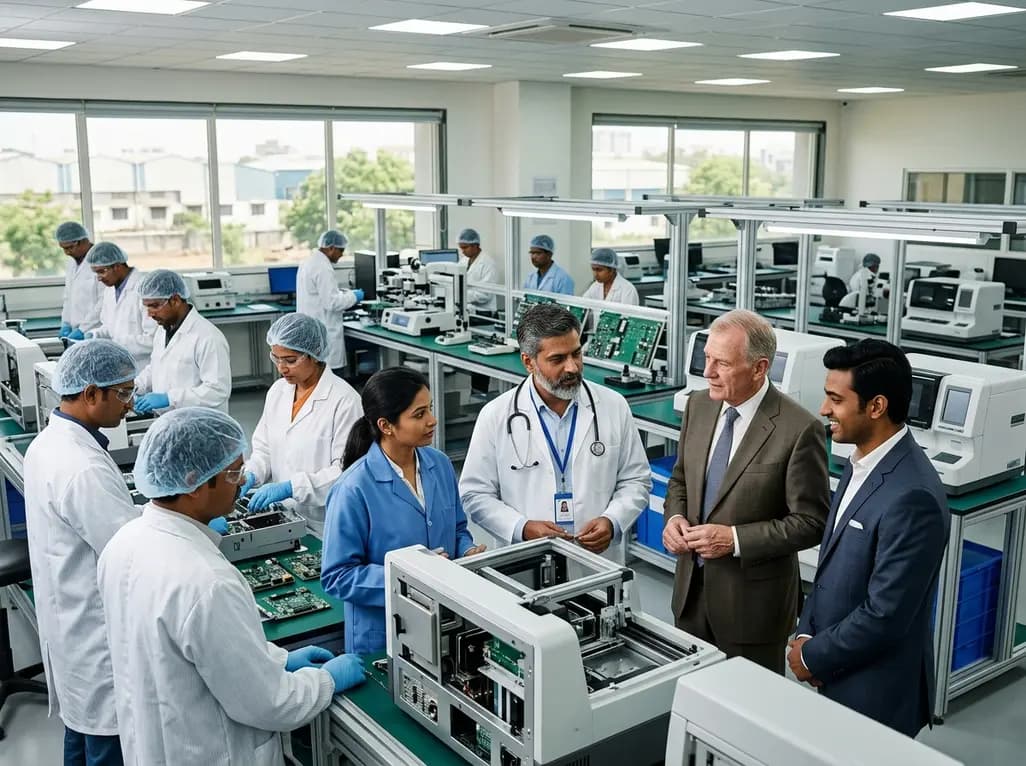
The healthcare landscape in India is undergoing a dramatic shift, driven by rapid technological advancements and rising capital investments. Specifically, the Indian IVD market has emerged as a focal point for global private equity firms looking to capitalize on expanding diagnostic needs. This surge in interest reflects a broader trend of modernization across clinical laboratories and medical institutions nationwide. Recently, major investment entities have initiated early-stage discussions to acquire a significant stake in Agappe Diagnostics. Consequently, this potential transaction underscores the growing commercial value and clinical importance of locally manufactured diagnostic solutions in India.
Global private equity firms like Warburg Pincus, Bain Capital, and CVC Capital are actively exploring opportunities within the domestic healthcare space. Currently, these investment groups are in preliminary discussions to purchase an approximate twenty-five percent stake in Agappe Diagnostics. This proposed transaction, valued between seven hundred and seven hundred and fifty crore rupees, represents a combination of secondary share sales and fresh capital. Consequently, the deal could value the Kochi-headquartered diagnostic pioneer at over three thousand crore rupees. Such a valuation highlights the robust financial health and market potential of indigenous diagnostic manufacturers. Additionally, investment advisors like Alvarez & Marsal are guiding the company's promoters through this strategic stake sale. Historically, Mauritius-based Sycamore Holdings acquired a twenty percent stake in Agappe in 2015 through Konark Capital Partners for fifty crore rupees. Today, the rest remains with founder Thomas John and his family. This capital influx will definitely accelerate research and development efforts. Therefore, the company can expand manufacturing to meet rising clinical demands domestically and globally. Ultimately, these funds will support the launch of advanced diagnostic analyzers.
The Indian IVD market is experiencing intense competition as domestic companies challenge established multinational giants. Historically, global corporations such as Roche, Beckman Coulter, and Siemens Healthcare have dominated this specialized market. However, domestic players like Agappe Diagnostics, Transasia Bio-Medicals, Trivitron Healthcare, and Meril Life Sciences are rapidly closing the gap. These Indian manufacturers are utilizing state-of-the-art technology to offer cost-effective alternatives to imported equipment. Furthermore, rating agencies like Crisil highlight that local firms must innovate constantly to survive against multinational competition. Private equity firms recognize this dynamic and are actively backing local champions to foster self-reliance in medical devices. For example, Warburg Pincus holds an eleven percent stake in Meril Life Sciences, acquired for two hundred and ten million dollars. This strategic backing enables domestic firms to scale their operations and improve product quality. Consequently, healthcare providers across India now have access to high-quality diagnostic tools at a fraction of the cost. Ultimately, this competition benefits patients by making essential diagnostic tests affordable. In addition, local production ensures a more reliable supply chain for critical diagnostic reagents.
Technological innovation remains the primary driver of growth in the medical diagnostics sector. Specifically, Agappe Diagnostics has built a comprehensive portfolio of reagents and clinical chemistry equipment. The company develops highly reliable analyzers that cater to the diverse needs of modern clinical laboratories. For instance, their Mispa brand includes advanced dry-chemistry biochemistry analyzers like the Mispa Chem DX. Additionally, the company manufactures the Mispa Revo Plus, which is a portable time-resolved fluorescence immunoassay analyzer. Laboratories routinely utilize this equipment for critical cardiac markers, thyroid panels, and fertility testing. Moreover, their hematology range includes the Mispa Hx35, a compact three-part complete blood count analyzer. These devices allow laboratory technicians to deliver accurate and rapid results to supervising physicians. Subsequently, clinicians can make timely and informed treatment decisions for their patients. By manufacturing both specialized reagents and analyzers, domestic companies ensure seamless integration and consistent quality control. Therefore, medical laboratories can reduce operational downtime and maintain high testing standards. Consequently, this innovation elevates the overall quality of healthcare delivery.
Increasing healthcare expenditure in India is fundamentally reshaping the diagnostic landscape. Both the government and the private sector are investing heavily in rural and urban healthcare infrastructure. As a result, patient access to essential diagnostic services has improved significantly over the last decade. Furthermore, there is a distinct shift toward preventive healthcare, which heavily relies on early diagnostic screening. This rising demand has encouraged local manufacturers to scale up production and introduce highly specialized testing panels. Consequently, private equity investors see substantial long-term value in funding diagnostic technology developers. Additionally, government emphasis on local manufacturing through 'Make in India' provides a favorable environment. This policy reduces import dependency and encourages domestic research. Therefore, local enterprises are now capable of producing high-end diagnostic tools that meet international standards. Meanwhile, clinics and hospitals can expand their service offerings without relying on expensive foreign imports. Ultimately, this synergy between public policy and private investment paves the way for a more resilient healthcare system, benefiting millions of patients across the nation.
While domestic success is vital, Indian diagnostic firms are also expanding their global footprint. For example, Agappe Diagnostics operates a wholly owned subsidiary in Switzerland to manage its international business. This strategic presence allows the company to supply diagnostic reagents and equipment to over ninety countries worldwide. Currently, their products serve seventy thousand clinical laboratories globally, demonstrating strong brand recall. In addition to exporting products, Indian firms are forging vital partnerships with global medical technology giants. Specifically, Agappe serves as the exclusive Indian distributor for major international corporations. These partners include Japan's Toshiba Medical Systems Corporation, China's Mindray, and South Korea's i-SENS. Through these channels, healthcare providers gain access to international technologies. Moreover, these collaborations facilitate technology transfer and help local engineers adopt global best practices in manufacturing. Consequently, domestic firms are gradually transforming into respected multinational corporations. This international credibility further attracts global investors who seek diversified exposure in emerging healthcare markets, accelerating the sector's growth.
Q1: Why is the Indian IVD market attracting significant private equity investment recently?
The Indian IVD market is growing rapidly due to rising healthcare spending, expanding diagnostic networks, and strong government support for local manufacturing. Consequently, global private equity firms see a massive opportunity to fund domestic companies that offer high-quality, cost-effective diagnostic equipment. These investments help local players scale operations, enhance research and development, and compete effectively with multinational corporations.
Q2: What are some of the key clinical diagnostic technologies manufactured by domestic companies?
Indian companies manufacture a wide range of advanced medical diagnostic equipment and highly specific reagents. These include compact dry-chemistry biochemistry analyzers, portable time-resolved fluorescence immunoassay systems, and three-part complete blood count hematology analyzers. These technologies allow laboratories to run critical tests for cardiac markers, thyroid function, fertility, and routine hematology with high precision and speed.
Q3: How does the presence of domestic diagnostic manufacturers benefit healthcare in India?
Domestic manufacturers significantly lower the cost of diagnostic tests by producing affordable reagents and equipment locally. This reduces reliance on expensive imported technologies and lowers operational costs for clinical laboratories. Consequently, healthcare providers can offer vital diagnostic services to patients at lower rates, making quality healthcare more accessible to both urban and rural populations.
Disclaimer: This content is for informational and educational purposes only. It does not constitute medical advice or replace professional judgment. Refer to the latest local and national guidelines for clinical practice.
References

Read summarized clinical updates, watch expert medical content, and earn CME certifications right from your smartphone.
Open your smartphone camera to scan and install.





Global private equity firms like Warburg Pincus and Bain Capital are eyeing a twenty-five percent stake in Agappe Diagnostics, signaling intense investor interest in the Indian IVD market. Read how local manufacturing, competitive pricing, and clinical innovations are reshaping diagnostics in India.
3 months ago

Review how tailored exercise programs benefit frail older patients with heart failure. Explore pathophysiological mechanisms, individualized training prescriptions, and strategies to overcome adherence barriers in clinical practice.
Today

Leucine Rich Bio has introduced South Asia's first comprehensive vaginal microbiome test, BugSpeaks. By profiling microbial dysbiosis, pathogens, and antimicrobial resistance, this next-generation diagnostic platform provides clinicians with deeper insights into recurrent infections, fertility, and reproductive health.
Today

In high-risk pulmonary embolism complicated by severe anemia and active uterine bleeding, systemic thrombolysis is contraindicated. Large-bore aspiration thrombectomy provides rapid hemodynamic rescue without fibrinolysis, supported by inferior vena cava filter placement and multidisciplinary critical care.
Today

This comparative study evaluates posterior labral tears with and without glenohumeral instability, highlighting distinct demographic patterns, MRI underestimation in stable shoulders, and successful arthroscopic repair outcomes.
Today

A clinical study demonstrates that early intervention with tocilizumab, either as monotherapy or bridged with corticosteroids, achieves significant proptosis reduction and resolves active inflammation in treatment-naive thyroid eye disease.
Today
