.webp&w=384&q=75)

Loading, please wait...
Loading, please wait...
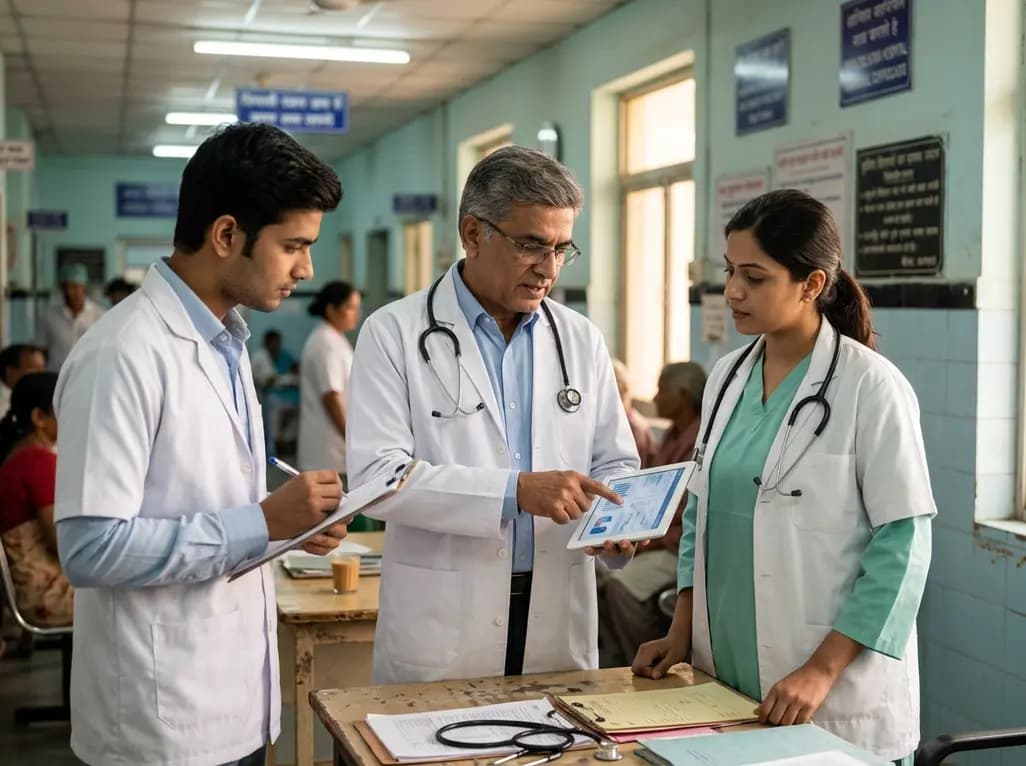
Cervical cancer continues to be a massive public health challenge in India, claiming thousands of lives annually. Consequently, medical experts are calling for an immediate overhaul of the national prevention strategy. Padma Shri Dr. Neerja Bhatla, former Head of Obstetrics and Gynaecology at AIIMS Delhi, strongly advocates for this critical transition. She argues that India must immediately shift from opportunistic, low-accuracy protocols to an organized, national HPV DNA screening framework. Although HPV vaccination protects future generations, it cannot safeguard adult women who are already at risk today. Therefore, robust and precise screening is vital to protect the current generation of women across the country. By modernizing clinical guidelines, healthcare systems can successfully achieve elimination targets. Indeed, timely detection remains the ultimate key to saving lives.
Currently, the national program in India heavily relies on Visual Inspection with Acetic Acid (VIA) for primary detection. However, VIA exhibits lower accuracy and suffers from high false-positive rates. In contrast, the World Health Organization (WHO) strongly recommends HPV DNA screening due to its superior clinical sensitivity. Molecular testing identifies high-risk viral strains before cellular abnormalities actually develop. Thus, it acts as a highly effective preventive tool compared to conventional cytology. While VIA and Pap smears serve as acceptable interim measures, they should only function as a temporary bridge. Ultimately, quality-assured molecular assays must become the standardized first-line modality in all clinical settings. Transitioning to molecular diagnostics will greatly enhance early detection rates and prevent diagnostic delays. Furthermore, this shift aligns India's national guidelines with the latest global oncology standards. As a result, clinical outcomes will improve dramatically across diverse patient populations.
While maximizing disease detection is vital, specificity deserves equal attention in resource-constrained systems. Indeed, a high false-positive rate triggers a cascade of unnecessary referrals, colposcopies, and biopsies. These redundant procedures place immense pressure on already stretched tertiary care facilities in India. Moreover, false positives cause avoidable anxiety and intense psychological distress for patients and their families. Therefore, our clinical goal must focus on identifying women who genuinely require treatment. By utilizing targeted genotype assays, clinicians can maintain excellent sensitivity while significantly improving specificity. Consequently, this balanced approach reduces unnecessary interventions without compromising cancer detection. Healthcare providers can then direct critical resources to high-risk patients who need urgent intervention. Ultimately, strategic diagnostic deployment ensures that the public health ecosystem remains sustainable and highly efficient over the long term.
Patient convenience plays a pivotal role in the success of any large-scale screening initiative. Often, women in remote areas must travel long distances and lose daily wages to visit clinics. If the diagnostic process requires multiple follow-up visits, many patients simply do not return to the clinic. Consequently, loss to follow-up remains a major barrier to cervical cancer elimination in rural sectors. To address this challenge, validated point-of-care HPV tests offer a revolutionary solution. For example, these rapid technologies can deliver accurate results in less than an hour. Consequently, clinicians can provide same-day counseling and immediate treatment decisions during a single patient visit. This efficient workflow dramatically improves patient compliance and clinical outcomes. By simplifying the screening journey, healthcare systems can ensure that no high-risk patient falls through the cracks.
Since indigenous molecular platforms are entering the Indian market, clinical validation must guide procurement decisions. Policymakers should never base diagnostic selection solely on low pricing. Instead, they must view screening tools as long-term investments in national health outcomes. Before integration into public programs, new assays must undergo rigorous multicentric clinical validation and health technology assessments. For instance, platforms like Truenat HPV-HR Plus demonstrate how innovation can bridge the accessibility gap. This platform combines reliable molecular performance with rapid, near-point-of-care delivery. It operates seamlessly in resource-variable settings without requiring complex laboratory infrastructure. Furthermore, it incorporates standardized workflows, digital connectivity, and reliable quality assurance processes. By insisting on robust clinical evidence, India can safely adopt affordable yet highly reliable diagnostic solutions that perform excellently in real-world scenarios.
Eliminating cervical cancer requires a comprehensive framework that combines vaccination and structured screening. Although HPV vaccination campaigns have gained momentum, they are not a standalone solution. The majority of adult women at risk today were already past the target age when vaccines arrived. Therefore, organized screening remains their primary line of defense against oncogenic progression. India must implement both strategies simultaneously while strengthening local treatment pathways for positive cases. Rather than debating centralized versus decentralized testing, a hybrid model should be embraced. Large cities can leverage high-throughput laboratories, while remote districts utilize decentralized molecular platforms. Finally, India needs three key policy reforms to accelerate this progress. First, the country must transition to organized screening. Second, it must standardize HPV DNA testing. Third, it must strengthen healthcare governance, monitoring, and financial accountability.
Q1: Why is HPV DNA testing preferred over Visual Inspection with Acetic Acid (VIA)?
HPV DNA testing is significantly more sensitive and accurate than VIA or traditional cytology. While VIA was useful due to affordability, its lower accuracy triggers excessive false positives. Consequently, molecular testing identifies high-risk viral strains much earlier, reducing diagnostic errors. Therefore, this superior method helps clinicians prevent oncogenic progression more effectively and safely.
Q2: How do point-of-care molecular tests improve patient follow-up rates?
Many women in India face barriers like travel costs, childcare issues, and lost wages when visiting healthcare facilities. If screening requires multiple appointments, many high-risk patients fail to return for their results. Fortunately, validated point-of-care molecular tests deliver results in under an hour. This rapid turnaround allows same-day counseling and immediate clinical decisions, which dramatically reduces loss to follow-up.
Q3: Why should cost not be the sole factor in procuring screening assays?
A screening test is a long-term clinical investment rather than a mere commodity. Lower-quality tests with poor validation can lead to high false-positive or false-negative rates. Consequently, false results strain tertiary care centers and cause extreme patient anxiety. Therefore, policymakers must prioritize rigorous clinical validation and quality assurance over low pricing to ensure sustainable public health outcomes.
Disclaimer: This content is for informational and educational purposes only. It does not constitute medical advice or replace professional judgment. Refer to the latest local and national guidelines for clinical practice.
References

Read summarized clinical updates, watch expert medical content, and earn CME certifications right from your smartphone.
Open your smartphone camera to scan and install.





Padma Shri Dr. Neerja Bhatla explains why India must transition from opportunistic VIA screening to an organized, population-wide program anchored in HPV DNA testing. Discover how validated point-of-care diagnostics can optimize clinical outcomes, streamline healthcare resources, and eliminate cervical cancer.
3 months ago

Review how tailored exercise programs benefit frail older patients with heart failure. Explore pathophysiological mechanisms, individualized training prescriptions, and strategies to overcome adherence barriers in clinical practice.
Today

Leucine Rich Bio has introduced South Asia's first comprehensive vaginal microbiome test, BugSpeaks. By profiling microbial dysbiosis, pathogens, and antimicrobial resistance, this next-generation diagnostic platform provides clinicians with deeper insights into recurrent infections, fertility, and reproductive health.
Today

In high-risk pulmonary embolism complicated by severe anemia and active uterine bleeding, systemic thrombolysis is contraindicated. Large-bore aspiration thrombectomy provides rapid hemodynamic rescue without fibrinolysis, supported by inferior vena cava filter placement and multidisciplinary critical care.
Today

This comparative study evaluates posterior labral tears with and without glenohumeral instability, highlighting distinct demographic patterns, MRI underestimation in stable shoulders, and successful arthroscopic repair outcomes.
Today

A clinical study demonstrates that early intervention with tocilizumab, either as monotherapy or bridged with corticosteroids, achieves significant proptosis reduction and resolves active inflammation in treatment-naive thyroid eye disease.
Today
