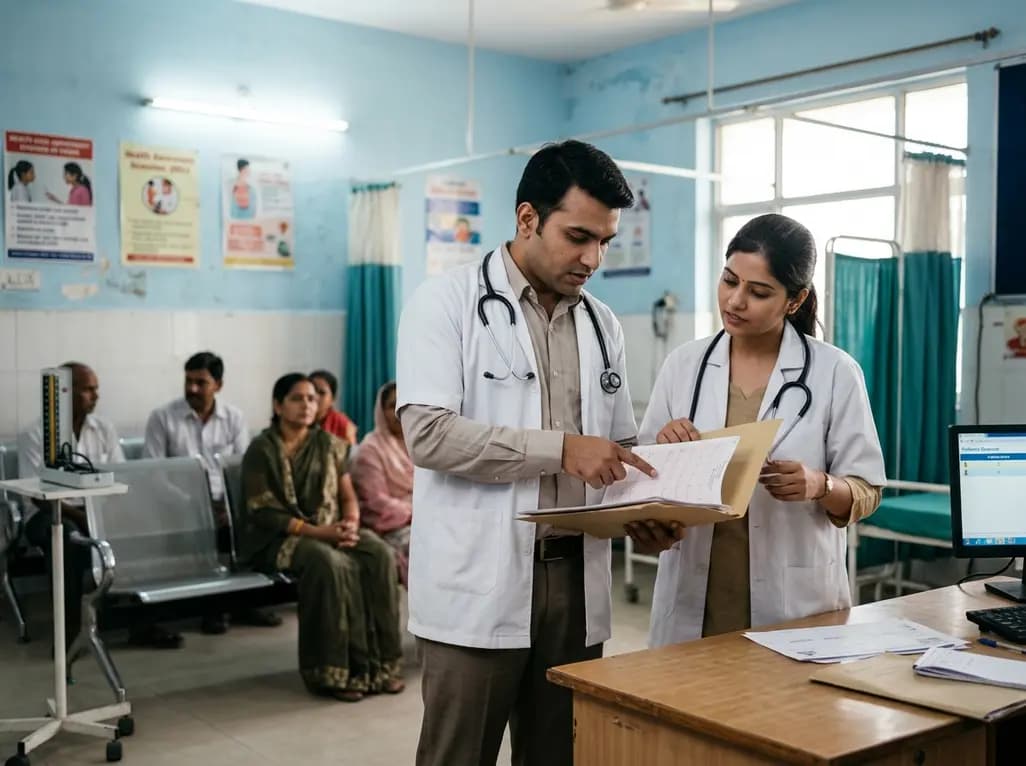
The government of India recently introduced a major health initiative to reform pediatric services across the country. Subsequently, Union Health Minister JP Nadda officially launched this comprehensive child healthcare programme to address critical early development stages. This landmark initiative, known as the Samagra Shishu Bal Swasthya Karyakram (SSBSK), merges existing community care platforms. Specifically, it combines home-based care models into a unified system to target the first three years of life. Therefore, by focusing on this critical period, the initiative aims to improve survival and neurodevelopmental outcomes nationwide.
Merging Schemes for a Unified Child Healthcare Programme
To begin with, the newly unveiled scheme strategically integrates two prominent grassroots initiatives. Specifically, the government consolidated the Home-Based Newborn Care and the Home-Based Care for Young Child frameworks. Consequently, this consolidation establishes a singular, robust system designed to eliminate gaps in pediatric healthcare delivery. Previously, fragmented follow-ups often resulted in vulnerable infants missing critical developmental checks. However, this unified child healthcare programme now guarantees a continuous pathway of medical and nutritional monitoring from birth up to thirty-six months.
In addition, the integration significantly optimizes the efficiency of community-based frontline health workers. For instance, Accredited Social Health Activists and Anganwadi Workers can now follow a single standardized protocol. Therefore, they can track infants more systematically without navigating conflicting guidelines. Furthermore, this streamlined approach ensures that families receive consistent counsel regarding lactation, immunization, and growth milestones. Healthcare experts believe that this administrative merge will drastically reduce neonatal morbidity across rural and urban districts alike. Ultimately, by maintaining a singular focus, the state can monitor child growth trajectories with unprecedented precision.
The Risk-Stratified Strategy for Vulnerable Newborns
An essential feature of this child healthcare programme is the pioneering introduction of a risk-stratified care model. Historically, standard pediatric guidelines applied uniform visitation schedules regardless of individual infant risk profiles. In contrast, this new framework categorizes infants based on specific health vulnerabilities and birth weights. Subsequently, healthcare providers can allocate resources where families need them most. For example, newborns identified as high-risk will now receive up to nine specialized home visits during their first forty-two days of life.
Moreover, this heightened supervision aims to detect early signs of sepsis, feeding difficulties, and respiratory distress. Similarly, the programme extends this proactive vigilance beyond the immediate neonatal phase. Specifically, at-risk infants will receive up to eight tailored home visits until they reach thirty-six months of age. Therefore, pediatricians and community nurses can closely monitor delayed developmental milestones and chronic nutritional deficits. Additionally, this systematic stratification ensures that critically ill babies undergo immediate referral to tertiary centers. By emphasizing preventive and targeted interventions, the government hopes to curb preventable infant mortality rates.
Grassroots Synergy and Community-Based Shishu Shivirs
To ensure effective grassroots implementation, the program fosters synergy among various community health workers. Specifically, Accredited Social Health Activists, Auxiliary Nurse Midwives, and Anganwadi Workers will conduct joint home visits. Consequently, this collaborative approach strengthens the local healthcare network and minimizes service duplication. Furthermore, these combined efforts will empower families by providing comprehensive, multi-layered support right at their doorsteps. In addition to home visits, the initiative introduces structured community contact points to capture children who might otherwise slip through the cracks.
For instance, the government will mandate Well-Baby Sessions during every local Village Health, Sanitation and Nutrition Day. Moreover, community health officers will host dedicated monthly events called Shishu Shivirs at Ayushman Arogya Mandirs. Therefore, families can easily access routine check-ups, anthropometric measurements, and developmental screenings close to home. These local gatherings will serve as vital hubs for the early identification of nutritional deficiencies and cognitive delays. Subsequently, children requiring specialized medical attention can enter organized referral loops immediately. This comprehensive localized network ensures that high-quality pediatric services remain accessible to underserved rural populations.
Integrating Maternal Mental Health and Early Childhood Development
In a highly progressive move, the child healthcare programme incorporates post-partum maternal mental health screening into routine community care. Historically, public health initiatives overlooked maternal depression, despite its profound impact on early parenting. However, this new strategy acknowledges that maternal psychological well-being directly influences infant development. Therefore, frontline workers will receive specialized training to screen mothers for postpartum depression and anxiety during routine home visits. Consequently, affected women can access timely counseling and psychological support, creating a healthier environment for their babies.
In addition to maternal care, the programme deeply integrates nurturing care for Early Childhood Development. Specifically, home visits will focus heavily on responsive caregiving, early childhood learning, and age-appropriate play. Frontline health workers will actively educate families on child safety, cognitive stimulation, and the critical importance of family engagement. Moreover, the guidelines specifically address modern developmental challenges by discouraging excessive screen time for children under three. Instead, the initiative actively promotes physical interaction and hands-on play to stimulate early brain development and social skills.
Digital Integration and Urban Slum Strategies
To sustain long-term continuity of care, the government plans to leverage sophisticated digital technologies. Specifically, the initiative introduces child-tracking applications, alert mechanisms, and advanced decision-support systems for frontline workers. Consequently, health workers can upload real-time pediatric data, enabling immediate tracking of missed visits or vaccinations. Furthermore, these digital systems will seamlessly integrate with existing portals like the JANANI, U-WIN, and POSHAN platforms. Therefore, medical records will transition smoothly using unique national health identifiers, such as ABHA and Baal-ABHA cards.
Moreover, the child healthcare programme addresses the unique challenges of urban healthcare through tailored, area-specific strategies. Historically, migrant families and slum dwellers faced significant barriers to accessing continuous public health services. To bridge this gap, the programme deploys specialized mobile health units and dedicated community workers to underserved metropolitan areas. Consequently, children of construction workers, migrants, and marginalized urban groups will receive the same rigorous follow-up as those in rural areas. By combining digital tracking with targeted urban outreach, the government ensures that every child receives vital health support on the journey toward a healthier nation.
Frequently Asked Questions
Q1: What is the primary objective of this child healthcare programme?
The primary objective is to provide a seamless, high-quality continuum of care for children from birth to thirty-six months. By integrating existing community schemes like Home-Based Newborn Care and Home-Based Care for Young Child, the initiative offers comprehensive nutrition tracking, cognitive screening, and disease intervention. Ultimately, it aims to lower infant mortality rates and foster healthy childhood development nationwide.
Q2: How does the risk-stratified model benefit vulnerable newborns?
This risk-stratified model categorizes newborns based on health vulnerabilities and birth weights. Consequently, high-risk newborns receive up to nine specialized home visits within their first forty-two days, while older at-risk children receive eight visits until age three. This intensive tracking ensures early identification of developmental delays, allowing frontline workers to facilitate immediate medical referrals to tertiary centers.
Q3: Does the programme address postpartum maternal mental health?
Yes, the programme incorporates structured post-partum maternal mental health screening into routine community care. Frontline healthcare workers receive training to assess mothers for postpartum depression and anxiety during standard home visits. Consequently, this intervention ensures mothers receive timely psychological support, which directly fosters a healthier, safer, and more nurturing environment for their growing infants.
Disclaimer: This content is for informational and educational purposes only. It does not constitute medical advice or replace professional judgment. Refer to the latest local and national guidelines for clinical practice.
References
- JP Nadda to unveil healthcare programme for children up to three years - ETHealthworld
- Press Information Bureau, Ministry of Health and Family Welfare, Government of India.
- National Health Mission, Ministry of Health and Family Welfare, Government of India.
.webp&w=384&q=75)