.webp&w=384&q=75)

Loading, please wait...
Loading, please wait...

India's healthcare sector is currently witnessing an unprecedented wave of expansion and capital influx. However, industry leaders like Alisha Moopen warn that a severe healthcare talent crunch could hinder this progress. While the market remains structurally under-bedded, the primary risk involves the supply of medical professionals rather than physical capacity. Groups like Aster DM Healthcare are now scaling aggressively, targeting 15,000 beds by FY29. Consequently, the competition for skilled doctors and nursing staff is intensifying across the country.
To navigate the healthcare talent crunch, hospitals must rethink their recruitment and retention frameworks. Moopen emphasizes that financial incentives are no longer the sole driver for attracting top-tier specialists. In fact, many physicians prioritize clinical independence and the ability to conduct high-impact research. Therefore, Aster DM Healthcare focuses on building learning-oriented institutions that offer professional autonomy. Furthermore, the global demand for Indian doctors adds another layer of complexity to local staffing. Hospitals must create sticky environments where clinicians feel empowered to build long-term teams. Additionally, the integration of advanced technology helps reduce administrative burdens that often lead to burnout.
The merger between Aster and Quality Care India aims to create a pan-India healthcare giant. Specifically, this combination allows for significant clinical synergies across various specialties. The group focuses on the "CONGO" mix, which includes cardiology, oncology, neuroscience, gastroenterology, and orthopaedics. Currently, these high-acuity departments represent a substantial portion of their revenue mix. Moreover, streamlining internal efficiencies helps maintain profitability during rapid scale-ups. Nevertheless, the transition from regional player to national leader requires meticulous planning and resource optimization. By de-bottlenecking patient processes, facilities can increase volume without necessarily diluting the quality of care.
Artificial intelligence is significantly changing hospital operations by improving efficiency and customer experience. Hospitals are using AI to reduce bottlenecks in appointments, report generation, and patient discharge. This digital transformation directly supports clinical outcomes and operational margins. Similarly, medical tourism remains a strategic pillar for growth in the Indian market. Despite geopolitical tensions, international patient volumes continue to grow at impressive rates. For instance, expansion into markets like Africa and the Maldives has helped diversify the patient funnel. In contrast to traditional models, the merger allows for multiple brands to offer competitive price points for international travelers.
Q1: What is the "CONGO" mix mentioned in hospital management?
The CONGO mix refers to five critical medical specialties: Cardiology, Oncology, Neuroscience, Gastroenterology, and Orthopaedics. These areas often drive higher revenue and require specialized clinical talent.
Q2: Why is there a talent crunch in the Indian healthcare sector?
The crunch is driven by a demand-supply mismatch where the expansion of hospital beds outpaces the growth of qualified professionals. Furthermore, international demand for Indian medical staff increases local attrition.
Disclaimer: This content is for informational and educational purposes only. It does not constitute medical advice or replace professional judgment. Refer to the latest local and national guidelines for clinical practice.
References

Read summarized clinical updates, watch expert medical content, and earn CME certifications right from your smartphone.
Open your smartphone camera to scan and install.





India's healthcare expansion faces a talent crunch. Aster DM Healthcare's Alisha Moopen shares insights on growth, talent, and medical tourism trends....
5 months ago

Following regulatory scrutiny from FSSAI regarding promotional representations and lean muscle preservation claims, Dr. Reddy's Laboratories and Nestlé Health Science are currently reviewing the branding and marketing strategy for their joint nutritional supplement Celevida GLP+.
Today
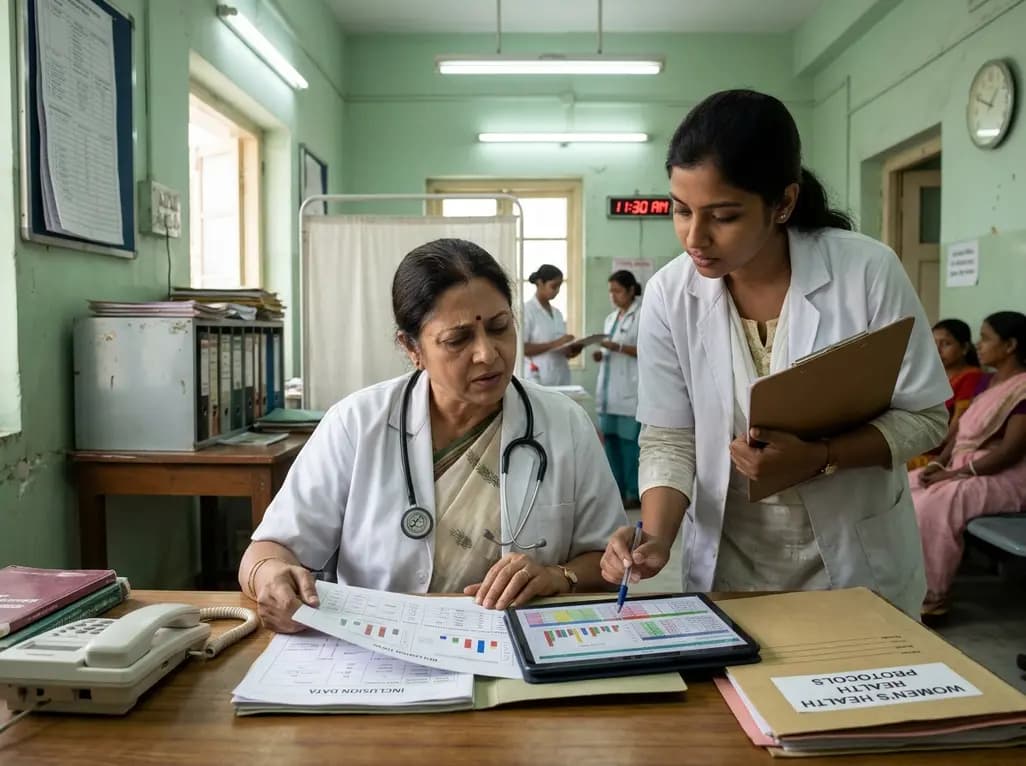
Demanding exhaustive hormonal profiling can inadvertently discourage clinical studies involving females. Methodological standards must align with the specific scientific question to expand, not restrict, equitable evidence for women.
Today

The Directorate General of Health Services directs Indian states to halt the hazardous reuse and reprocessing of single-use medical devices. Discover regulatory implications under the Drugs and Cosmetics Act, critical infection risks, legal liabilities, and operational changes required across clinical specialties.
Today
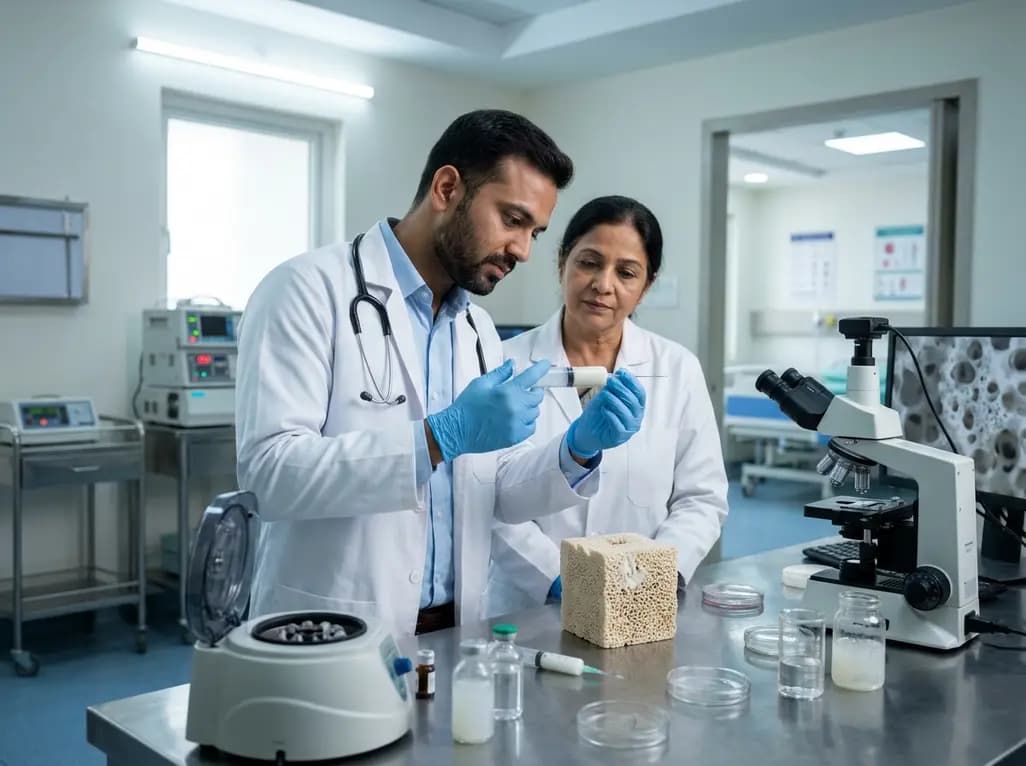
A novel calcium polyphosphate coacervate enables injectable bone implants with in situ hierarchical porosity via phase separation and gas foaming, significantly enhancing cell proliferation, energy metabolism, and osteogenic differentiation for minimally invasive bone defect repair.
Today

India is advancing preventive healthcare by integrating genomics, artificial intelligence, and quantum technologies. With the SANGAM programme sequencing one million Indian genomes, clinicians can unlock personalized therapies, detect cardiometabolic risks early, and curb the burden of diabetes and heart disease.
Today
