.webp&w=384&q=75)

Loading, please wait...
Loading, please wait...

Dealing with imposter syndrome in surgical residency is a common hurdle for many trainees. A national cross-sectional survey recently evaluated this phenomenon among Canadian Otolaryngology-Head and Neck Surgery (OHNS) residents. The results indicate that nearly half of all participants experience significant feelings of being a "fraud" despite their objective achievements. These findings are particularly relevant for medical educators aiming to improve resident well-being and professional development.
Furthermore, researchers utilized the Clance Impostor Phenomenon Scale (CIPS) and the General Self-Efficacy Scale (GSES) to assess 56 residents. Specifically, 44.64% of participants scored within the significant range for impostorism. Consequently, women reported significantly higher scores than their male colleagues. This trend highlights a vital need for tailored support systems and gender-specific wellness initiatives in high-pressure surgical environments.
The study revealed a strong inverse correlation between self-efficacy and the imposter phenomenon. Therefore, as feelings of fraudulence increased, the residents' belief in their clinical abilities decreased. Interestingly, the year of training also played a significant role. PGY-2 residents exhibited the highest scores, while PGY-5 residents showed the lowest. This suggests that clinical experience and seniority naturally help to mitigate these intrusive thoughts over time.
In addition to these findings, the study emphasizes that residency programs must implement structured wellness initiatives. Because early-stage residents and women are most vulnerable, targeted mentorship and open dialogue can be highly effective. Ultimately, addressing these psychological barriers is essential for developing confident and capable surgeons in India and abroad.
The CIPS is a validated psychological tool used to measure the intensity of imposter feelings. It assesses self-doubt, fear of evaluation, and the tendency to attribute success to external factors like luck rather than personal ability.
Early-year residents, particularly PGY-2s, often face a steep learning curve and increased clinical responsibility. Consequently, the transition from highly supervised roles to more independent ones can trigger feelings of inadequacy before they gain sufficient clinical confidence.
Disclaimer: This content is for informational and educational purposes only. It does not constitute medical advice or establish a doctor-patient relationship. Refer to the latest local and national guidelines for clinical practice.
References
Moise AC et al. Imposterism and Self-Efficacy Among Canadian Otolaryngology-Head & Neck Residents: A National Survey. Laryngoscope. 2026 Jun 02. doi: 10.1002/lary.70653. PMID: 42231054.
Bhama AR, Ritz EM, Anand RJ, et al. Imposter syndrome in surgical trainees: clance imposter phenomenon scale assessment in general surgery residents. J Am Coll Surg. 2021;233(5):633-8.
Sawant NS, Kamath Y, Bajaj U, et al. A study on impostor phenomenon, personality, and self-esteem of medical undergraduates and interns. Ind Psychiatry J. 2023;32(1):136-41.

Read summarized clinical updates, watch expert medical content, and earn CME certifications right from your smartphone.
Open your smartphone camera to scan and install.





A national survey explores the prevalence of imposter phenomenon among OHNS residents, linking it to gender, self-efficacy, and training stages....
4 months ago

Co-administering antiseizure medications and DOACs frequently causes pharmacokinetic interactions, subtherapeutic drug levels, and thromboembolic failures. This review highlights enzyme induction risks, unpredictable outcomes with levetiracetam, and the vital role of therapeutic drug monitoring.
Today

Demanding exhaustive hormonal profiling can inadvertently discourage clinical studies involving females. Methodological standards must align with the specific scientific question to expand, not restrict, equitable evidence for women.
Today
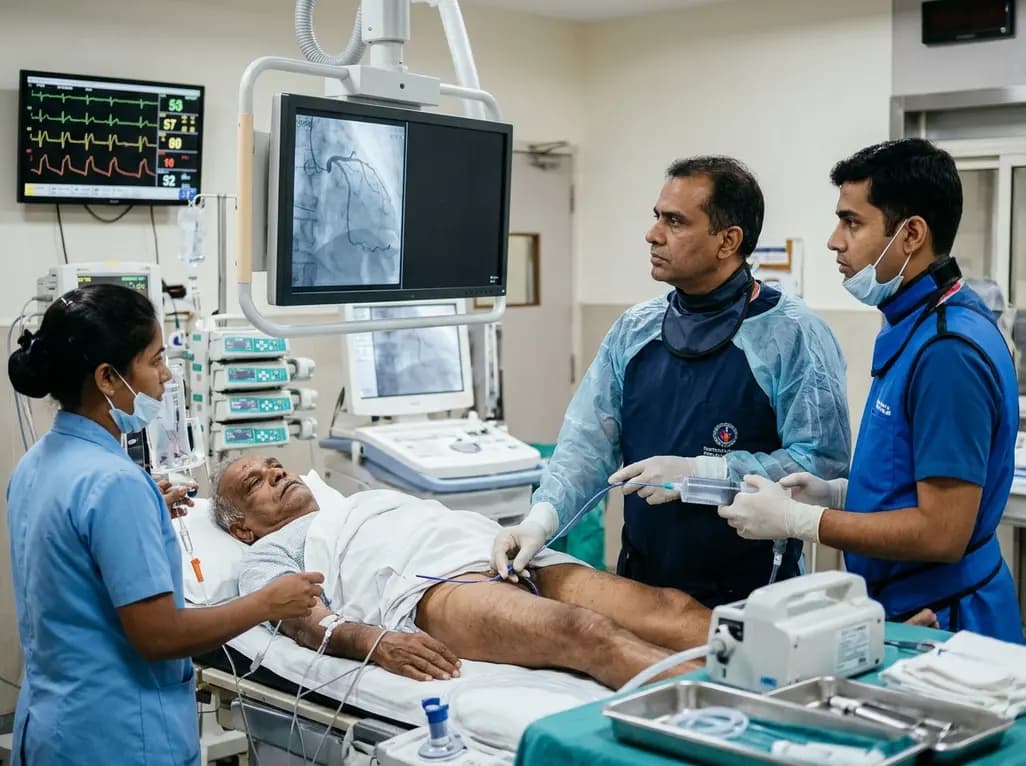
An elderly man with partially repaired Tetralogy of Fallot presented with STEMI caused by coronary embolism rather than atherosclerosis. Successful treatment with sustained mechanical aspiration thrombectomy underscores the vital need for high clinical vigilance in adult congenital heart disease.
Today

A comparative review of tension band wiring and intramedullary screw fixation in thumb metacarpophalangeal arthrodesis, evaluating union rates, hardware complications, and clinical outcomes.
Today

Following regulatory scrutiny from FSSAI regarding promotional representations and lean muscle preservation claims, Dr. Reddy's Laboratories and Nestlé Health Science are currently reviewing the branding and marketing strategy for their joint nutritional supplement Celevida GLP+.
Today
