

Loading, please wait...
Loading, please wait...

Managing psychological distress often requires automatic, subconscious adjustments rather than conscious, deliberate effort. Clinical researchers have increasingly highlighted the pivotal role of implicit emotion regulation in maintaining affective stability across varied clinical environments. Although conscious strategies like cognitive reappraisal receive substantial attention in therapy, automatic regulatory tendencies dictate how quickly an individual responds to emotional triggers. Consequently, when these subconscious processes falter, individuals experience persistent mood dysregulation and heightened anxiety. Recent scientific evidence synthesizes findings across psychiatric populations, shedding light on how these non-conscious mechanisms influence affective pathology. Therefore, exploring these automatic processes allows clinicians to comprehend why standard conscious coping strategies often fail to alleviate emotional distress in common psychiatric conditions.
Psychiatric diagnostics have traditionally concentrated on conscious symptoms and voluntary emotional control strategies. However, subconscious affective processing often shapes the underlying vulnerability to mood and anxiety disorders. In clinical practice, implicit emotion regulation operates without conscious intention or explicit awareness. For instance, when an individual encounters a threatening stimulus, automatic neural circuits immediately modify emotional intensity before conscious evaluation occurs. Furthermore, individuals diagnosed with major depressive disorder, generalized anxiety disorder, and bipolar disorder demonstrate significant impairments in these automatic adjustments. Similarly, conditions such as post-traumatic stress disorder and obsessive-compulsive disorder exhibit distinct disruptions in non-conscious emotional processing. Consequently, patients remain trapped in cycles of negative affect, because their underlying regulatory architecture fails to restore emotional baseline equilibrium. Therefore, understanding this automatic construct provides clinicians with a transdiagnostic framework that transcends conventional categorical boundaries. Ultimately, assessing these automatic patterns helps physicians identify why standard verbal interventions may encounter patient resistance.
A rigorous meta-analytic review evaluated twenty-three clinical studies to clarify contradictory findings regarding subconscious emotional modulation. Specifically, researchers evaluated objective behavioural paradigms, including emotional conflict and affective interference tasks, across hundreds of clinical patients and controls. The meta-analysis revealed small to medium effect sizes indicating substantial performance deficits in clinical cohorts. For example, patients demonstrated significantly lower accuracy scores compared to healthy controls during emotionally demanding cognitive tasks. Moreover, reaction time metrics highlighted that affected individuals required longer durations to resolve emotional interference. Consequently, these findings confirm that psychiatric patients face genuine computational inefficiencies when processing subconscious affective cues. Furthermore, methodological quality assessments using the Newcastle-Ottawa Scale confirmed that the analyzed trials maintained high clinical standards. Thus, the empirical data conclusively refute earlier hypotheses that implicit regulatory pathways remain intact during affective distress. Instead, maladaptive automatic processing represents an enduring, demonstrable impairment across multiple diagnostic categories.
Neuroimaging research provides vital insights into the neural mechanisms that drive automatic affective dysregulation. Normally, implicit emotion regulation relies on ventral frontolimbic circuits, including the ventromedial prefrontal cortex and anterior cingulate cortex. These frontal regions automatically inhibit hyperactive subcortical structures, such as the amygdala, during emotional provocation. However, patients with mood and anxiety disorders consistently display aberrant functional connectivity within these automatic pathways. Specifically, diminished prefrontal engagement fails to dampen heightened amygdala reactivity during subconscious emotional conflicts. In addition, neurochemical imbalances involving serotonin, dopamine, and gamma-aminobutyric acid further disrupt frontolimbic communication. Consequently, the brain experiences an exaggerated physiological surge without the compensatory dampening that healthy neural circuits normally provide. Furthermore, chronic stress exacerbates this frontolimbic disconnection by promoting structural remodelling within vulnerable cortical areas. Therefore, biological vulnerability reinforces emotional distress, proving that automatic regulatory deficits originate from measurable neurobiological alterations rather than subjective lack of patient effort.
Recognizing subconscious emotion dysregulation provides profound transdiagnostic value for modern clinical psychiatry. Rather than viewing depression, panic disorder, and social phobia as entirely separate entities, clinicians can identify shared automatic vulnerabilities. Indeed, patients across the affective spectrum demonstrate remarkably parallel difficulties in filtering irrelevant threat cues. Moreover, this automatic bias toward threat perpetuates avoidance behaviors and depressive rumination across diverse diagnostic presentations. As a result, individuals frequently experience intrusive negative thoughts before any conscious reframing can take place. Furthermore, traditional therapeutic modalities often focus exclusively on explicit reappraisal, inadvertently neglecting these deep-seated subconscious habits. Consequently, patients may understand cognitive coping techniques intellectually yet remain unable to prevent intense emotional spikes in real time. Therefore, recognizing transdiagnostic implicit dysfunction encourages physicians to adopt comprehensive treatment models. By targeting these shared subconscious pathways, clinicians can achieve more durable therapeutic responses across co-occurring mood and anxiety conditions.
Integrating these empirical discoveries into psychiatric care requires innovative, multimodal intervention strategies. Clinicians must realize that standard cognitive interventions may fail when automatic processing remains unaddressed. Therefore, incorporating computer-based cognitive bias modification into treatment protocols offers promising opportunities to retrain automatic attention. Similarly, mindfulness-based stress reduction cultivates decentralized emotional awareness, thereby strengthening automatic frontolimbic regulation. In addition, pharmacotherapy plays an essential complementary role by modulating neurotransmitter systems that support executive frontolimbic circuitry. Furthermore, clinicians in outpatient settings should educate patients about automatic emotional reactions to alleviate unwarranted feelings of guilt or personal failure. Consequently, patients learn that involuntary emotional surges reflect neurobiological vulnerability rather than personal weakness. Ultimately, combining targeted biological therapies with automated cognitive retraining produces superior long-term clinical outcomes. Moving forward, psychiatric care will increasingly leverage these dual-target strategies to restore both conscious and subconscious emotional balance.
Explicit regulation involves conscious, effortful strategies such as deliberate cognitive reappraisal or voluntary suppression. In contrast, implicit regulation operates automatically, modifying emotional reactions without conscious awareness or intentional effort. Both pathways are essential, but implicit mechanisms form the primary, immediate baseline defense against daily psychological stressors.
Traditional psychotherapies predominantly train conscious, reflective coping strategies. However, if underlying automatic affective processing remains impaired, intense emotional spikes occur before deliberate coping mechanisms can activate. Consequently, patients struggle to implement cognitive techniques during acute distress, highlighting the need to target automatic regulatory pathways directly.
Emerging interventions include cognitive bias modification, mindfulness practices, and attention training tasks that target automatic cognitive loops. Furthermore, optimal psychopharmacological treatment stabilizes frontolimbic neural networks, facilitating more effective subconscious emotional adaptation. Combining these approaches helps restore balanced automatic emotional processing in patients with affective disorders.
Disclaimer: This content is for informational and educational purposes only... Refer to the latest local and national guidelines for clinical practice.
References

Read summarized clinical updates, watch expert medical content, and earn CME certifications right from your smartphone.
Open your smartphone camera to scan and install.





A meta-analytic review reveals significant impairments in implicit emotion regulation across mood and anxiety disorders. Patients exhibit reduced accuracy and slower processing, underscoring the role of automatic frontolimbic dysregulation and the need for novel transdiagnostic psychiatric interventions.
Today

Ambient digital scribes promise effortless medical documentation, but a critical sociotechnical commentary reveals that AI alters rather than eliminates charting work. Discover how shifting cognitive burdens, oversight risks, and workflow redesign impact clinical safety and healthcare practice.
Today

A new comparative study demonstrates that intraoperative imprint cytology achieves 96.6% diagnostic accuracy in ovarian tumours, outperforming frozen section in sensitivity for borderline lesions and offering an accessible, rapid alternative for resource-constrained surgical centres.
Today

Thoracic aortic aneurysm lacks etiologic medical therapy. A new study reveals that targeting specific αV integrins with Cilengitide attenuates TGF-β and mechanotransduction pathways, effectively limiting pro-fibrotic remodeling and aortic bulb dilation in both syndromic and sporadic disease models.
Today
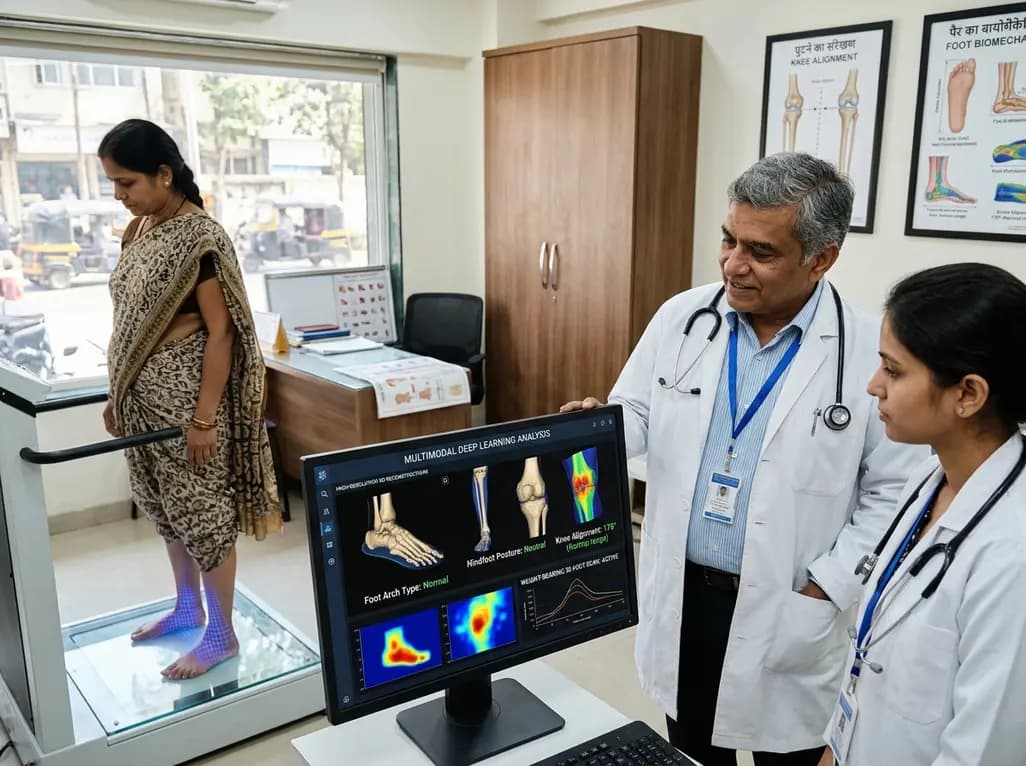
A multimodal deep learning framework utilizing weight-bearing 3D foot scans accurately screens lower-limb alignment, including arch type, hindfoot posture, and knee alignment, offering an accessible, radiation-free alternative to radiography for early biomechanical triage.
Today

A real-world retrospective study demonstrates that combining intravitreal ranibizumab with focal/grid macular laser significantly improves visual acuity and central macular thickness compared to laser monotherapy in patients with center-involved diabetic macular edema.
Today
